


Bible Stories for Young Children: Where to Start
Not every Bible story is a children's story, and starting in the wrong place is the most common reason a child decides these stories are frightening or dull. A practical order to work in.

Key points
-
What makes a story work at this age
A young child follows people and weather, not covenants and kingdoms.
-
Do not sand off the hard parts — shorten them
Children forgive a difficult moment far more easily than they forgive being told something that turns out not to be true.
-
Answer the question they actually asked
"Was he scared?" is a question about the child, not about the character.
-
A practical order
Weather first, then courage, then the ones that ask something of the listener.
Why the first one matters
Most children meet Bible stories in whatever order they happen to be handed. That order does more work than people expect: a child whose first encounter is with something large and frightening tends to file the whole category under frightening, and a child whose first encounter is with something abstract files it under dull.
Neither impression is easy to revise later.
What a young child can actually follow
Before roughly seven, the stories that land share a shape: one character, one visible situation, one ending you can point at.
- Rain, and a boat, and eventually dry ground.
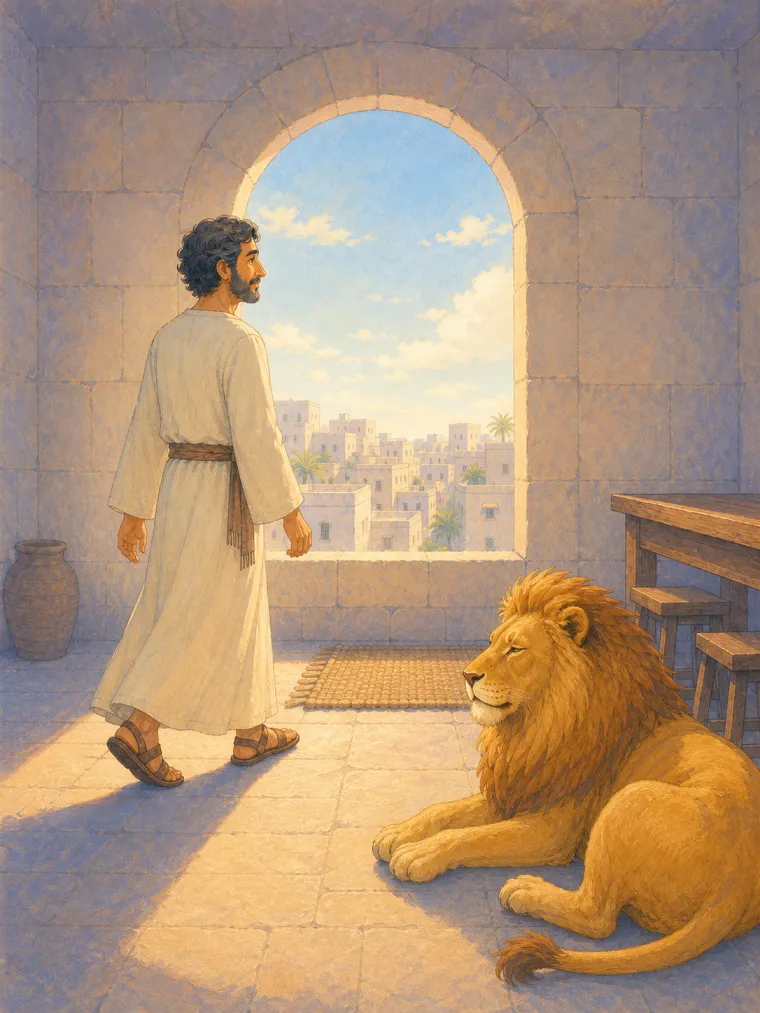
- A lion, and a night, and morning.
- A storm, a fish, and a man who changes his mind.
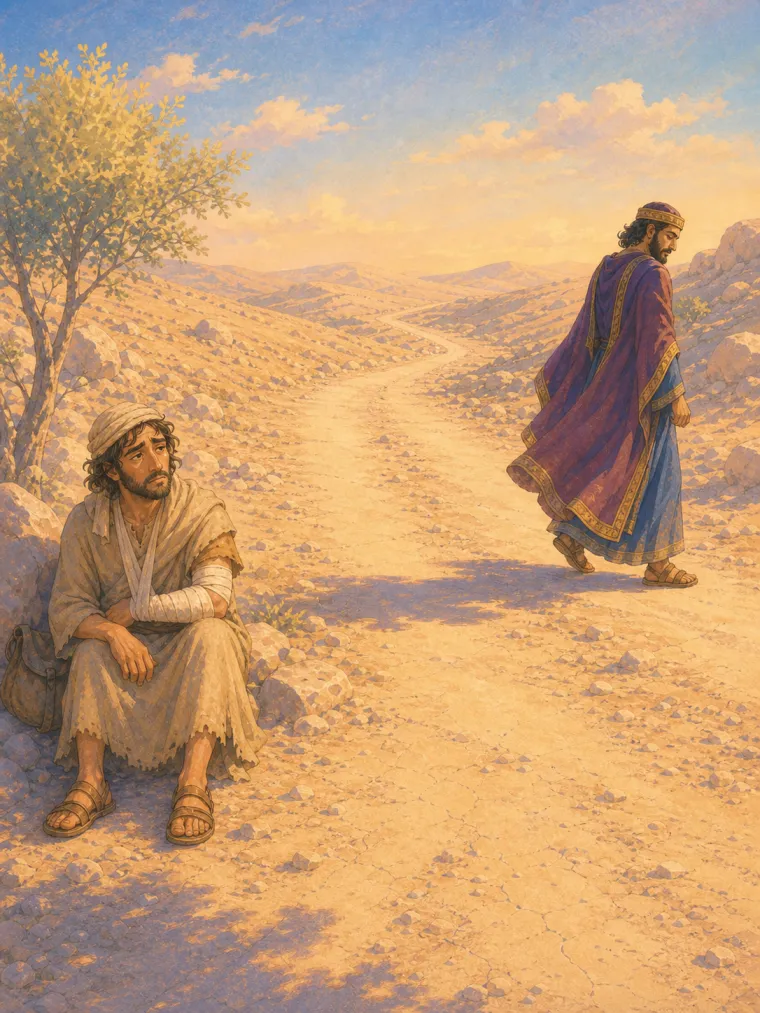
- A road, several people who walk past, and one who does not.
Stories whose meaning lives in a relationship rather than an event — covenant, inheritance, national history — are followable at the surface and almost entirely missed underneath. That is not a reason to avoid them permanently. It is a reason not to lead with them.
The frightening parts
The instinct is to remove them. The problem is that the child usually meets the unedited version eventually, and the discovery lands as *I was managed*, which costs more than the original difficulty would have.
The workable middle is plain and short. Say what happened in as few words as it takes, without softening the words themselves, and then give the rest of the telling to what happened afterwards. You are adjusting length, not accuracy.
They are asking about themselves
*Was he scared?* is almost never a question about Daniel.
It is a question about being alone in the dark, asked from a safe distance, because the character makes it askable. Answer the story question briefly and truthfully, and then follow where they take it. The conversation after the story is usually the part that matters; the story was the way in.
An order that works
Starting points, in the order we would introduce them:
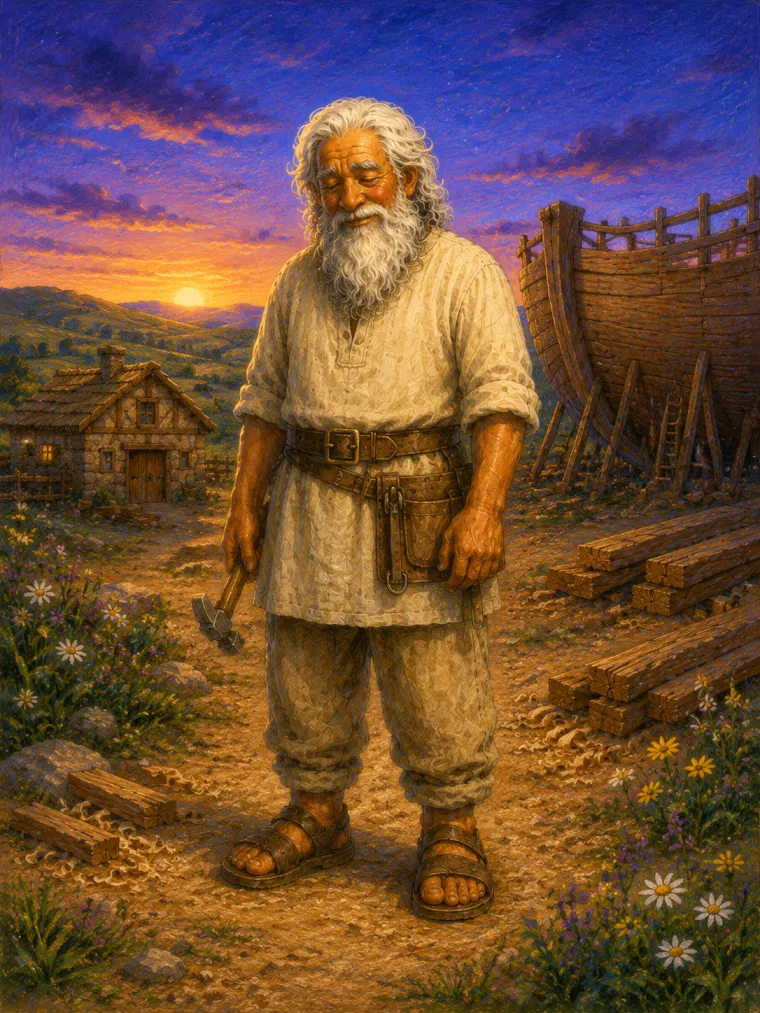
- Noah and the ark — entirely concrete: weather, animals, a boat.
- Noah and the rainbow — the same world, one step towards meaning.
- Daniel in the lions' den — courage, and a night that ends.
- David and Goliath — being small and going anyway.
- Jonah and the great fish — for the child who is testing what happens if they refuse.
- The Good Samaritan — later than most lists put it, because it asks the listener to see themselves in a passer-by.
When the version you want does not exist
Families differ on how much detail belongs in a retelling, and published children's Bibles make that decision for you. If the one you want is not on the shelf — a particular story, at a particular length, pitched at the particular child in front of you — describing it in a sentence and making it is a reasonable alternative to searching.
Where ReadKidz fits
- Not knowing whether a retelling handles the difficult parts the way your family would ReadKidz has a set of illustrated Bible stories written for this age band, each a complete book you can read online before deciding whether it fits your child. A practical order
Questions parents ask
At what age can a child understand Bible stories?
Children can follow the events from around age three and hold onto the characters long before they can hold onto the meaning. Expect several years of enjoying the story as a story before it starts carrying anything larger, and treat that as normal rather than as a stage to hurry.
How do I handle the frightening parts?
State them once, plainly, and briefly — then give most of the telling to what happened afterwards. Children generally handle a difficult moment far better than they handle discovering later that a story was edited for them.
Which stories should I leave until later?
Anything whose meaning depends on covenant, sacrifice or national history — the events are followable but the point is not, and what a young child retains is usually the most vivid image rather than the message it was carrying.
Should I use a children's Bible or tell it myself?
A children's Bible gives you consistent wording and illustrations to point at; telling it yourself lets you match the length to the evening and answer questions as they come. Most families end up doing both, and the retelling is usually where the questions arrive.
My child keeps asking if it really happened. What do I say?
That question deserves a straight answer in line with what your family actually believes, given at the level they asked it. What does not work is deflecting — children read evasion accurately and it makes the whole category feel unstable.