


How to Write a Bedtime Story That Actually Ends in Sleep
Most bedtime stories are built like daytime stories — a problem, a chase, a rescue — and then everyone wonders why the child is wide awake. Here is what to do differently.
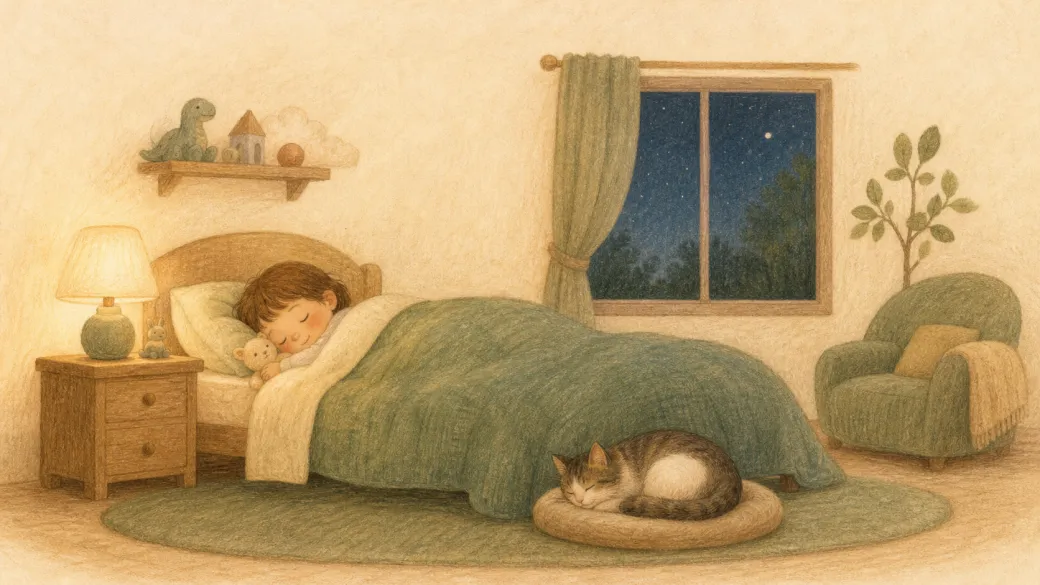
Key points
-
Structure it backwards from calm
A bedtime story is not a short story told at night — it is a wind-down with a plot attached.
-
Keep the stakes tiny
A lost mitten is a better bedtime problem than a lost child.
-
Use repetition on purpose
Repetition is boring in daylight and load-bearing at bedtime.
-
End the same way every night
The last line should be a signal, not a surprise.
The problem with a good story at bedtime
The stories that work best in daylight are the ones that work worst at 7:30pm. Something is lost, someone is chasing, the ending arrives with a flourish — and then the light goes off and a small, entirely alert person wants to discuss it.
This is not a failure of storytelling. It is a story doing exactly what it was built to do, at the wrong hour.
Wind down, do not build up
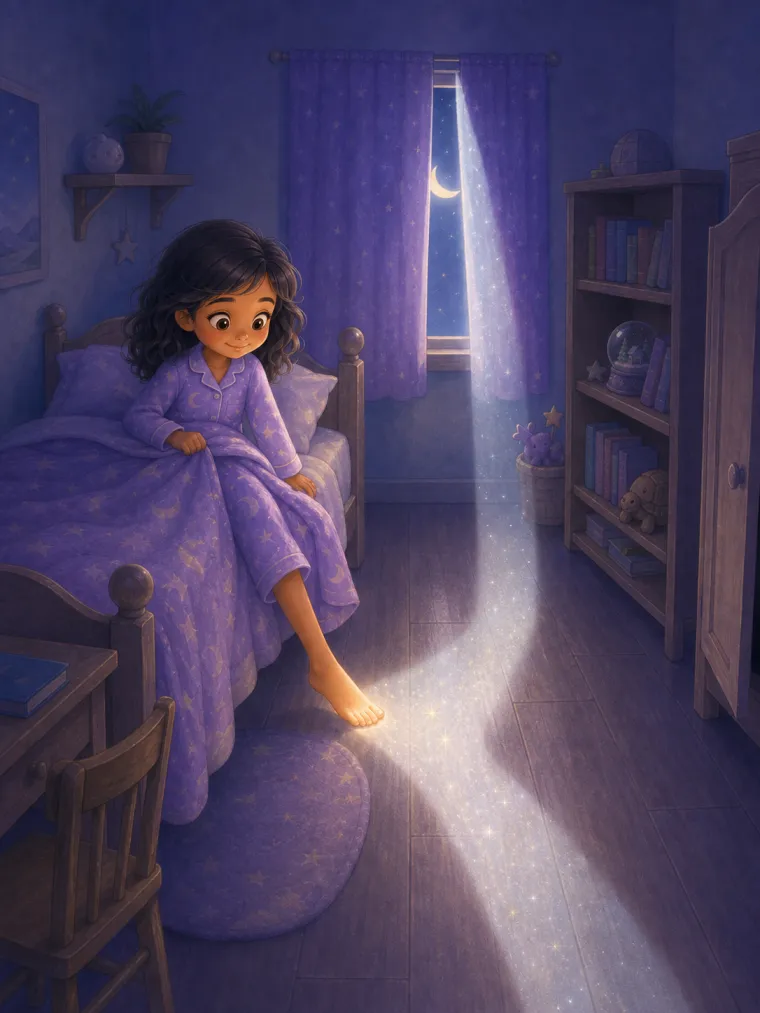
A bedtime story should lose energy as it goes. Practically, that means inverting the usual shape:
- First third — a small situation. Something is misplaced, or someone is waiting.
- Second third — it resolves. Not dramatically; it just works out.
- Last third — nothing happens on purpose. The character goes home, gets warm, gets still, and listens to something quiet.
That final third is the actual bedtime story. The first two exist to earn it.
Make the problem too small to worry about
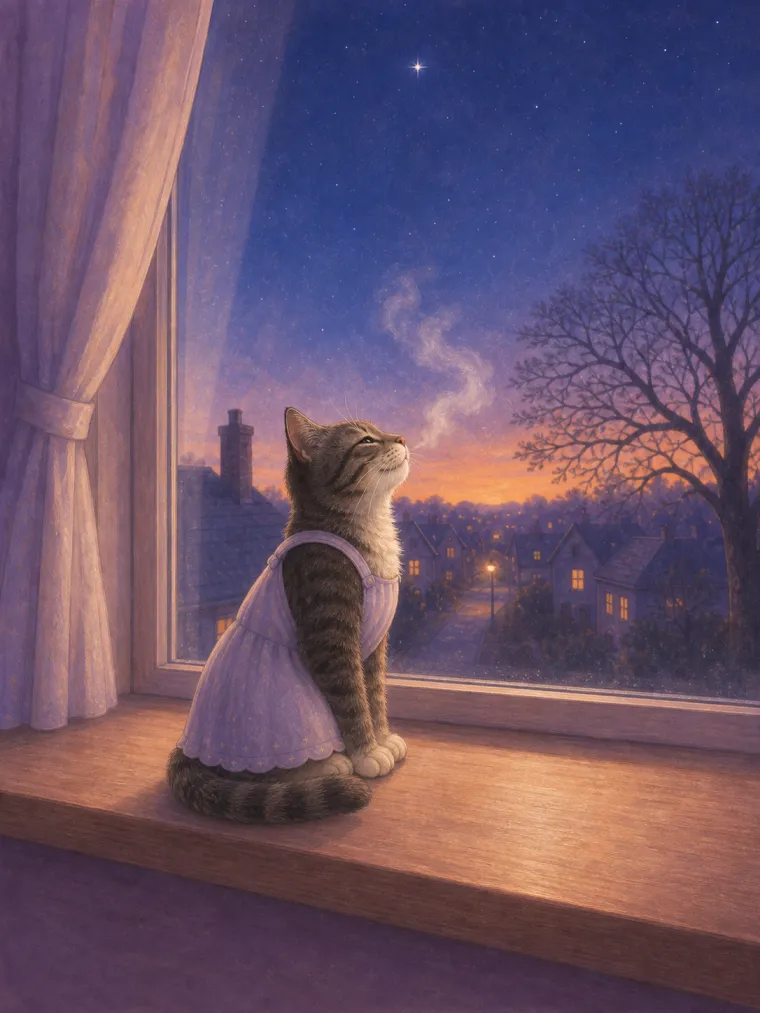
The reliable bedtime problems are almost comically low-stakes: a mitten in the wrong place, a puddle across the path, a friend who has not arrived yet. From the first sentence it should be obvious that this will be fine.
Anything with real peril in it works against you twice — once by waking the child, and again by becoming the story they ask for every night, because mild fear is interesting.
A few in our library built on this shape:
- A cat watching the last light leave the window
- A bedroom that goes dark all at once
- A bunny learning to slow down
- A bear at the end of a long day
Repeat yourself
A line that comes back — the same goodnight to each animal in turn, the same sound of rain on the same window — gives a tired brain a rail to hold. Children usually join in on the repeated line for a while and then stop.
That stopping is the useful signal. It is almost always the point at which they are going under.
End on stillness, every time
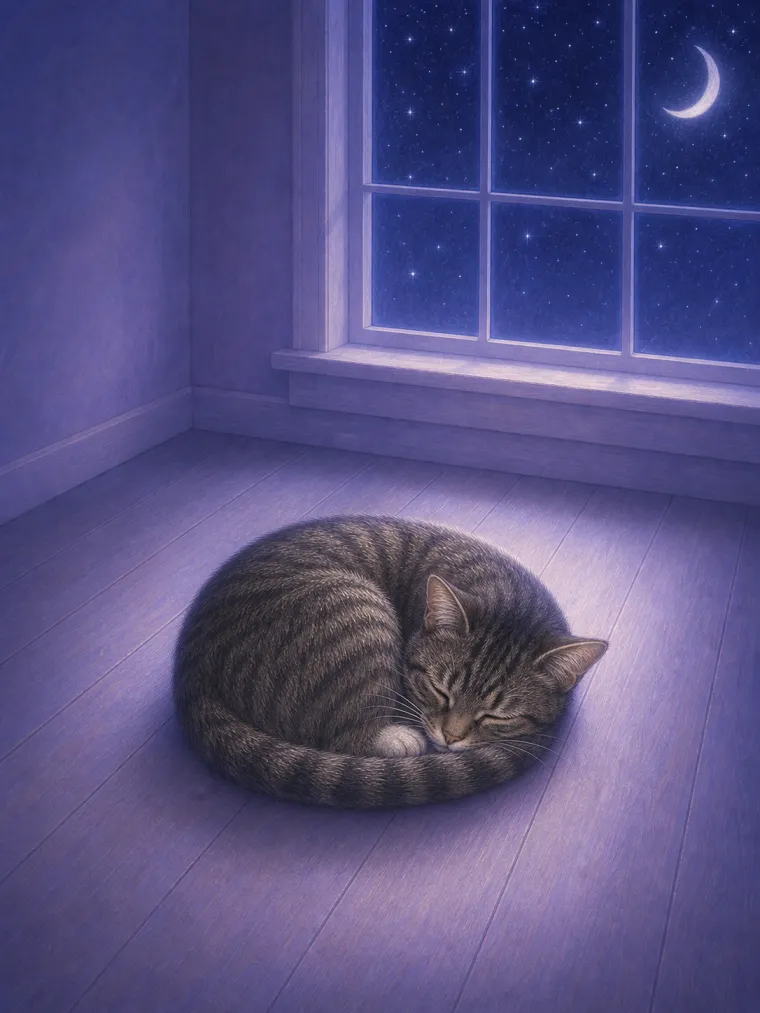
Pick one closing sentence and use it for every story, forever. *And that was the end of that day.* Whatever it is, keep it.
After a week it stops being a sentence and becomes punctuation — the audible edge of the day, doing work no amount of negotiation can. It is also, incidentally, the cheapest available answer to "one more story": the line has already said no.
When you have nothing left to invent
Some evenings there is no story in you. That is normal and not a parenting failure — invention is work, and it is being asked for at the least resourced moment of the day.
If it helps, describing tonight's story in a sentence and having it come back written, with your child's own name and their own room in it, takes about as long as finding a book on the shelf.
Where ReadKidz fits
- Inventing a new story at the end of a long day, every day ReadKidz can build a bedtime story around a child's own name, room and favourite animal, with the wind-down shape already in place. Structure it backwards from calm
Questions parents ask
How long should a bedtime story be?
Roughly three to five minutes of reading for most children under seven. Long enough to settle into, short enough that it does not become the evening's main event — and short enough that you can say yes to a second one without losing half an hour.
Should the story have a moral?
It can, but bedtime is a poor time to deliver one. A child who senses they are being taught something becomes alert rather than sleepy. If there is a lesson, let it sit inside the story rather than arriving as a summary at the end.
Is it better to read a book or make one up?
Both work, and they do different things. A book is reliable and requires nothing from you at the end of a long day; an invented story can include your child by name and whatever happened that afternoon. Many families do one of each, in that order.
My child always asks what happens next. What am I doing wrong?
Usually the story is ending on momentum rather than on stillness. If the last image is a character setting off somewhere, the obvious question is where. Try ending on a character who has already arrived and is no longer going anywhere.
Can the same story be told every night?
Yes, and it is often the point. Familiarity is what makes a story restful — there is nothing left to find out, so there is nothing to stay awake for. Children generally signal when they are ready for something new.