


Story Ideas for When Your Child Says "Tell Me a Story"
Here are thirty starting points that go somewhere, sorted by what you have left in the tank — plus the two-part trick for turning any of them into a story without planning ahead.
Key points
-
One thing, one small problem
Every story you will ever need to invent is a familiar object that wants something ordinary.
-
Solve by noticing, not by winning
Stories that end in cleverness settle a child better than stories that end in triumph.
-
Use their day as raw material
The most-requested story in most houses is the one where something from that afternoon happens to somebody else.
-
Let them steer, but keep the wheel
Two options are a collaboration; an open question is a stall.
The two-part trick
Every story you will ever need to improvise is the same shape:
One familiar thing. One small problem.
A sock that wants to find the other sock. A cat whose favourite step is occupied. A boot with a stone in it. Say what the thing wants, put something ordinary in the way, and you are already telling a story — the rest is just narrating until it resolves.
What makes this work is that a young child's interest is in the *thing*, not the plot. Your child's actual boot beats any invented kingdom, and they will supply most of the meaning themselves.
Thirty starters, sorted by how tired you are
Almost no energy required
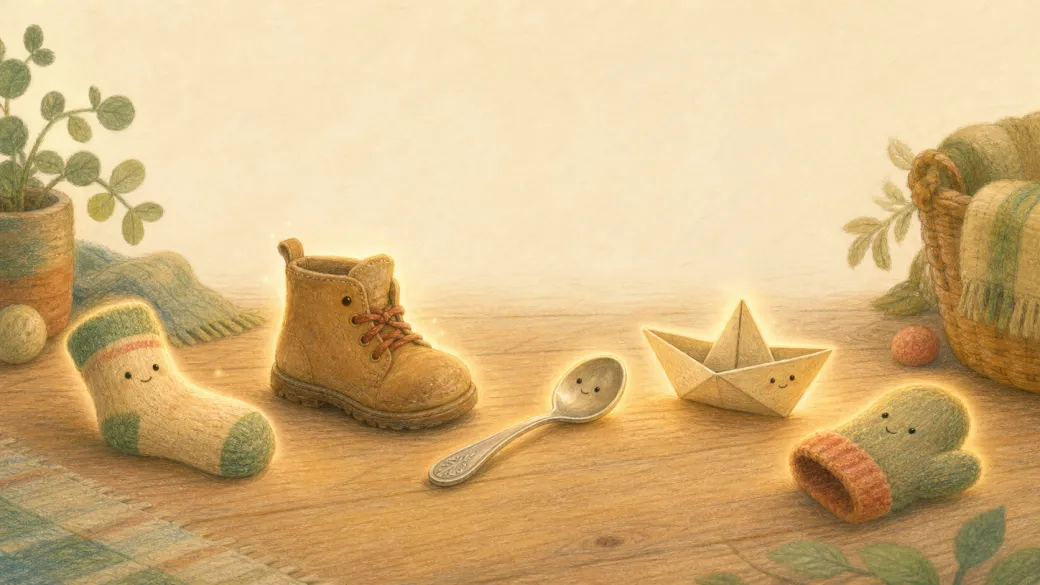
- A sock looking for the other sock.
- A boot with a stone in it that will not come out.
- The last biscuit, deciding who to be eaten by.
- A door that only creaks on Tuesdays.
- A spoon that is tired of soup.
- The smallest key on the keyring, which has never opened anything.
- A puddle that wants to be stepped in.
- A jumper that has been put on backwards and rather likes it.
- A pencil that has worn down to almost nothing.
- The light that comes on when you open the fridge, wondering what it looks like when the door shuts.
A bit more in the tank
- A cat who has found a warmer step and now has to explain this to the old step.
- A snail who is late but insists on being on time.
- Two birds arguing over a branch that could hold both.
- A moon that gets stuck behind the same cloud every night.
- A dog who has buried something and cannot remember what.
- A tree in autumn deciding which leaf goes last.
- A shell on a beach that has heard everything and says nothing.
- A paper boat that only ever wanted a puddle, and gets a river.
- A scarf blown into a hedge, meeting the birds who live there.
- A lamp in an empty room, waiting for someone to come home.
Enough for a proper one
- A child who wakes up and everything in the house is exactly one size smaller.
- A bear who has slept through spring and has to be told what he missed.
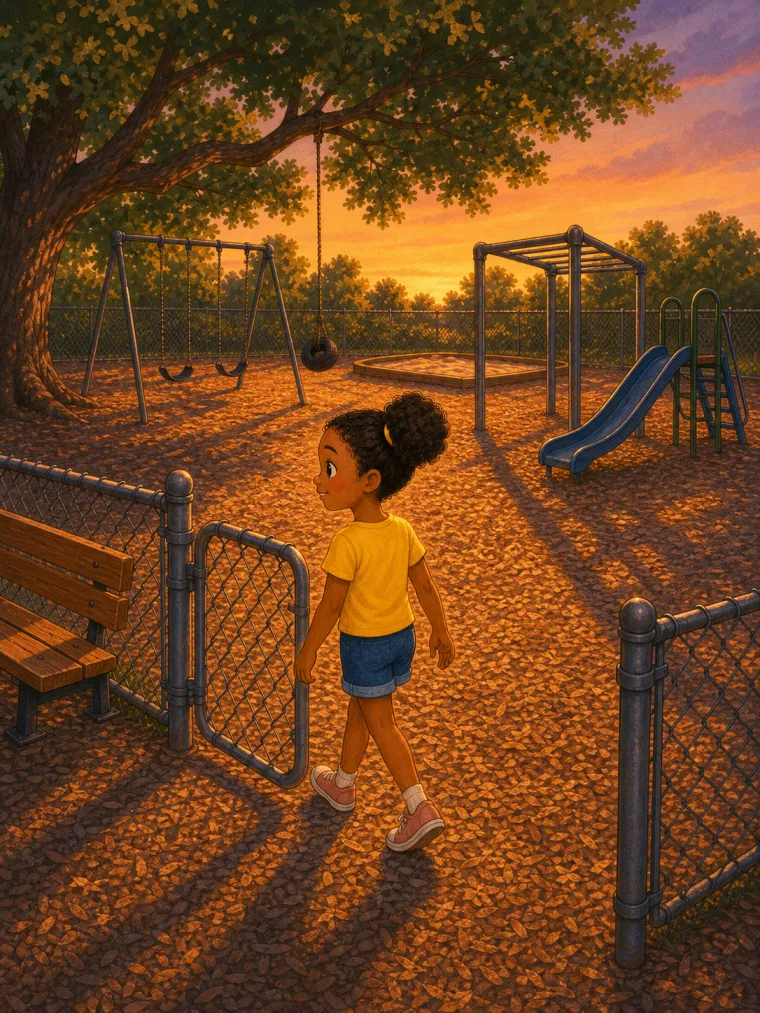
- A new kid at the gate and one swing built for two.
- A dragon who is afraid of the dark and has to admit it.
- Somebody who can hear what the rain is saying, but only in one room.
- A shop that sells things people have lost, run by someone who lost something too.
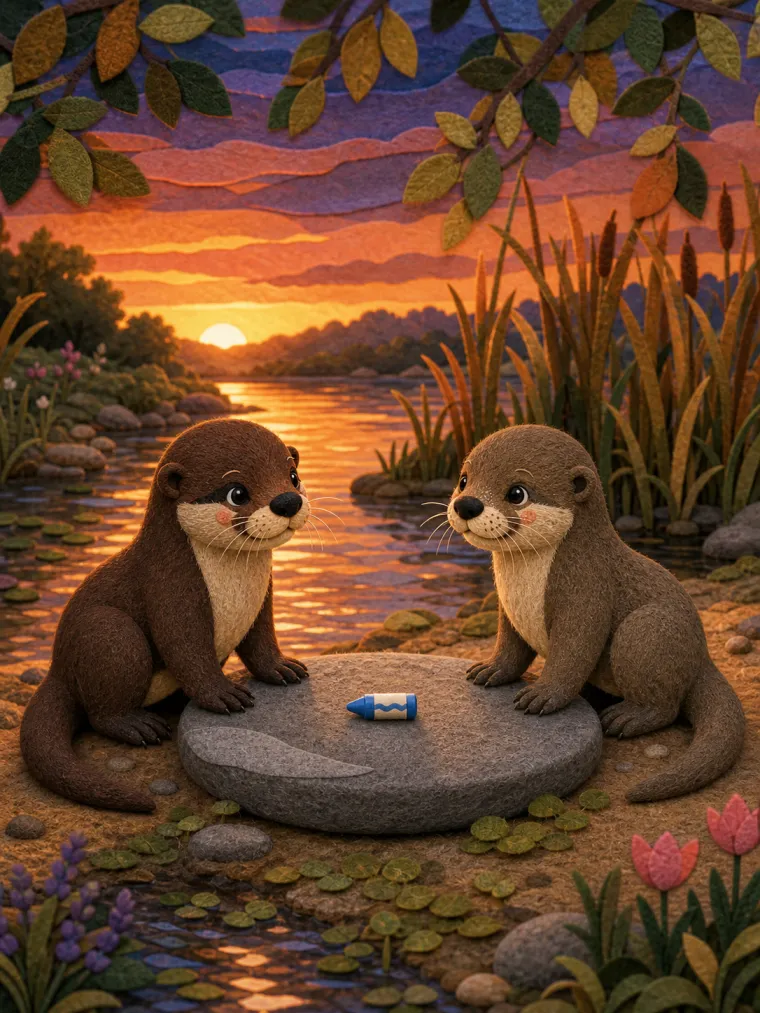
- Two otters and one crayon.
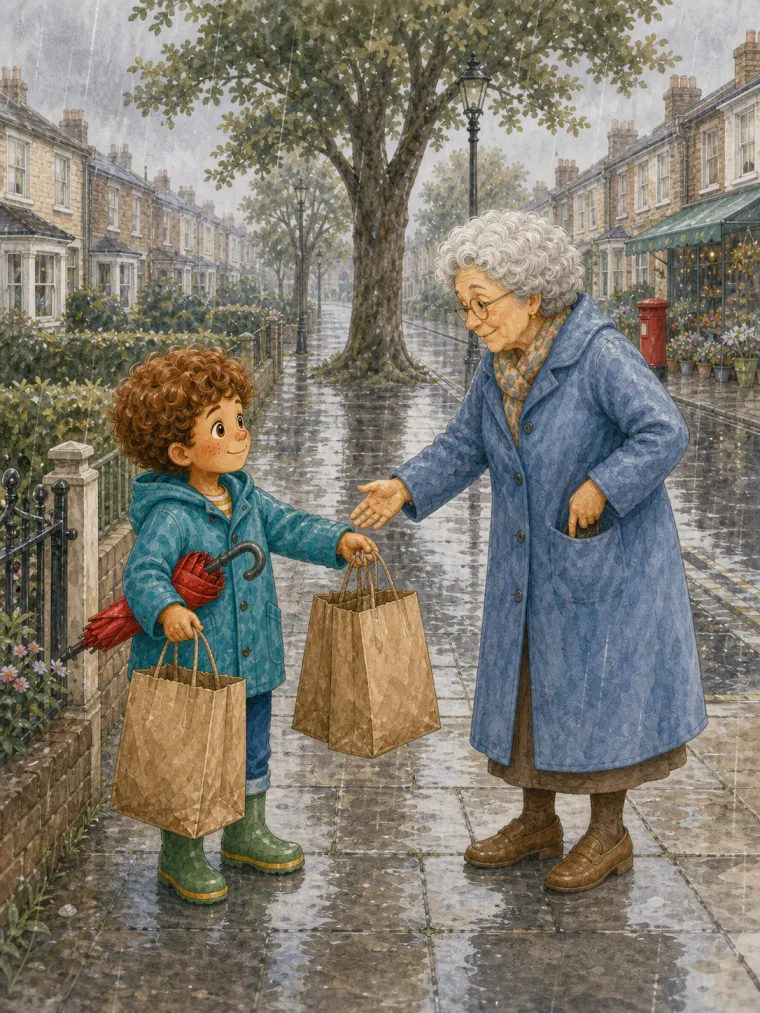
- A very small umbrella on a very wet street.
- A star that goes out for one night and comes back apologetic.
- A grandmother's coat pocket that never quite empties.
Solve by noticing, not by winning
The ending that settles a child is usually somebody spotting something, not somebody beating something. The sock was inside the jumper the whole time. The high shelf was reachable from the other side.
Triumph raises the temperature. Noticing lowers it — which matters a great deal if this is happening at 7:30pm.
Let them steer, but keep the wheel
"What happens next?" invites either silence or dragons. Two options work far better: *does she look under the chair, or does she ask the cat?*
The child is genuinely steering, and you have not handed a blank page to someone who is nearly asleep.
If one of them turns out to be a keeper
Some of these become the story that gets asked for every night for a month, and then it is gone — because it only ever existed out loud.
Any of the thirty above can be typed in as a single sentence and come back as a complete book with pictures, if you want the keeper version to be something they can hold.
A few that already exist, in case one saves you the effort tonight:
Where ReadKidz fits
- A story your child loved that existed only once and is now gone Any of these starters can be typed into ReadKidz as a single sentence and come back as a complete illustrated book, if the version your child wants to keep is one they can hold. Use their day as raw material
Questions parents ask
What do I do when my mind is completely blank?
Name the first object you can see and give it something to want. A sock that wants to find the other sock is a complete story premise, and by the time you have said it out loud you will usually know what happens next.
How do I stop the story escalating into dragons and explosions?
Offer two options rather than asking an open question. An open "what happens next?" invites the biggest idea available; a choice between two small ones keeps the child steering without raising the stakes.
How long does an invented story need to be?
Three minutes is plenty. Invented stories feel longer to tell than they are, and a short one you finish beats a long one that runs out of road and ends with "and then they went to sleep".
Is it a problem if I use the same idea repeatedly?
No — repetition is usually what children want. The same character in a slightly different situation is a series, and series are easier to invent than one-offs because the hard part is already decided.
My child interrupts constantly. How do I keep going?
Take the interruption into the story rather than deflecting it. If they announce there is a horse, there is now a horse. Interruptions are participation, and a story that absorbs them ends up more theirs than one that holds them off.