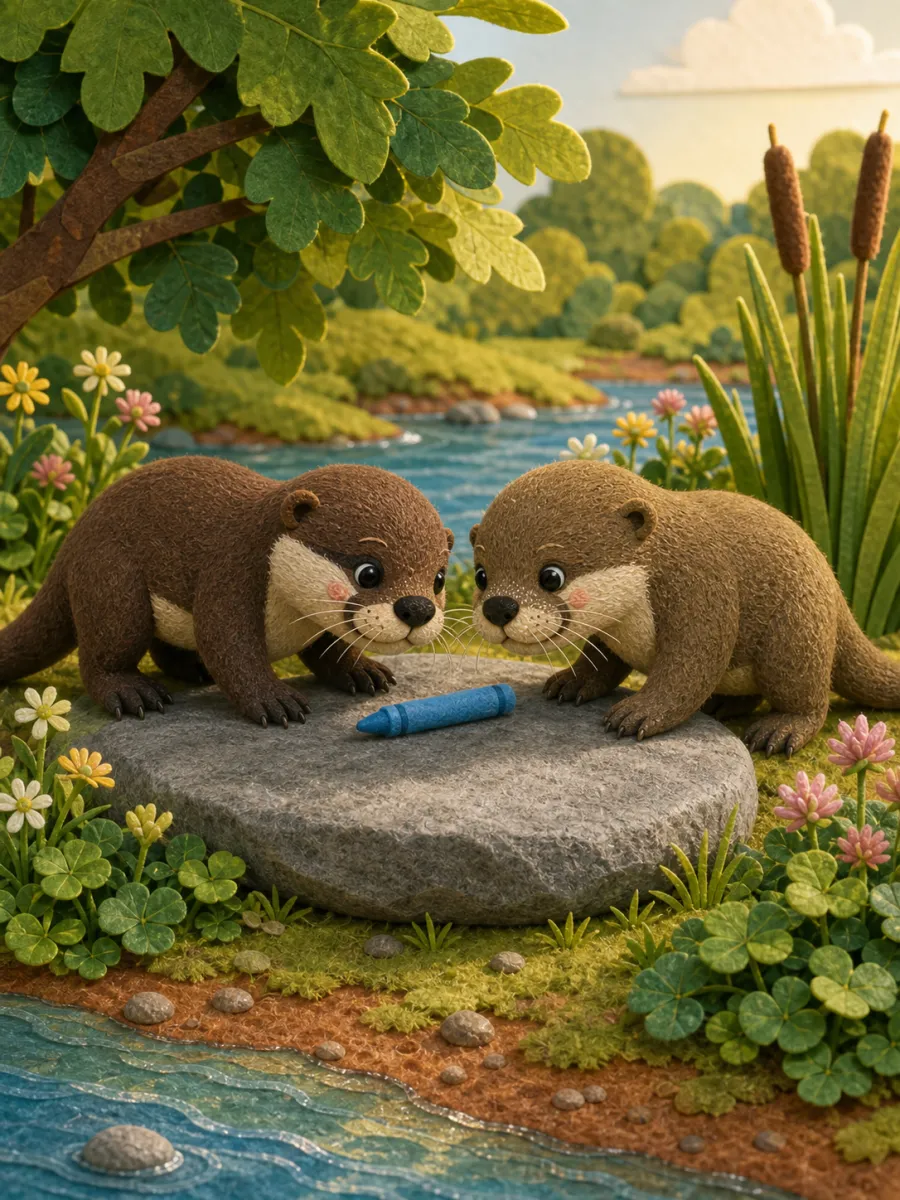
Paper Collage Children's Book Illustration
Paper collage children's book illustration is the practice of building each picture from pieces — torn tissue, painted paper, layered card, cloth and felt — so the page has visible edges and real texture instead of brushwork. It is a craft medium, which is exactly why so few tools attempt it. ReadKidz publishes seven collage styles that can illustrate a complete book, and this page shows all seven with the reference art each one is built from.
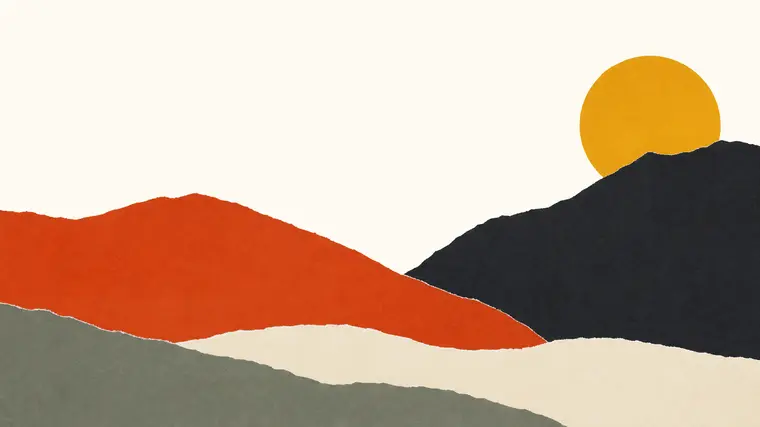
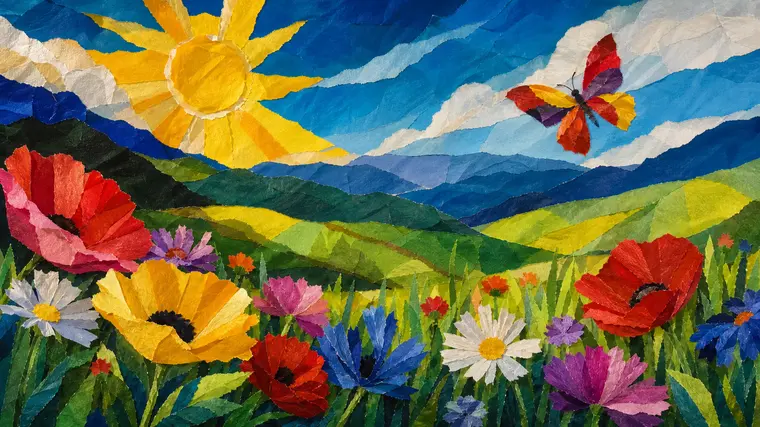
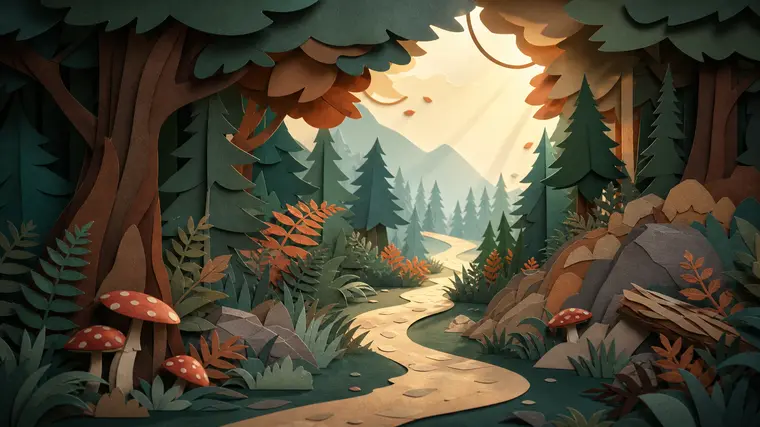
The seven collage styles
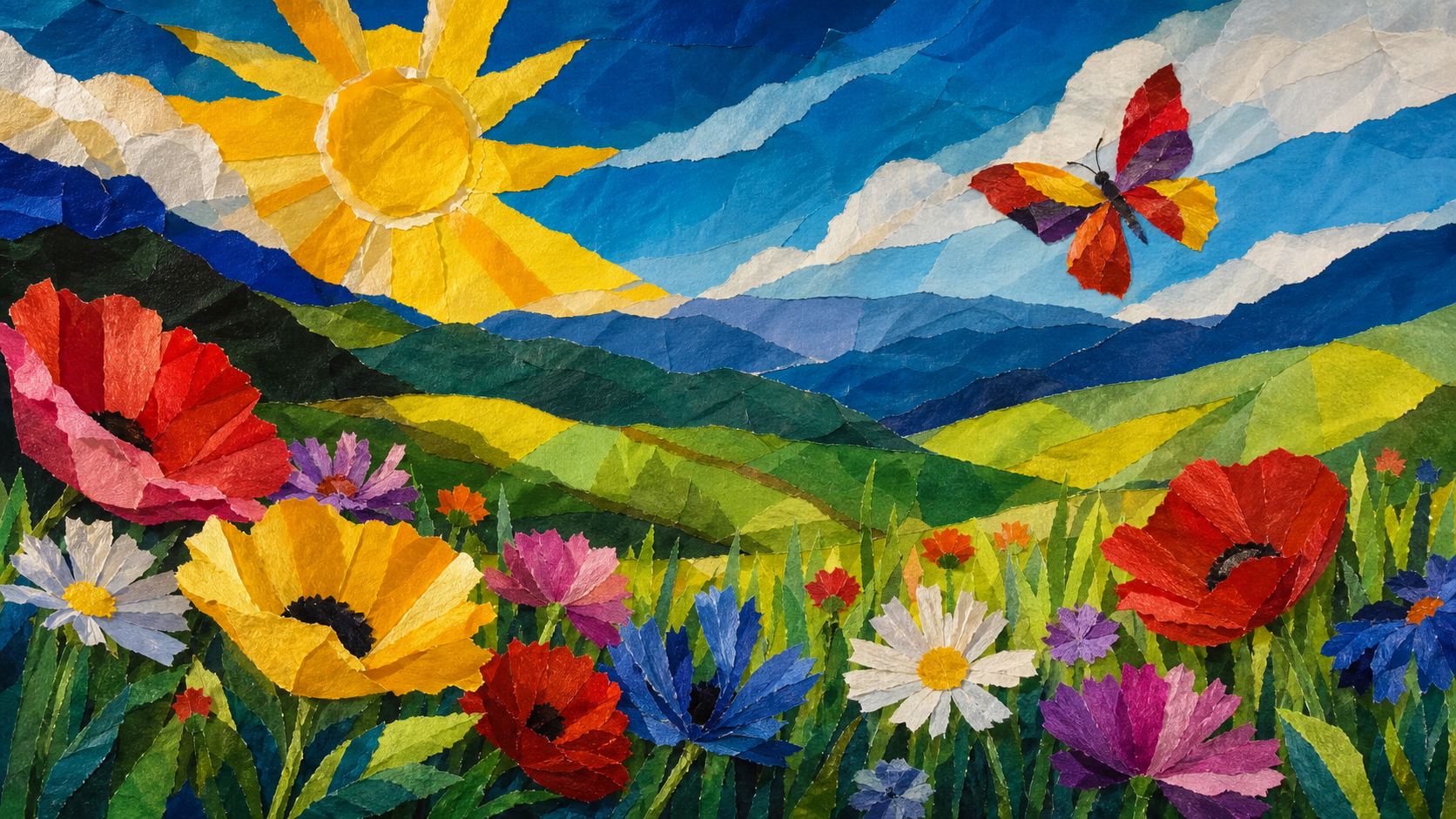
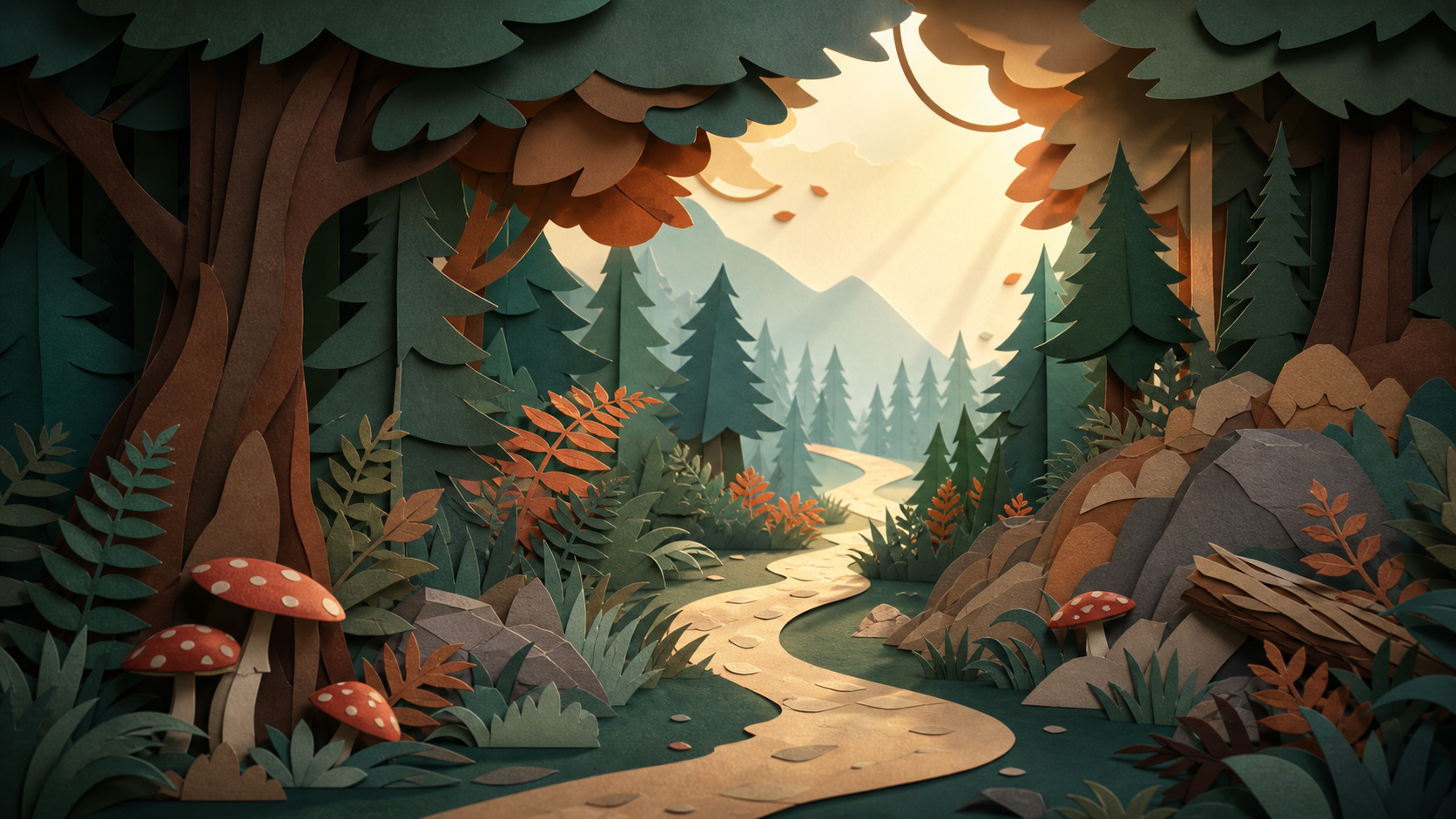
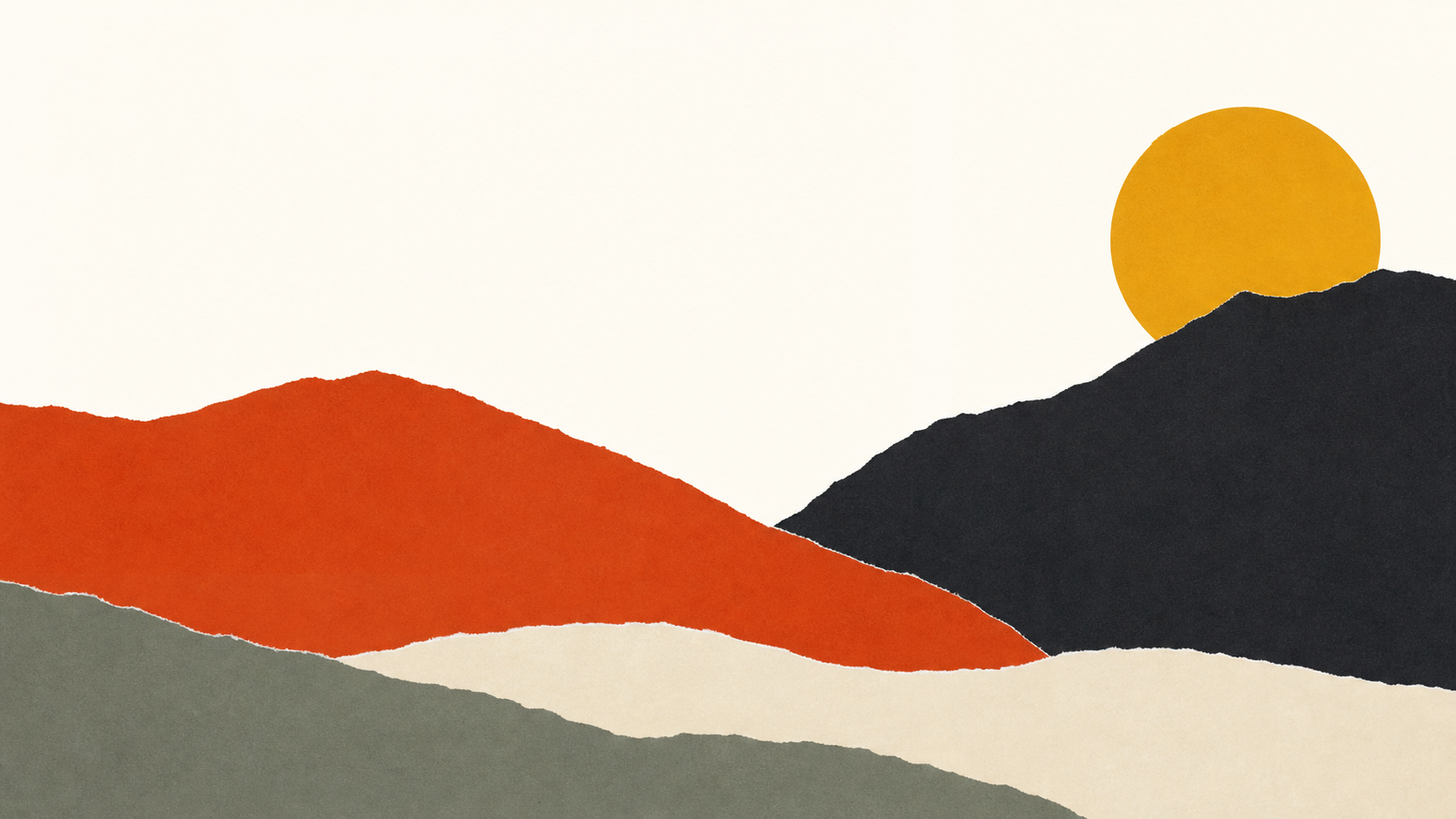
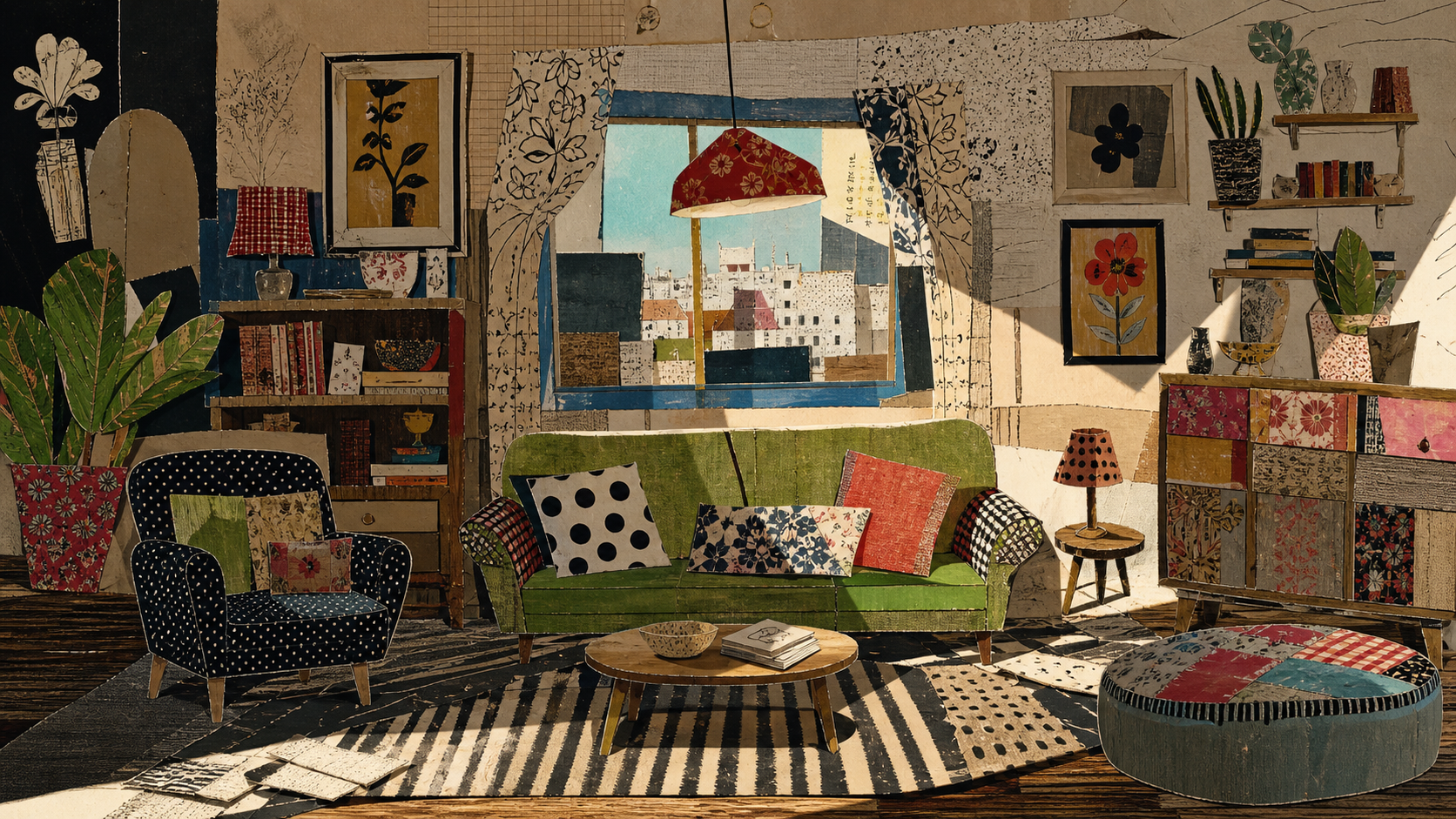
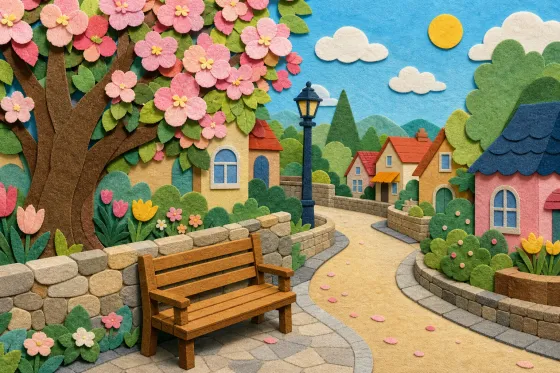
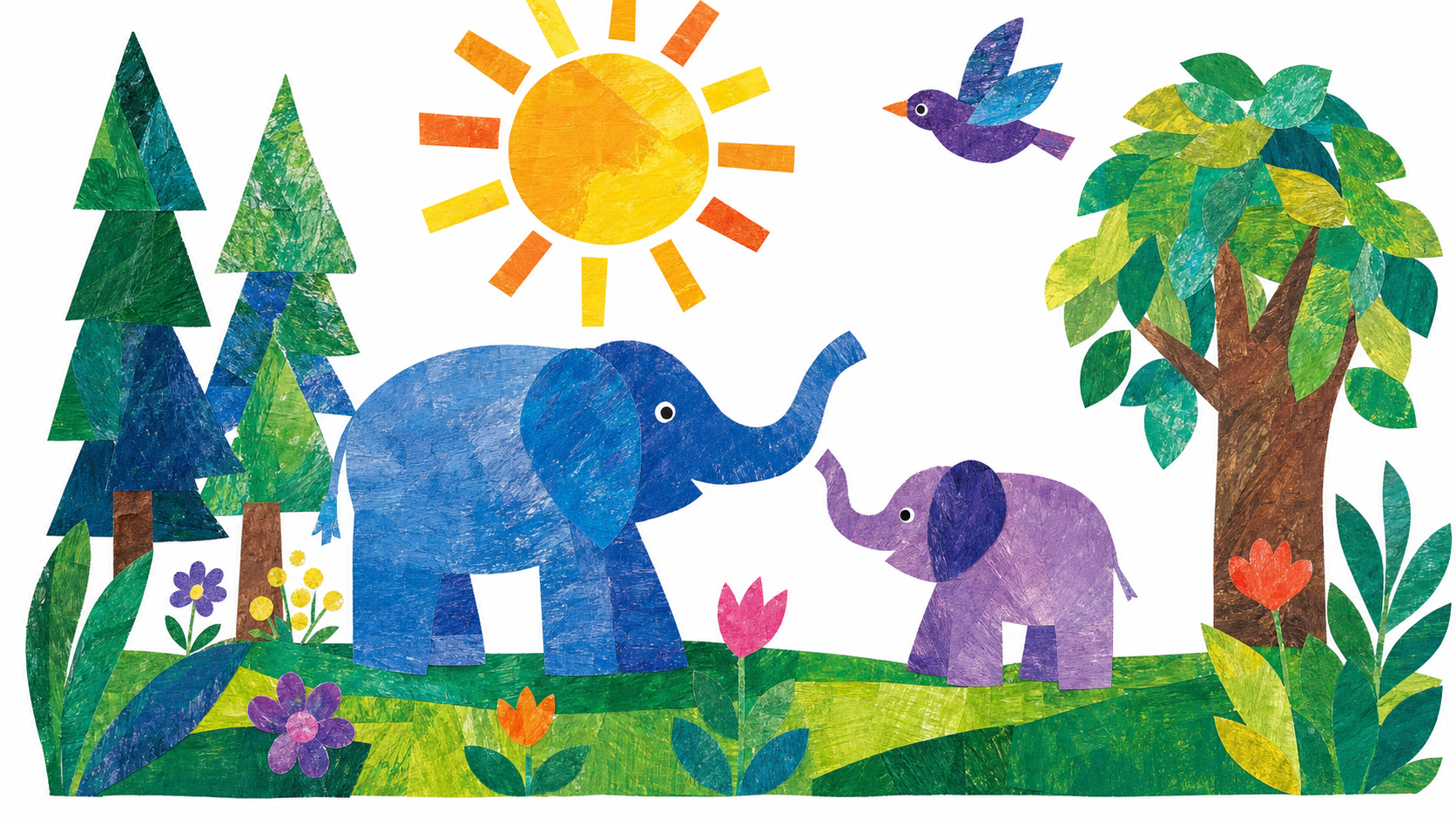
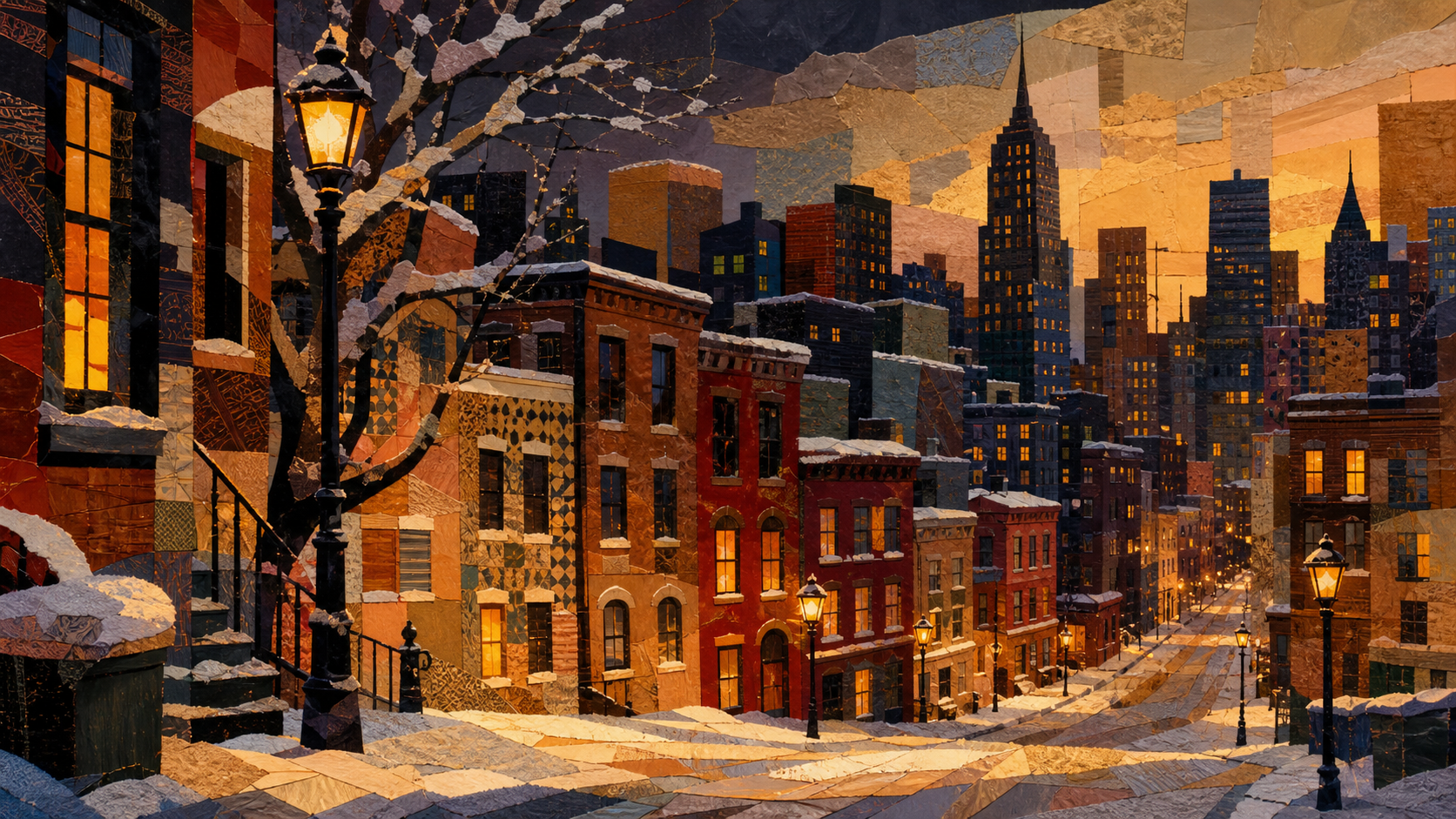
Torn versus cut, flat versus layered, paper versus cloth — those are the differences that change how a collage page reads. Each card shows the style's own reference plate rather than a photograph of somebody else's book.
Read a finished book end to end
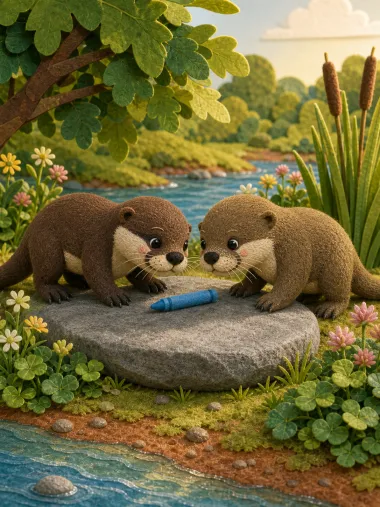
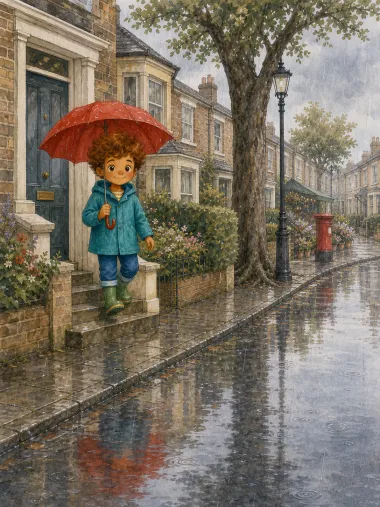
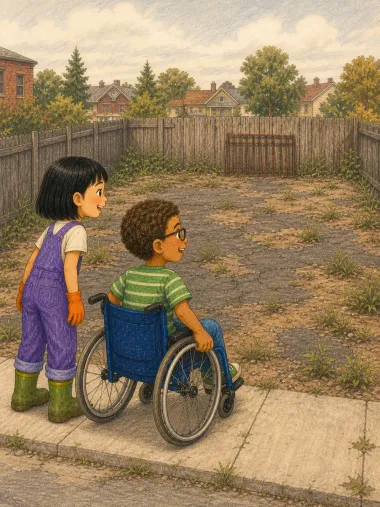
The Crayon That Made More Colors is 10 pages for ages 3-7; The Smallest Umbrella on Maple Street is also 10 pages, and Our Many Ways to Make a Garden reaches ages 4-8. All three are complete books rather than sample spreads. Browse all storybooks →
How it works
- 1Pick a story with strong shapes
Collage works by silhouette. Animals, buildings, weather, food, vehicles and anything with a clear outline come through beautifully; fine facial expression and small print do not. Describe the book in a sentence and the text comes back as real pages you can look at before any art is made.
- 2Decide torn or cut, flat or layered
Torn tissue gives soft feathered edges and a handmade feel. Clean cut-paper gives crisp geometry. Layered card adds shadow and depth. Cloth and felt trade precision for warmth. Each style shows its reference art so this is a look-and-choose decision rather than a guess.
- 3The same texture, page after page
Each character is designed once and reused as the reference for every page, so a collage bear keeps the same paper, the same edges and the same colour blocks throughout. Any single page can be rebuilt without disturbing the others.
Is collage the right medium for this book?
- Styles in this medium
- Seven, spanning torn tissue, clean cut-paper, layered card, scrapbook mixes, painted paper and wool felt
- What it does well
- Bold silhouettes, counting and concept books, cities, weather, food and animals
- What it does less well
- Subtle facial expression and fine detail — the pencil and watercolor mediums carry those better
- Reading age
- Strong from the very youngest upward; the flat shapes and high contrast are what toddlers read most easily
- In print
- One of the mediums that gains the most from paper stock; exports are PDFs (watermark-free when included in your plan or purchased product)
- Honest limit
- These are digital illustrations rendering the collage idiom, not scans of real cut paper
The seven styles and their descriptions come out of the ReadKidz catalog through a sync script, so a retired collage style drops off this page instead of remaining as a promise.
Frequently asked questions
Is this actually cut paper, or a texture effect?
It is a digital illustration made in the collage idiom — separate shapes with visible edges, layered depth, paper and cloth grain — and not a scan of physical cut paper. We say so plainly because the appeal of collage is its physicality, and a page that implied real scanned paper would be selling something else.
How do the seven styles differ from each other?
Along three axes. Edge: torn and feathered versus cleanly cut. Depth: flat shapes sitting side by side versus stacked layers casting soft shadow. Material: printed and painted paper versus cloth, stitching and wool felt. The reference plate beside each style shows all three at once, which is faster than any description.
What kinds of story suit a collage book?
Anything that can be told in silhouettes. Concept and counting books, seasons and weather, food, transport, city scenes, and animal stories all work because each idea can be one clean shape. Stories that hang on a character's changing expression are better served by a drawn or painted medium.
Will the collage look consistent from page to page?
Yes. Each character is designed once and that design becomes the reference for every illustration, so the paper, edges and colour blocks stay the same throughout instead of the book looking like seven different craft projects.
Does collage print well?
It is arguably the medium that benefits most from print. Texture and layered edges that look flat on a phone screen read as depth on paper stock. Export is a PDF (watermark-free when included in your plan or purchased product) suitable for a printer or self-publishing.
Are these styles modelled on a specific illustrator's collage work?
No. Each one is named and described by its technique — torn tissue, layered cut-paper, painted paper, felt — and none is offered as a named illustrator's or studio's style. Collage has a strong association with a handful of famous picture books, so it is worth stating: these are descriptions of a craft, not imitations of a person.
Who owns the finished book?
You do. Under the ReadKidz Terms of Service the work you create is assigned to you and watermark-free export is available when included in your plan or purchased product, so it can be read at home, given away, self-published or sold.
See your story built out of paper
Describe the book you want. Choose the collage style once the story exists, look at its reference art, and check the cost before anything is charged.