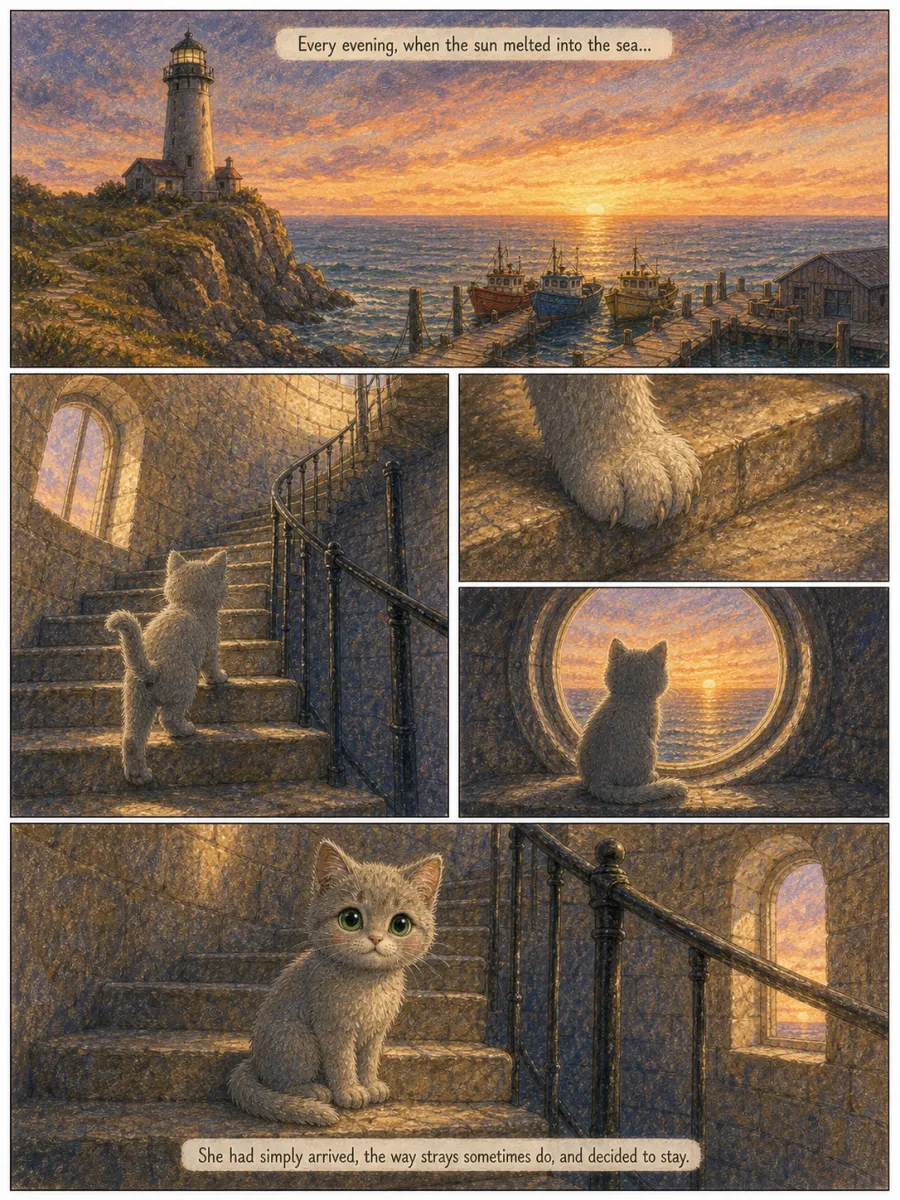
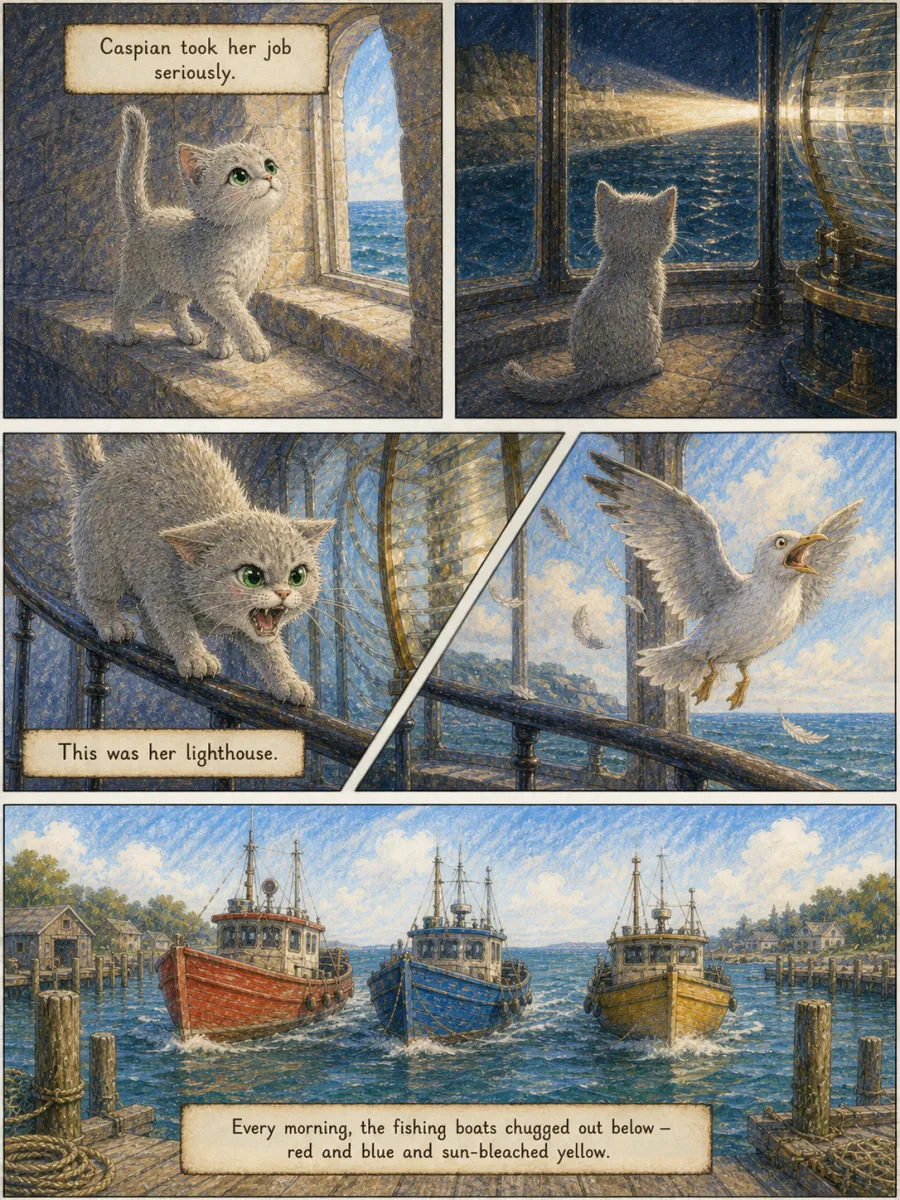
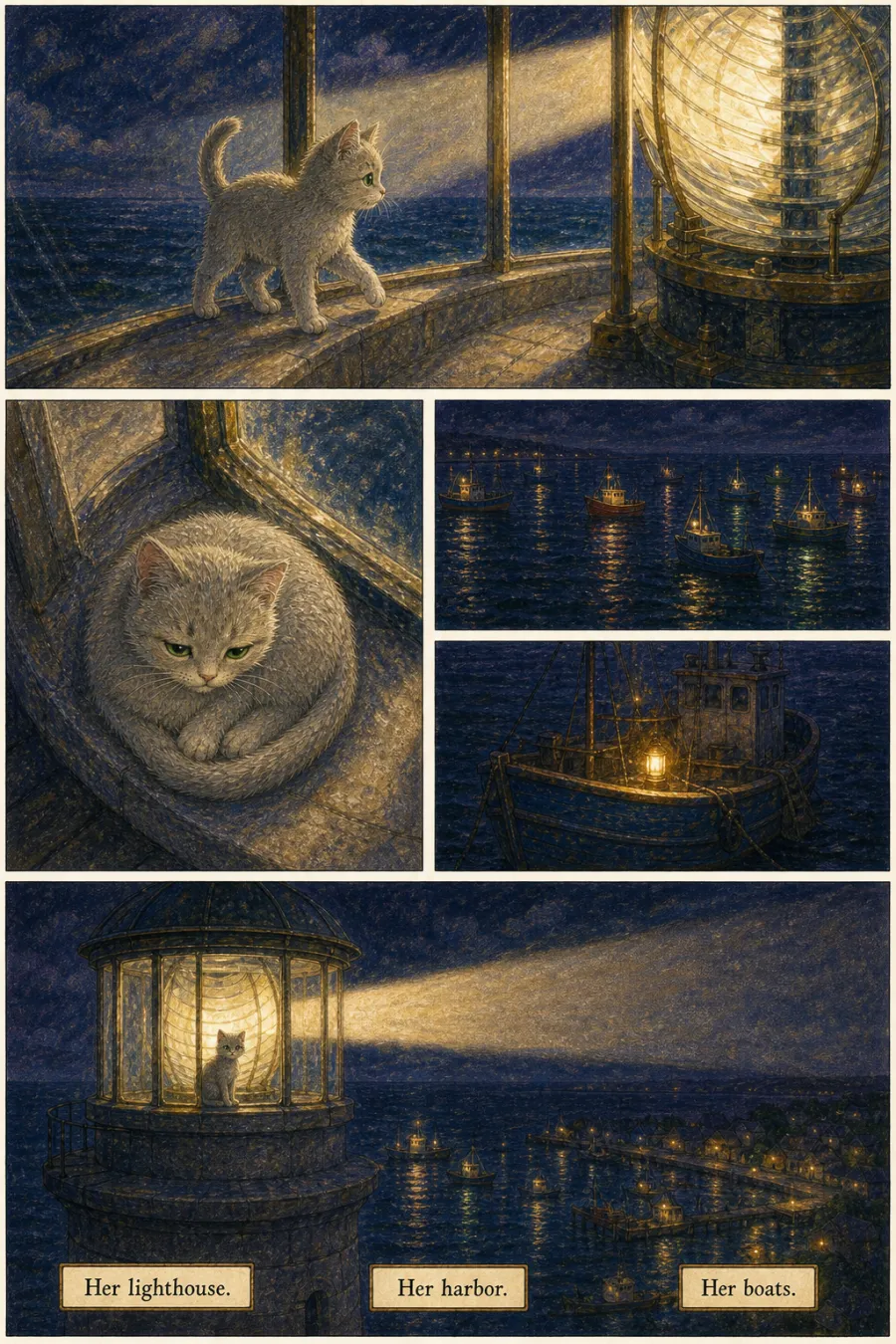
Caspian took her job seriously. She patrolled each window ledge, her tail held high like a flag. She watched the beam sweep across the dark water. She hissed at seagulls who landed on the railing without permission. This was her lighthouse. Nobody else's.
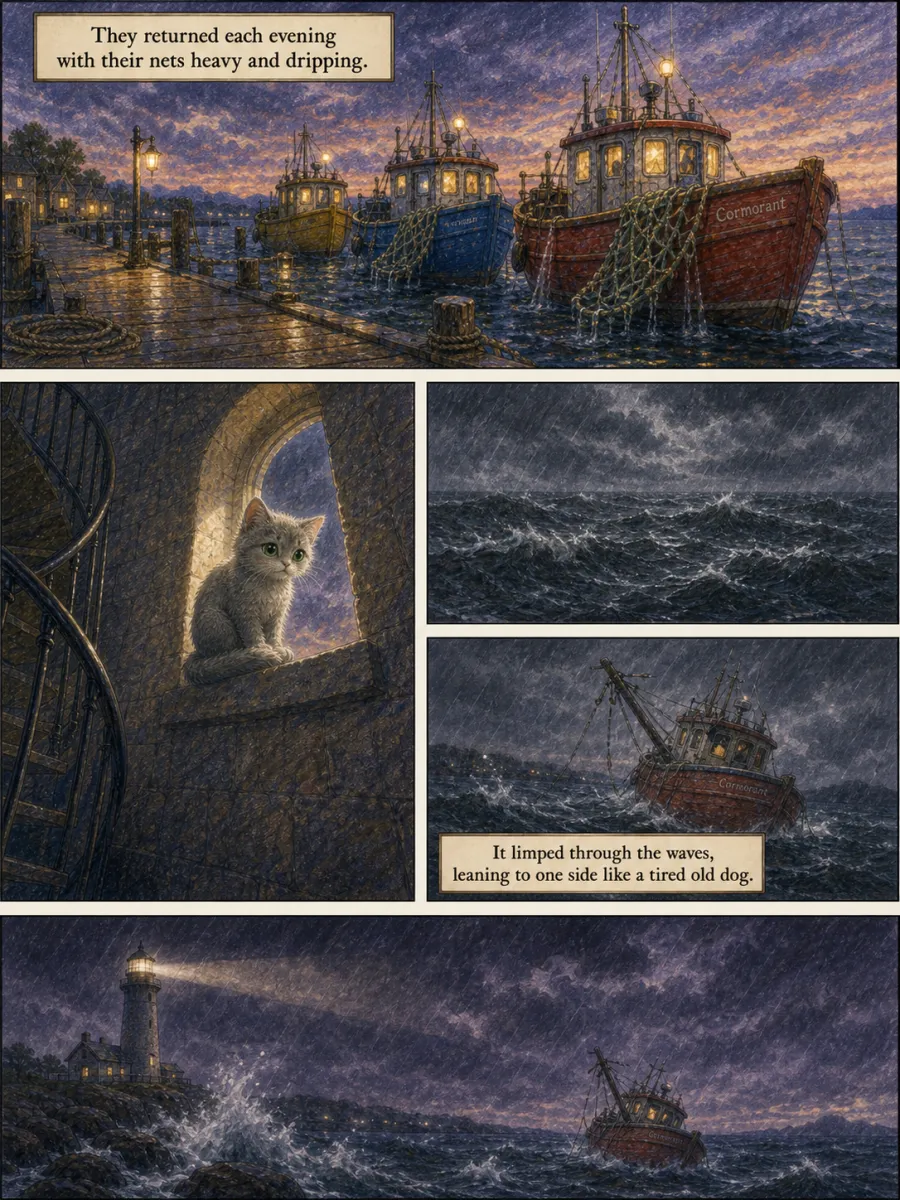
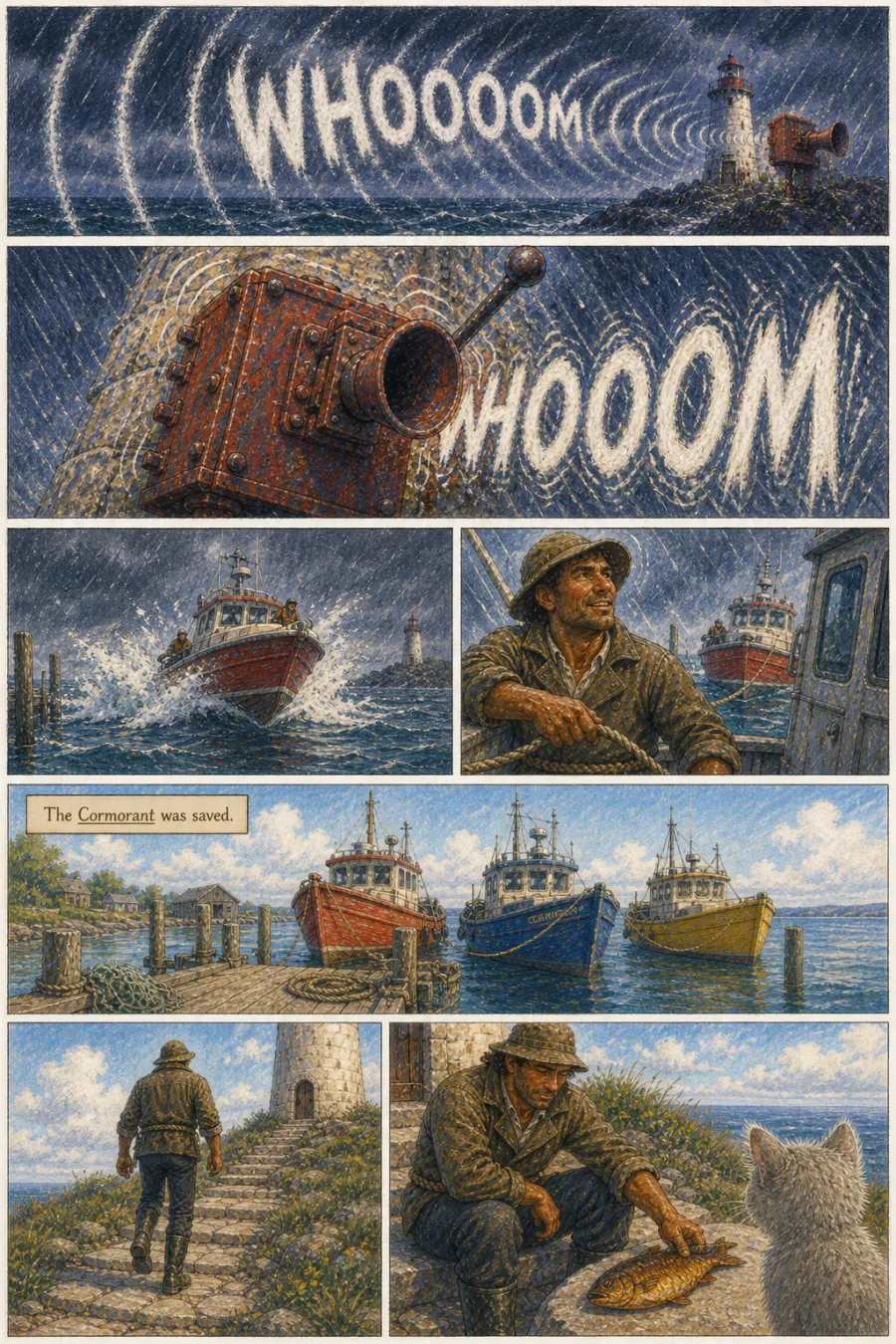
Every morning, the fishing boats chugged out of the harbor below — wide wooden hulls painted red and blue and sun-bleached yellow.
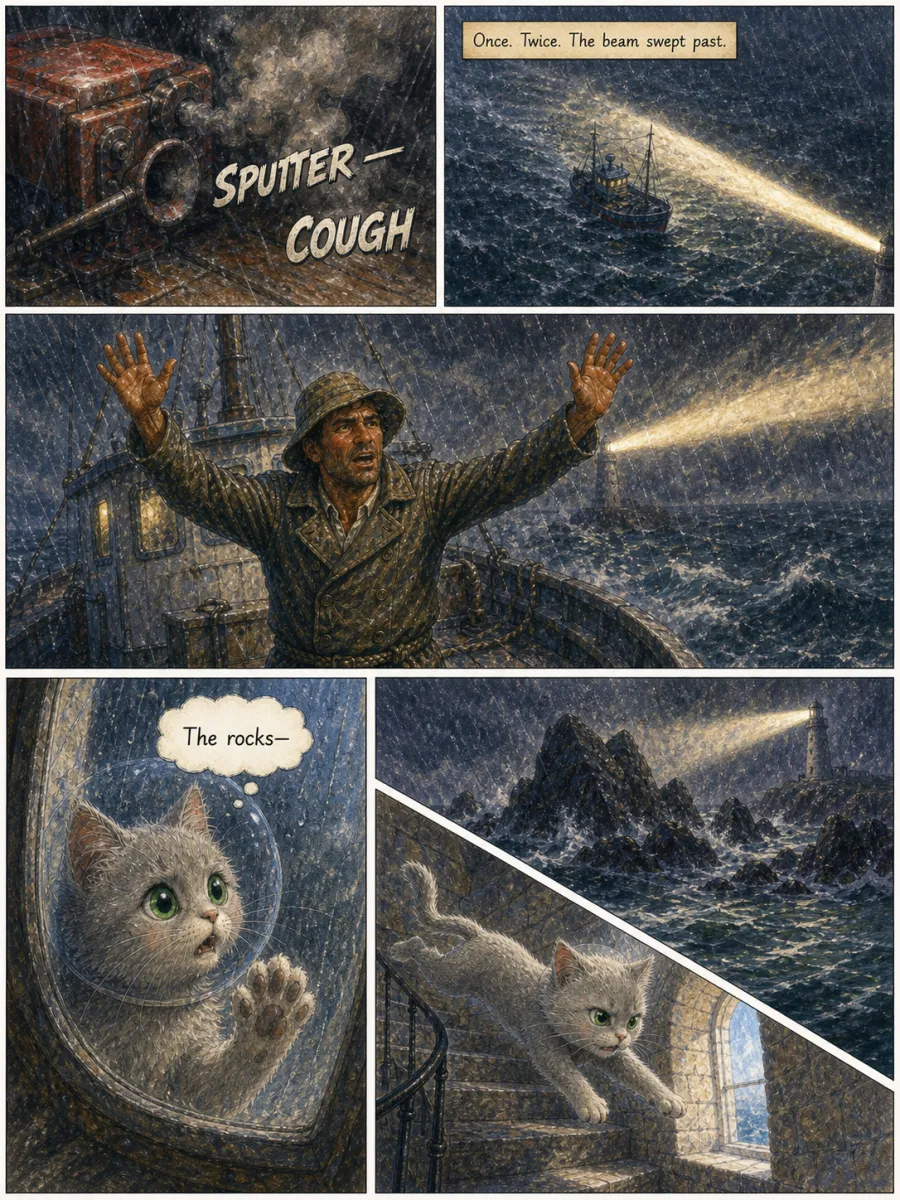
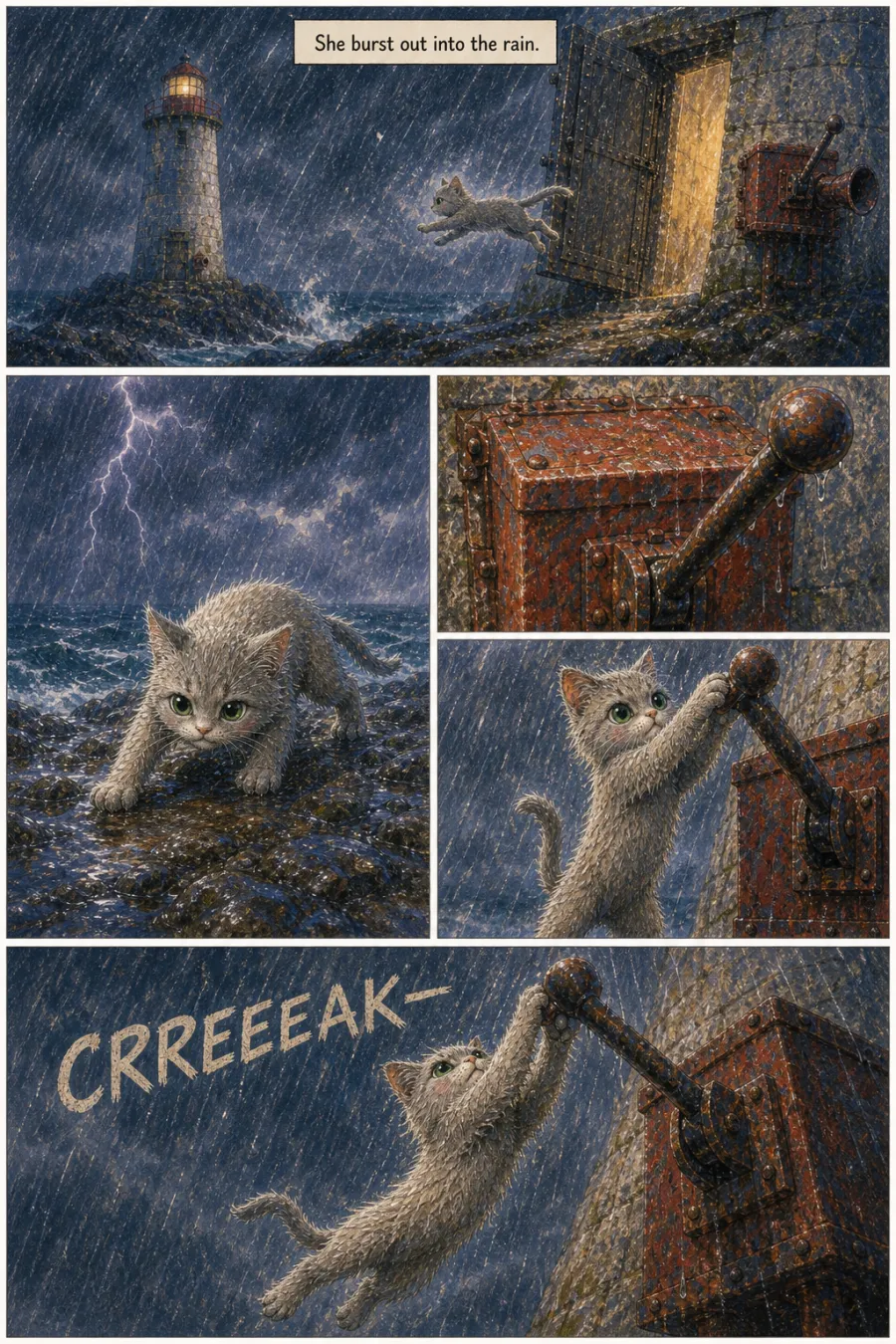
She burst out the iron door at the bottom and scrambled across the wet stones to the signal box — a rusted red lever she had seen the old lighthouse keeper pull, years ago, before he left.
She hooked both paws around it and pulled with every bit of her small, bony weight.
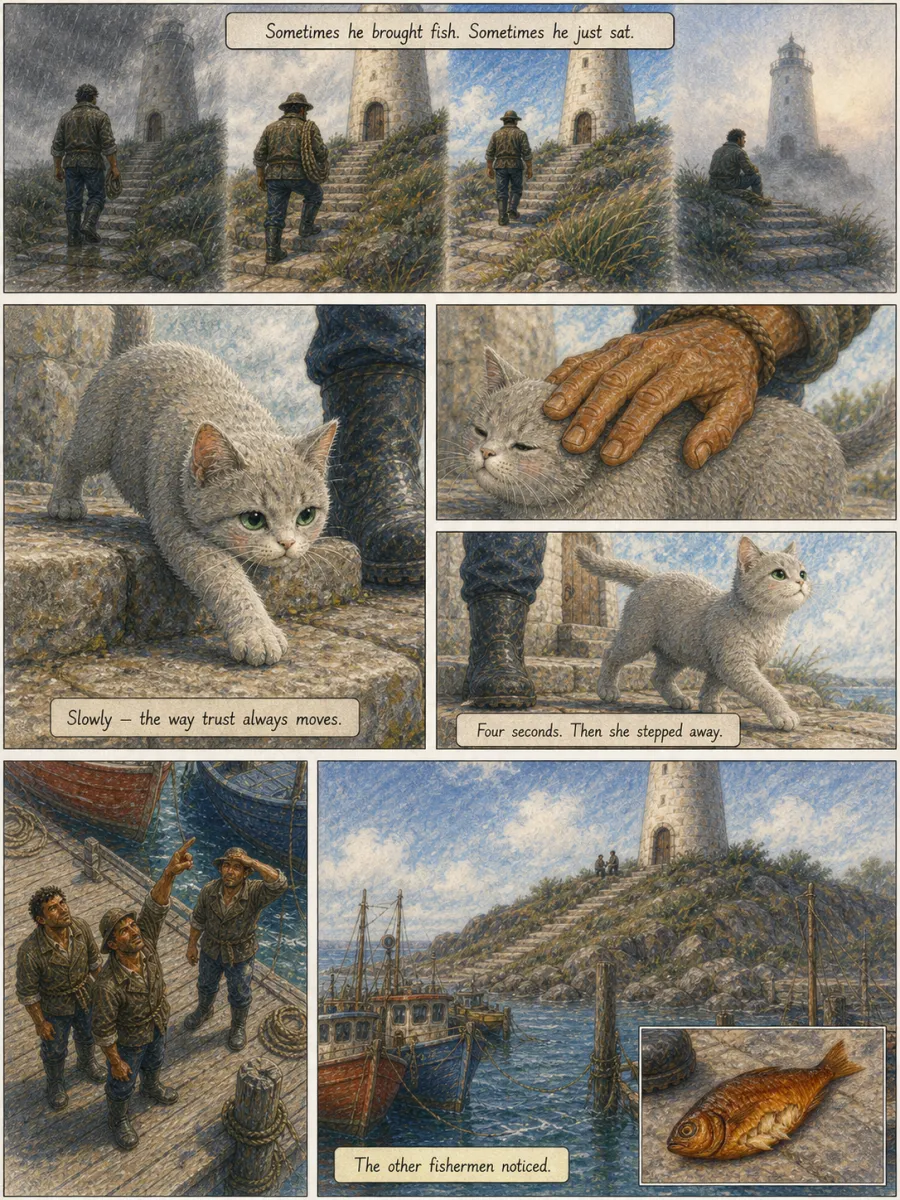
Slowly — the way trust always moves — Caspian edged closer, then closer, until one morning she sat right beside his boot and let his rough hand rest on her back for exactly four seconds before she stepped away.
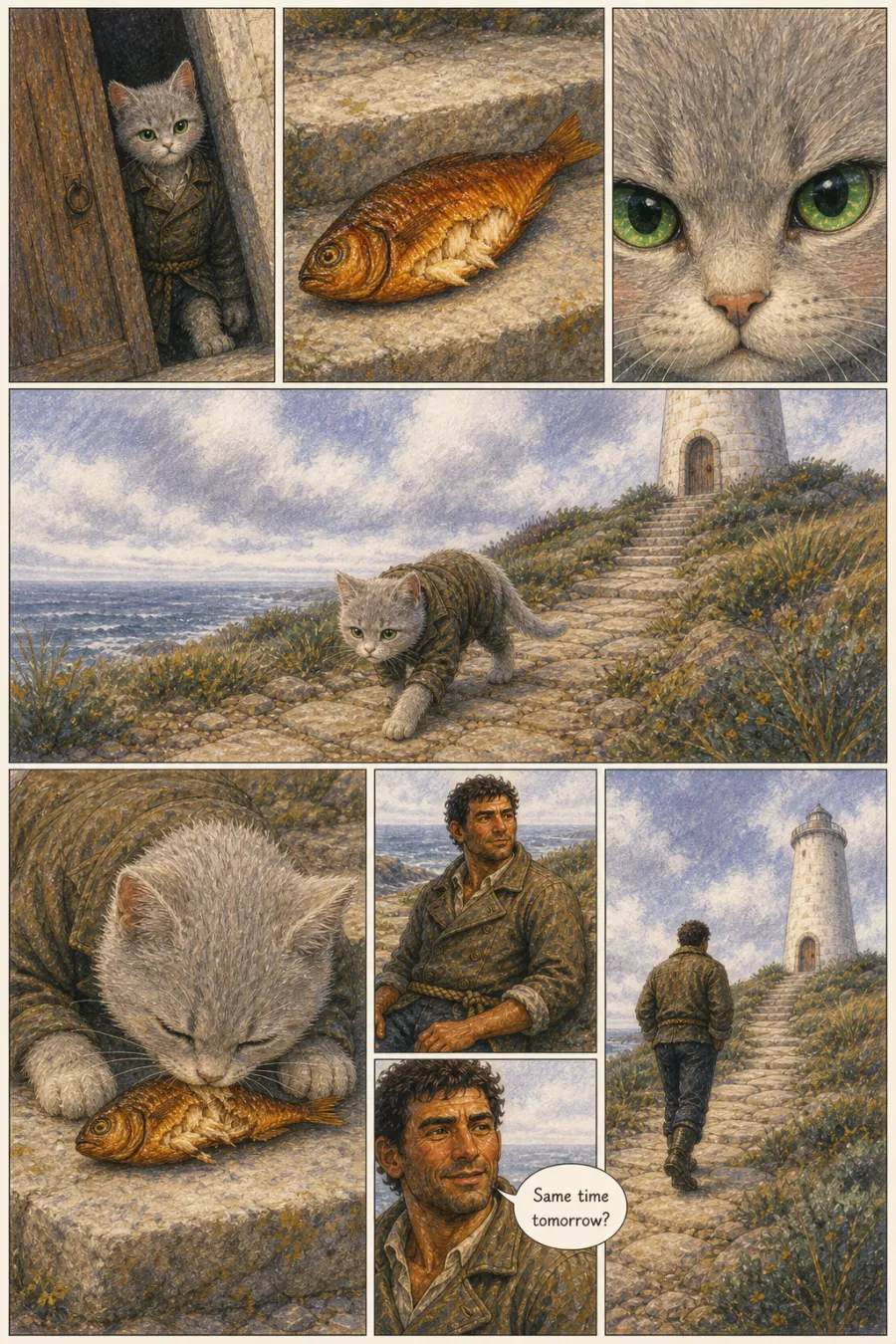
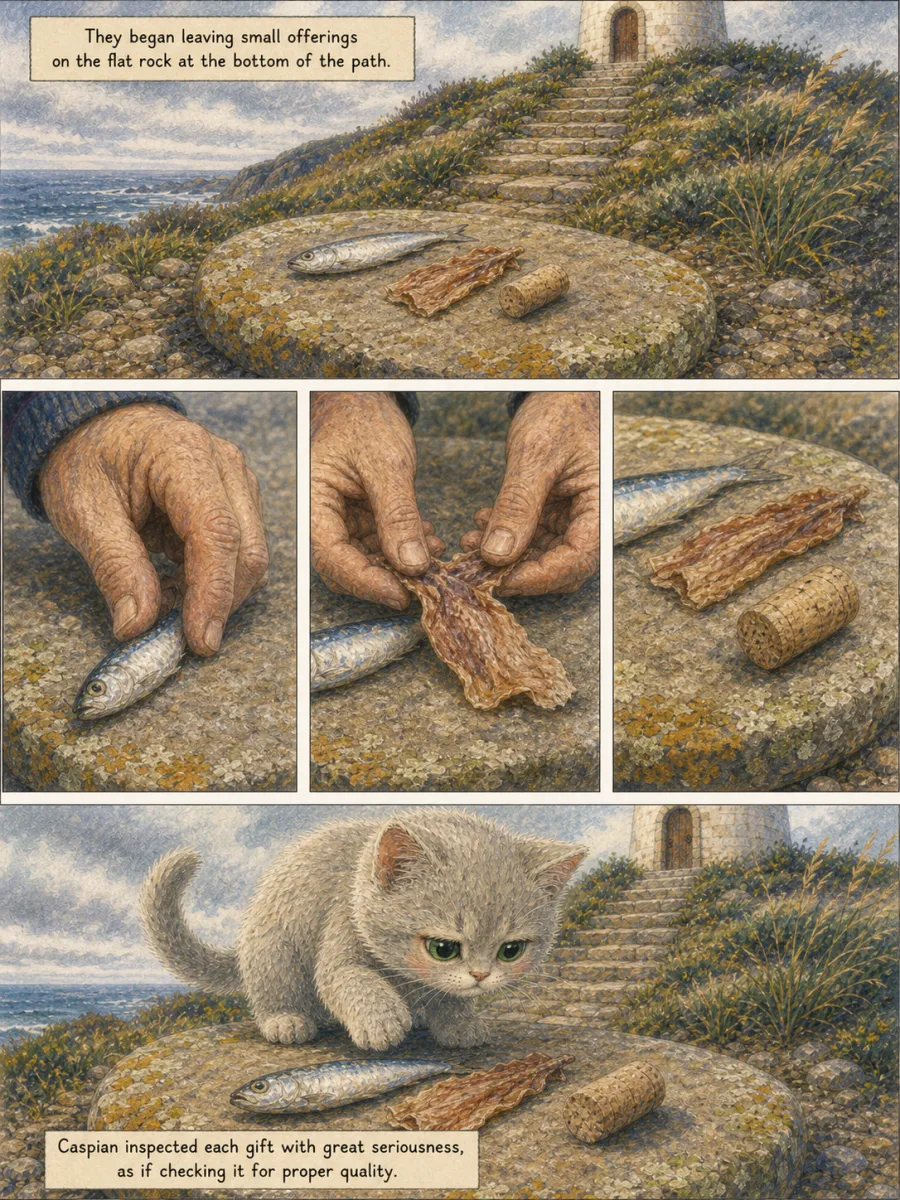
They began stopping at the bottom of the path, leaving small offerings on the flat rock there: a silver sardine, a scrap of dried squid, a cork for batting around.
Caspian inspected each gift with great seriousness, as if checking it for proper quality.
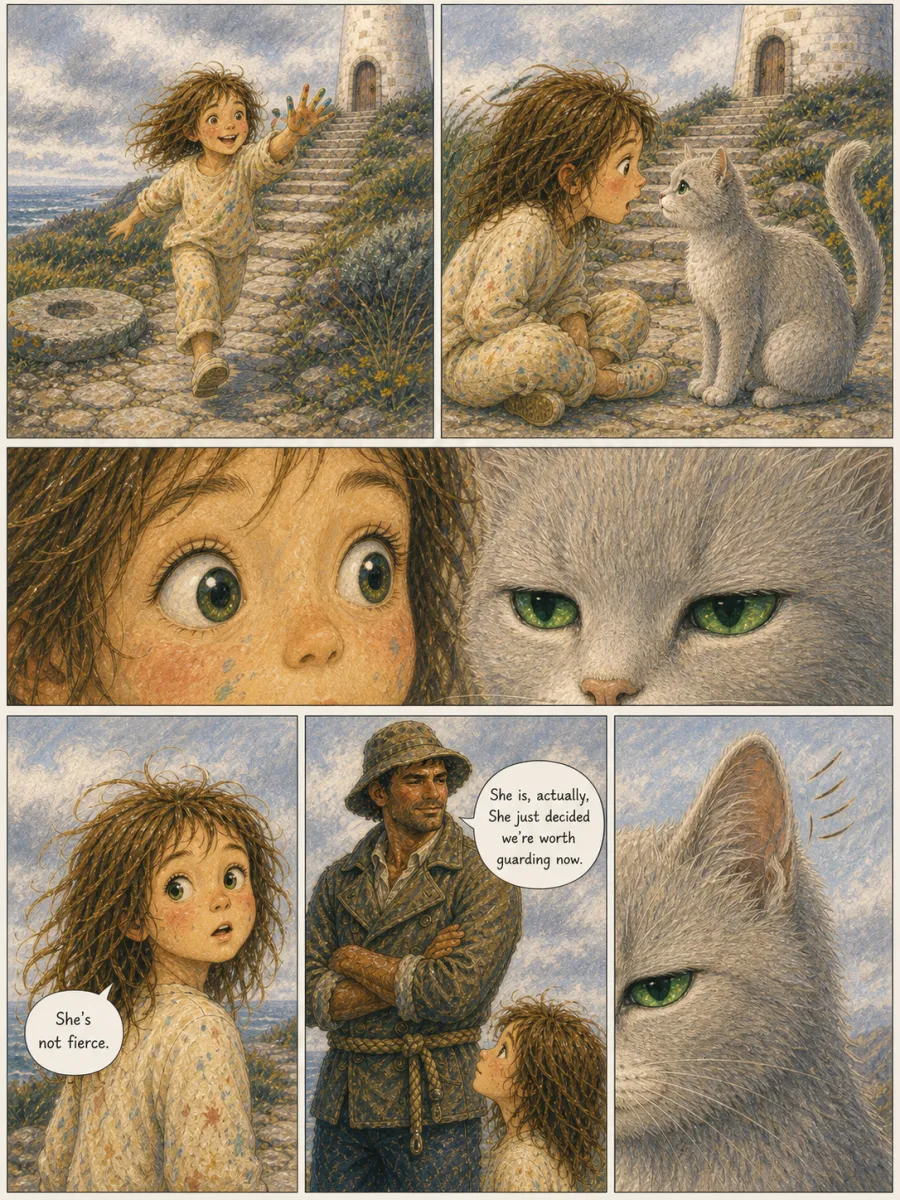
One afternoon a child from the harbor — Darro's daughter, a girl called Wren, with tangled hair and paint-stained fingers — ran up the path and sat cross-legged in front of Caspian, nose to nose.
"She's not fierce," Wren said, surprised.
"She is, actually," said Darro from behind her. "She just decided we're worth guarding now."
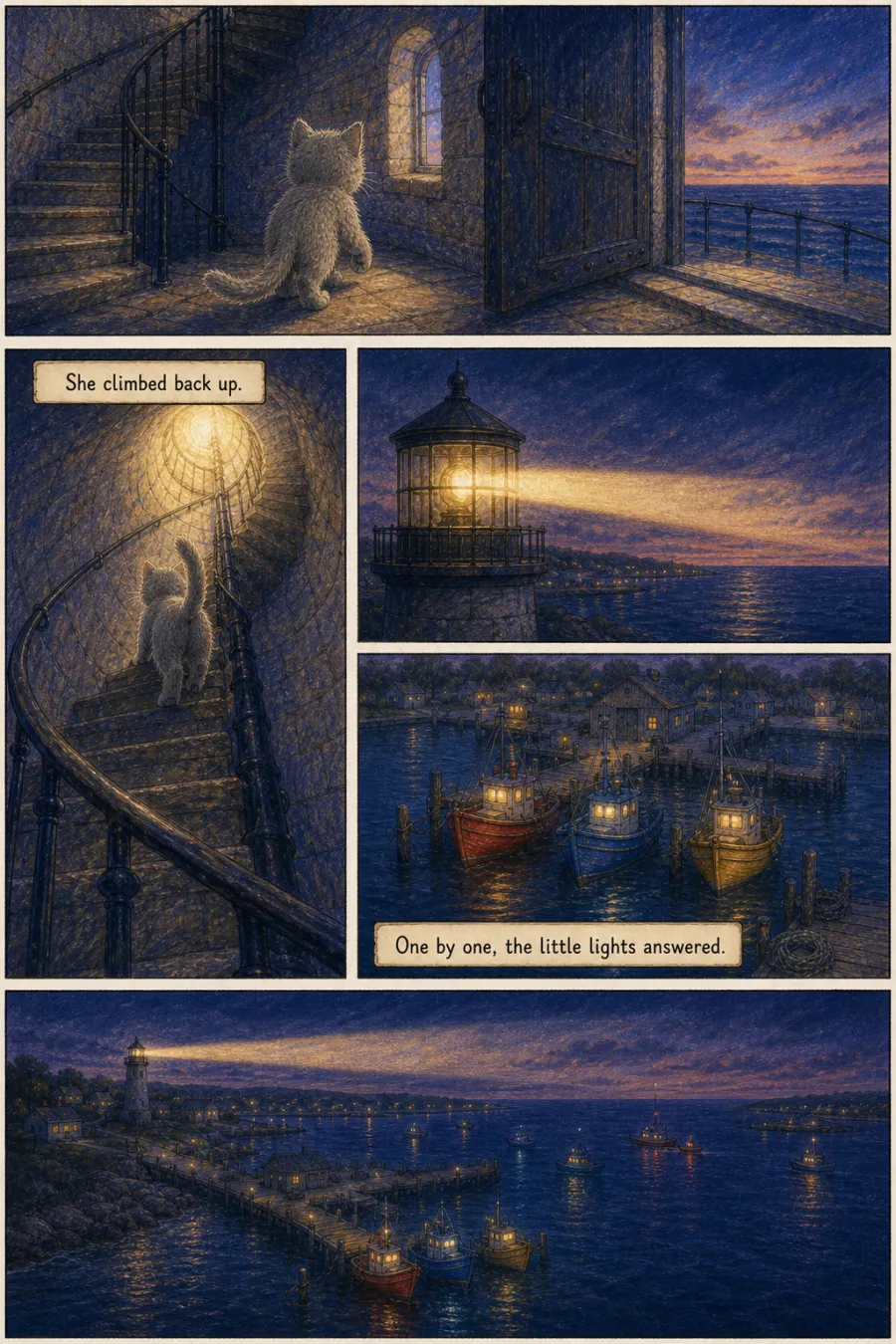
She turned and climbed back up her spiral stairs to the lantern room, where the beam was already beginning its long, slow circle across the evening water.
Below, the red and blue and yellow boats rocked gently in the harbor.
Their lights blinked on, one by one, like small answers to her own great light.
She settled onto the window ledge and curled her tail around her paws. She watched all of them — every boat, every bobbing lamp — with her usual green-eyed seriousness.