


Make a Children's Book About Family
A children's book about family is only right when it fits the family reading it — two homes, three generations, a grandparent raising a grandchild, people who arrived late and stayed. Readkidz writes and illustrates a complete picture book built around one object that can hold all of that, so the story bends to your family instead of asking your family to match the story.
Made with Readkidz
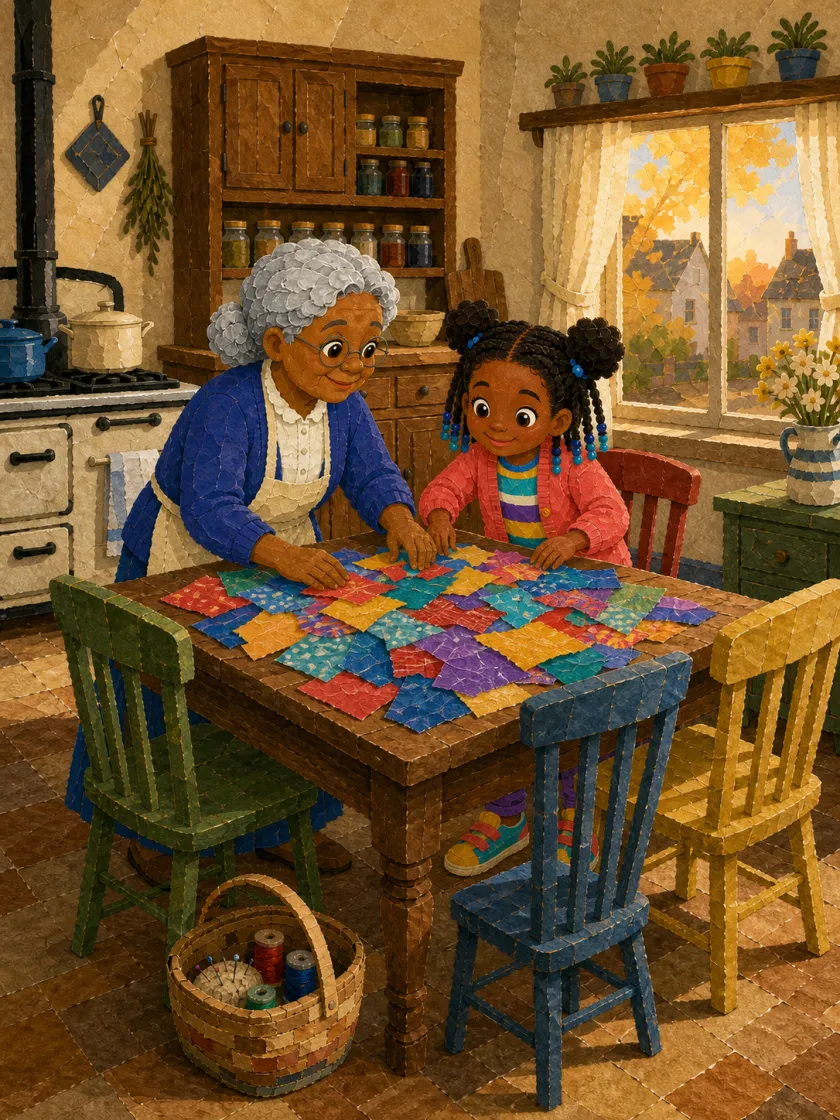
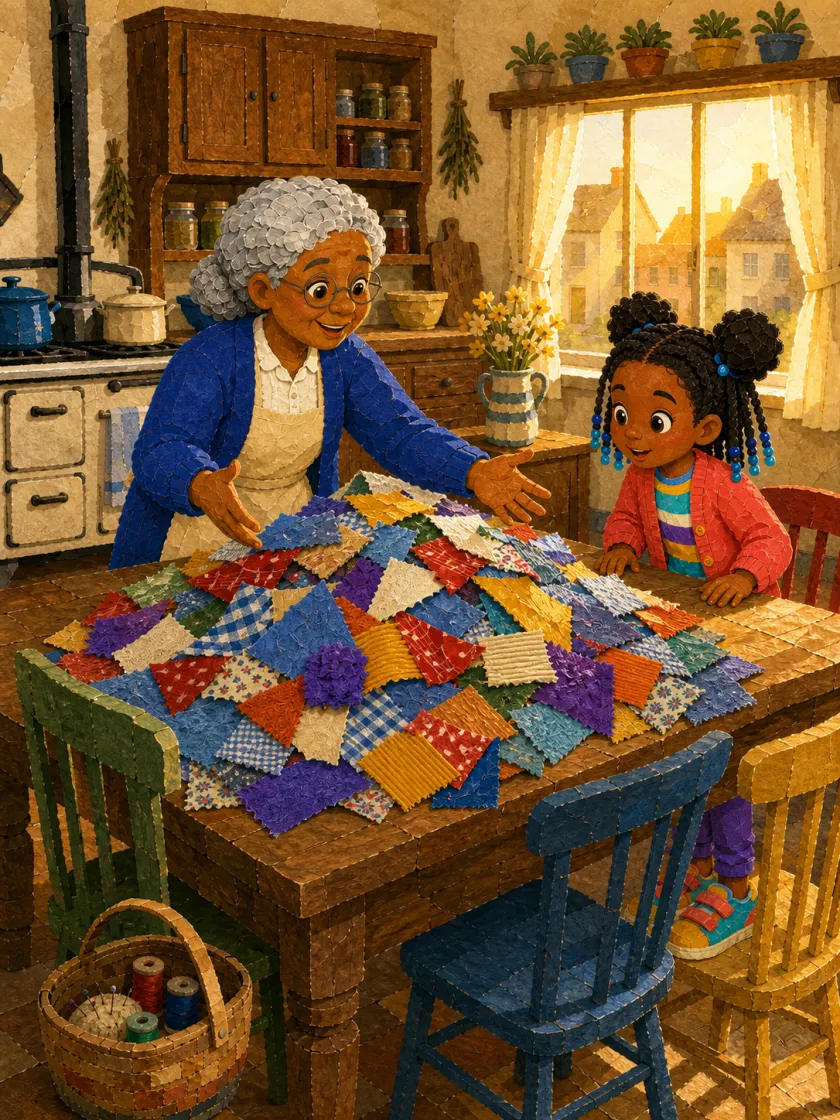
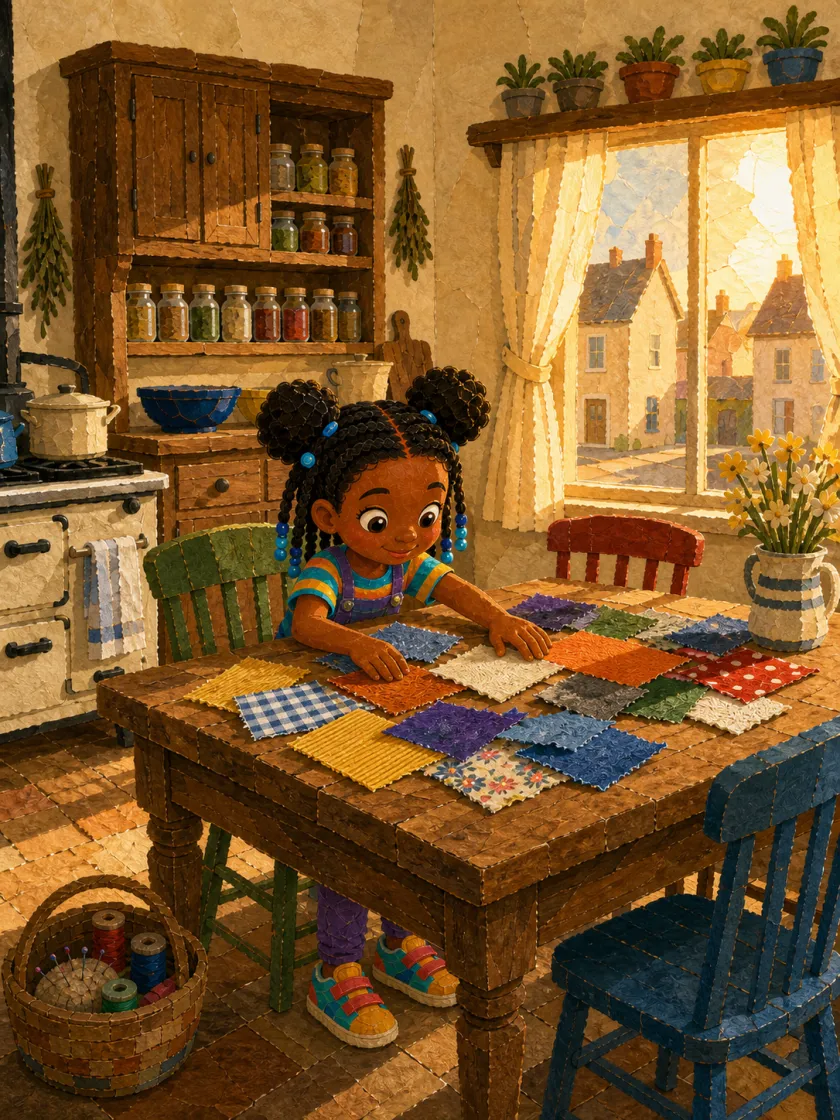
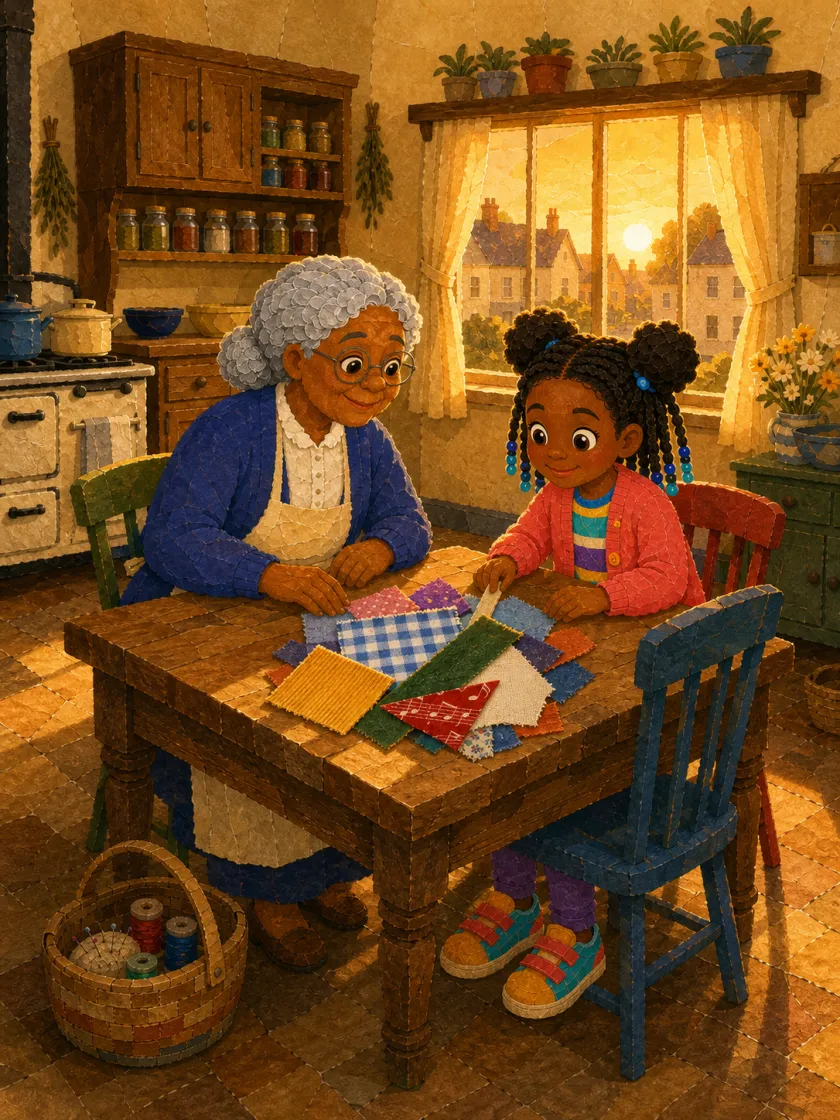
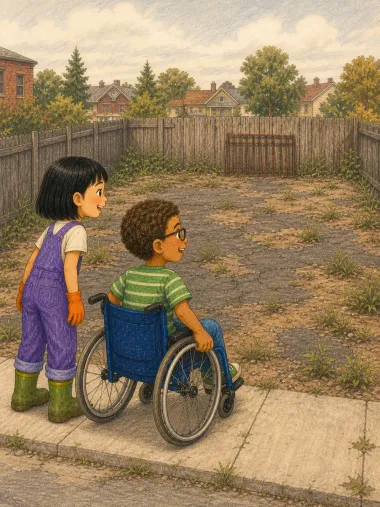
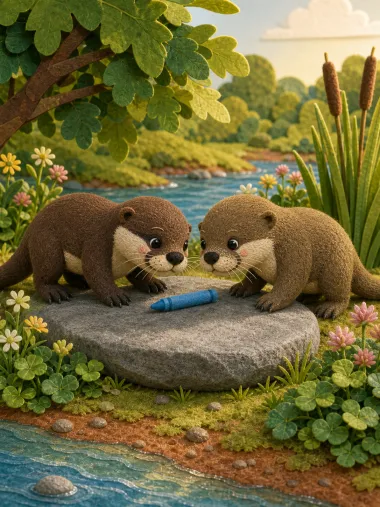
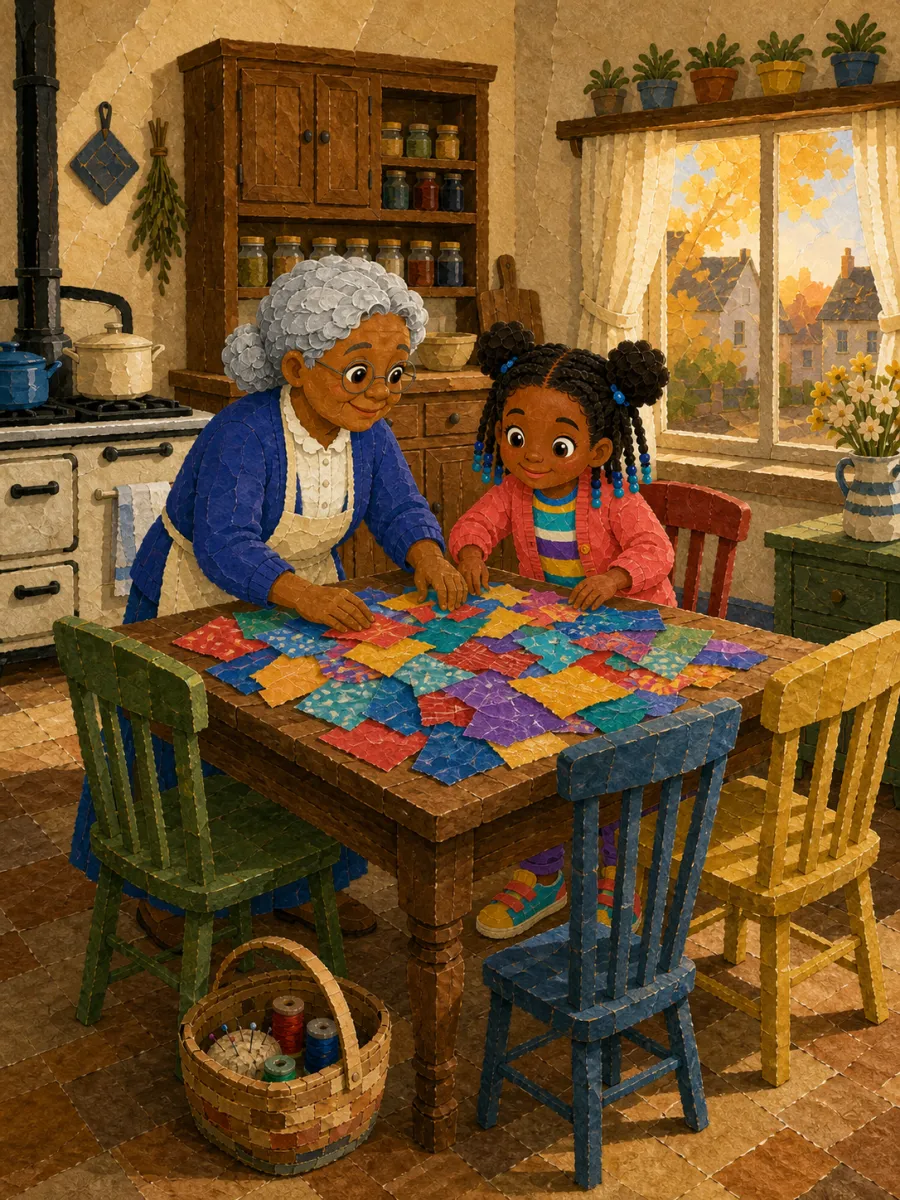
Three pages from “The Quilt of All Our Homes.” Every scrap in the quilt came from somewhere — which is how the book counts a family without listing one.
Complete stories made on Readkidz
Every one is a finished book you can read page by page — not a preview. Browse all storybooks →
How it works
- 1Say who is actually in your family
Not the version that fits on a form. Two houses, a stepparent, an aunt who lives downstairs, a dog who counts. The more precisely you describe it, the less the book has to fall back on a default family nobody actually has.
- 2Find the object that holds them
A quilt, a recipe, a table, a song, a route walked every Sunday. One object gives a family story a spine — each person adds a piece, and the object ends up being the family portrait without anyone needing to line up for it.
- 3Let it stay unfinished
The strongest ending for a family book is one that is still going: the quilt gets bigger, the recipe gets passed on. Read the last spread and if it closes too firmly, ask for one that leaves room — families do not have endings.
Is this what you were looking for?
- What you get
- 10 illustrated pages plus a cover
- Written for
- Ages 3-7
- How long
- One sitting — not weeks
- Rights
- Original story — nothing is retold from another book
Frequently asked questions
Our family doesn't look like the ones in picture books.
That is the reason to make one. Describe the actual arrangement — who lives where, who does bedtime, who visits on Saturdays — and it is drawn that way on every page, consistently. Nothing in the process assumes a shape your family has to fit into.
Can we include someone who has died?
Yes, and the object-based structure is designed for it: a piece of their shirt in the quilt, their handwriting on the recipe card. Say how present you want them — mentioned once, or in every scene — and say the tone you want, and the pacing is built to match.
Can I use our real names?
Yes. Real names, ages, the order the children come in, the name your child calls their grandmother. These are the details that make a family book get kept rather than read once.
Can it be for a new sibling or a move?
Those are two of the most common versions. Describe the change and where your child sits inside it, and the story can end with the family bigger, or in a new place, without pretending the change was easy.
Can I read a finished one first?
Yes. The link below opens the complete eleven-page The Quilt of All Our Homes, with the caregiver notes and the questions at the back.
Will mine come out like that one?
No. The idea of one object carrying a family transfers; the quilt, the sewing room and the people do not. Your family, your object, your ending — no reused sentences.
Make a book about your family
Say who is in your family and what object holds them together. You get every page drawn, with the price shown up front.
Create new original characters, wording, and visual designs. Do not request protected characters, logos, or close imitation of a living artist’s signature style.