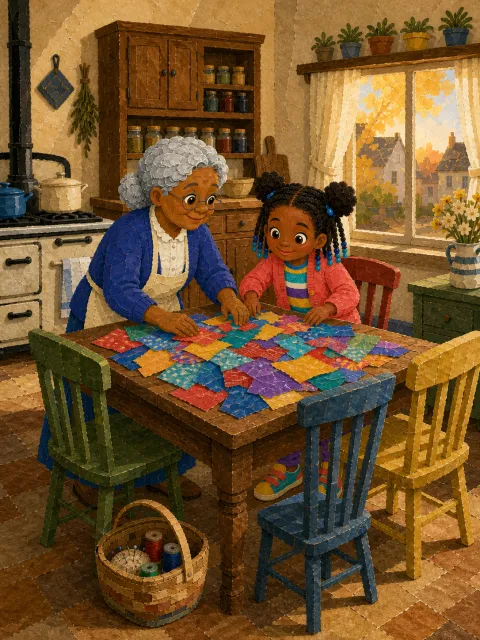
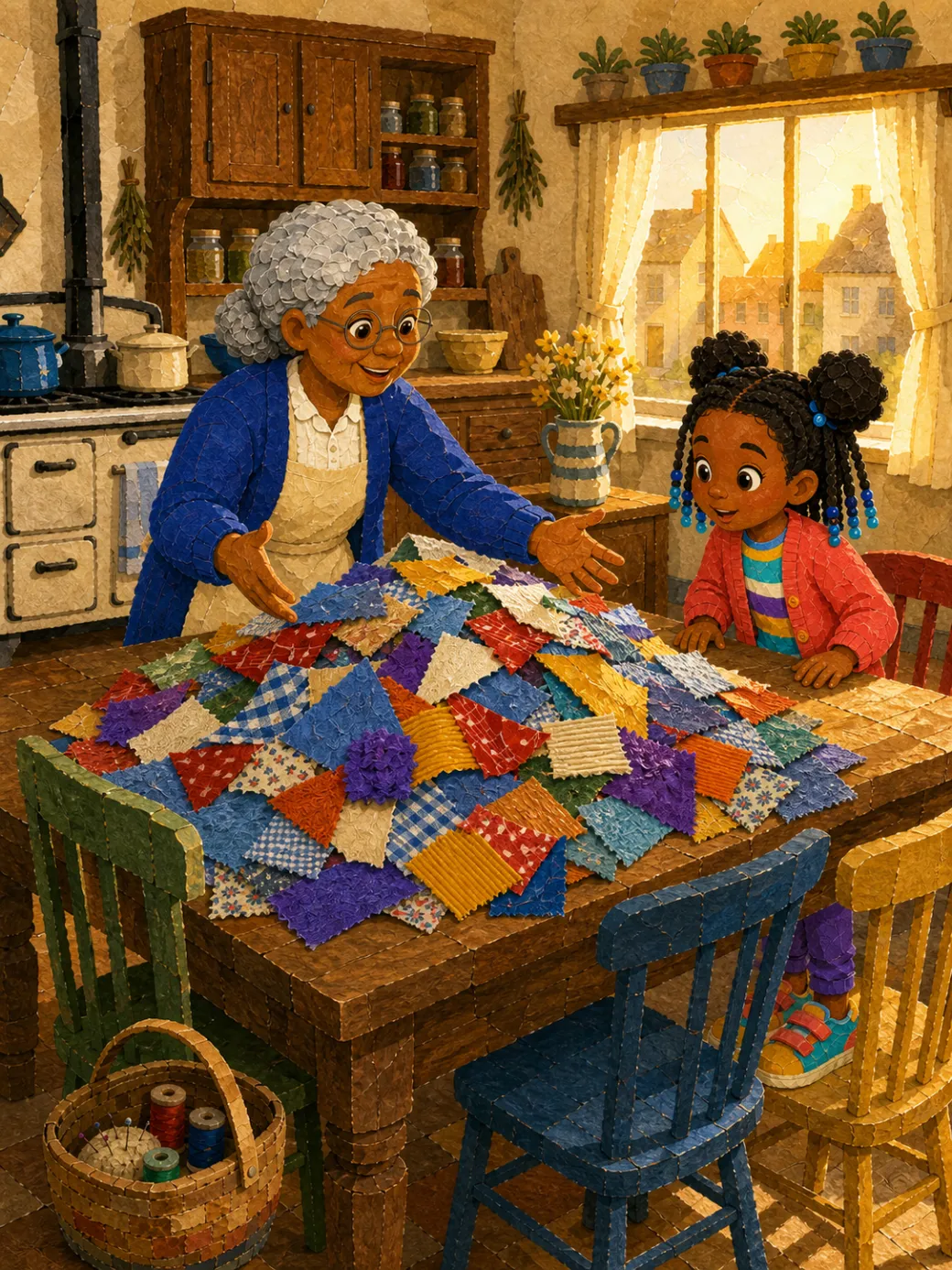
1Grandma Jo spread a mountain of fabric scraps across the kitchen table. There were squares and triangles, striped pieces and dotted ones, pieces soft as a whisper and pieces stiff as a paper bag. "Every one of these," said Grandma Jo, "came from somewhere we love."
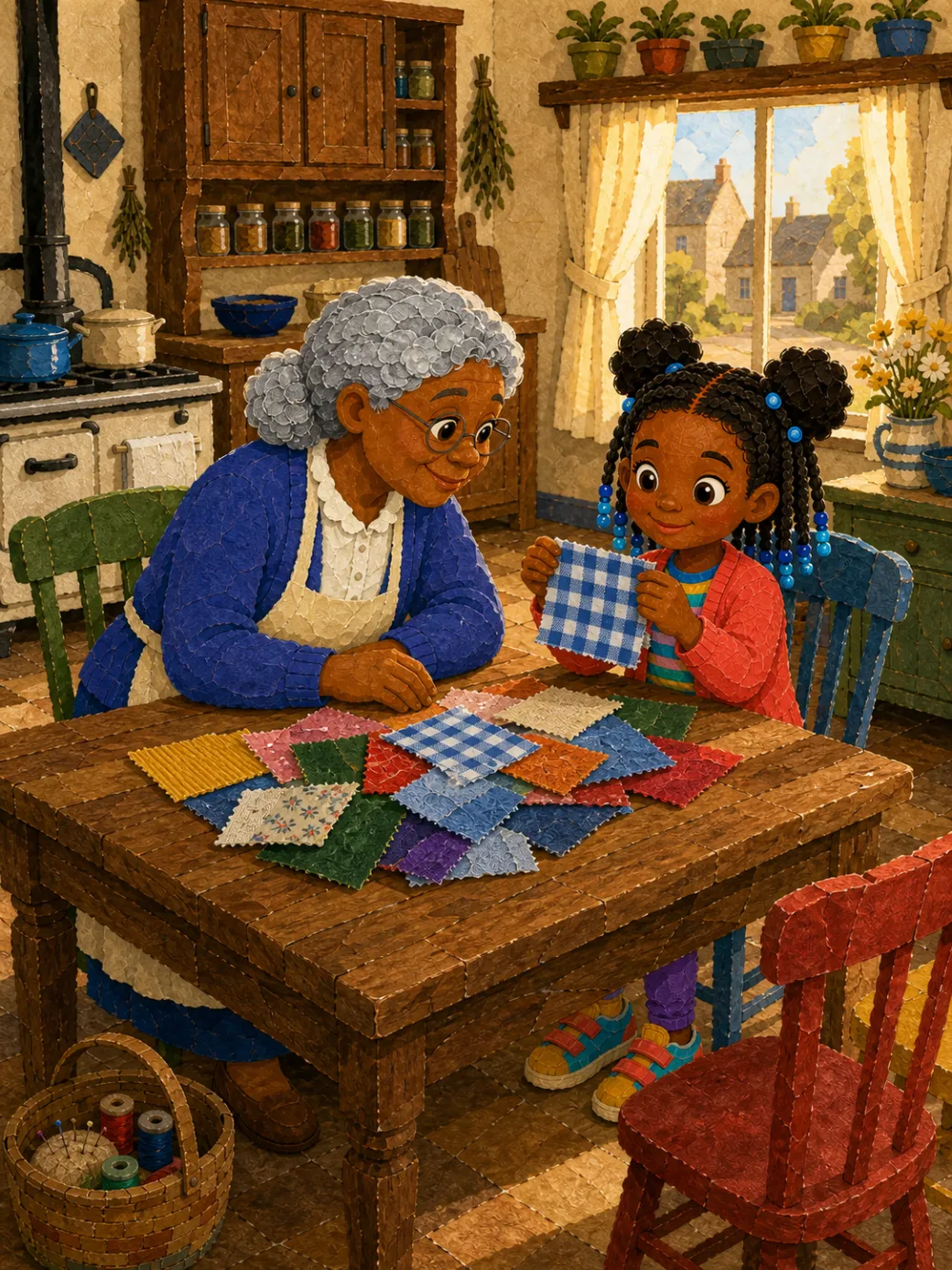
2Amara picked up a square of blue-and-white checked cloth. It smelled faintly of something warm and spiced. "That's from Uncle Desmond's old apron," said Grandma Jo. "He used to make jollof rice every Sunday. You'd hear that pot bubbling from the front step." Amara set it down carefully, like something that might still be hot.
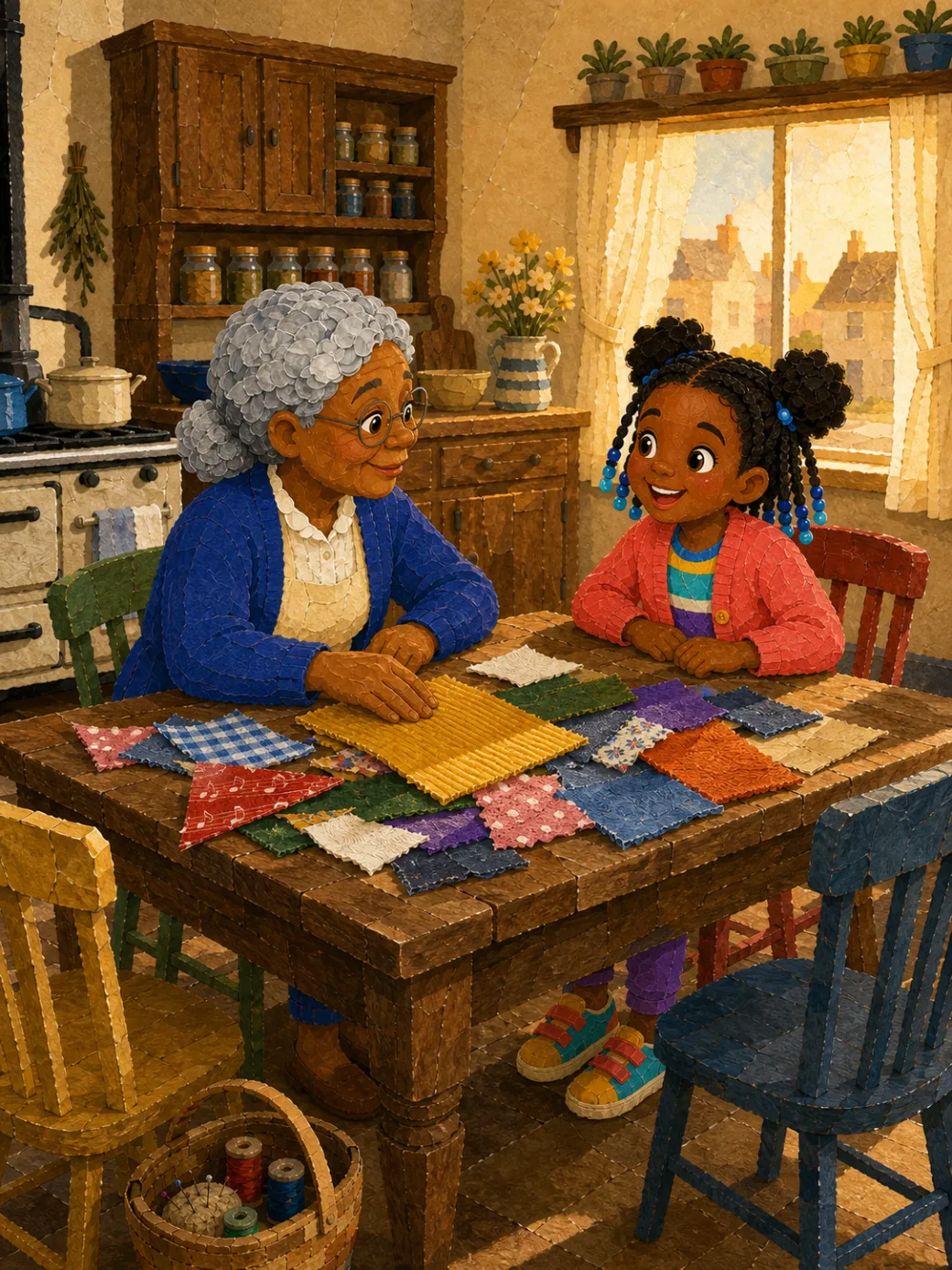
3The next piece was yellow corduroy, soft and worn thin in one corner. Grandma Jo smoothed it with her thumb. "Your Aunt Priya sent that. It's from the cushion cover on her reading chair — the one where she'd hold you in her lap and read three books, then four, then five, because you always said, one more." Amara laughed. She still said that.
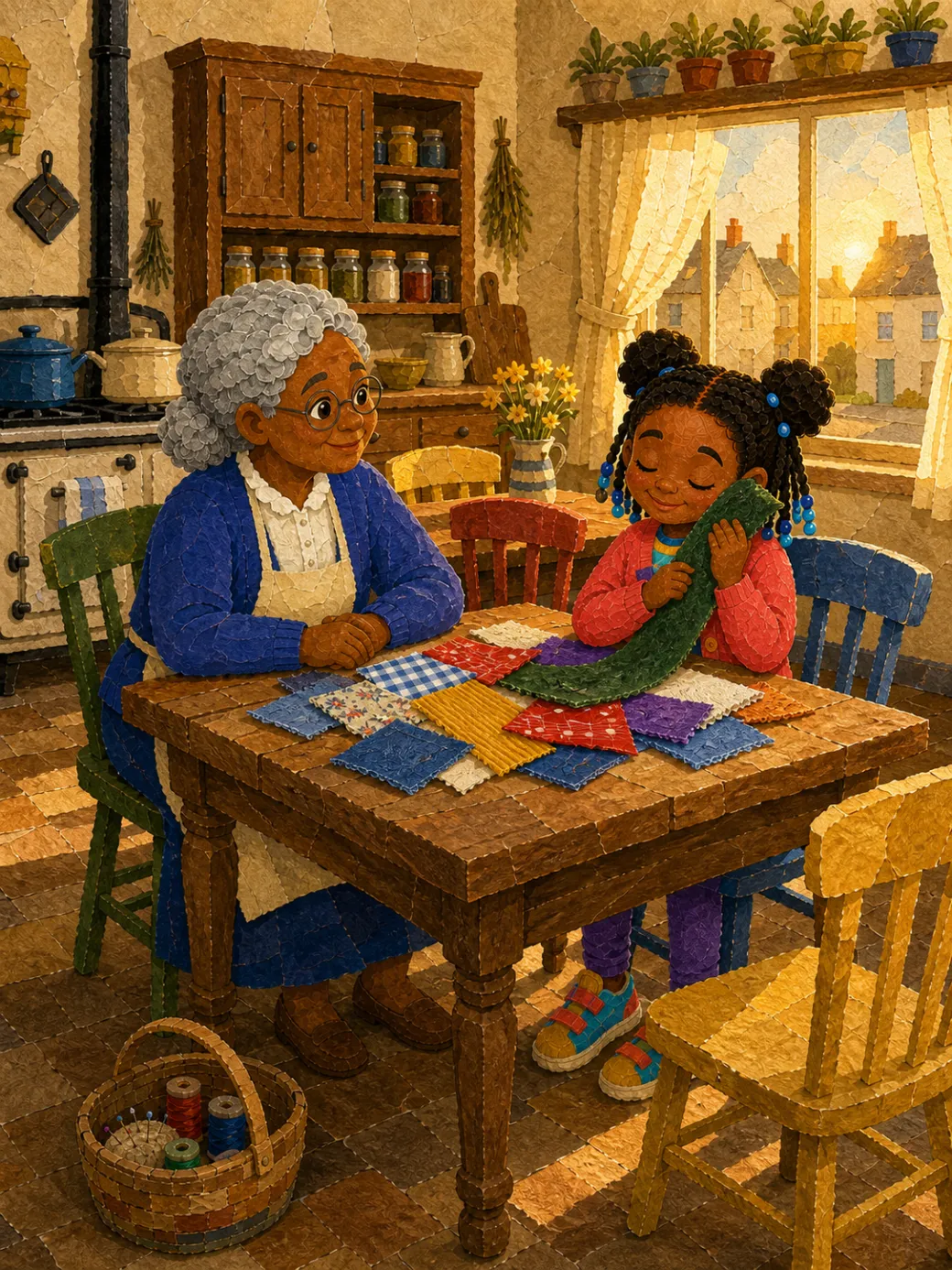
4There was a strip of deep green wool that had once been part of a scarf. "Papa Kweku wore this on the ferry," said Grandma Jo, "the morning he brought your mama home from the island for the first time. He said the sea wind was rude that day." Amara pressed it to her cheek. It was scratchy, but she didn't mind.
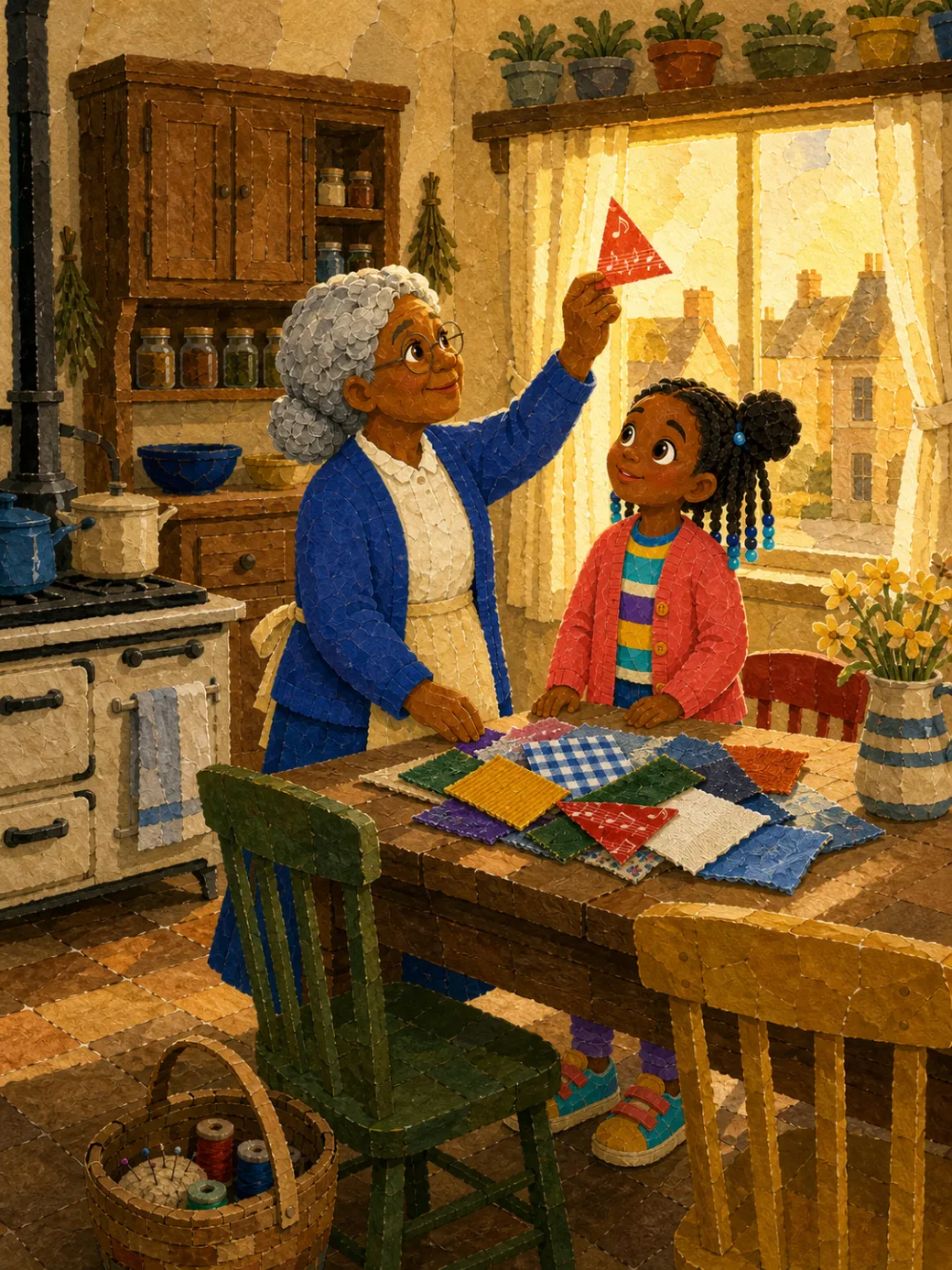
5A small red triangle had tiny white music notes printed on it. Grandma Jo held it up to the window light. "That's from the curtains in cousin Leila's apartment — the one above the music school. You could hear scales drifting up through the floorboards every evening. Leila said it was like living inside a song."
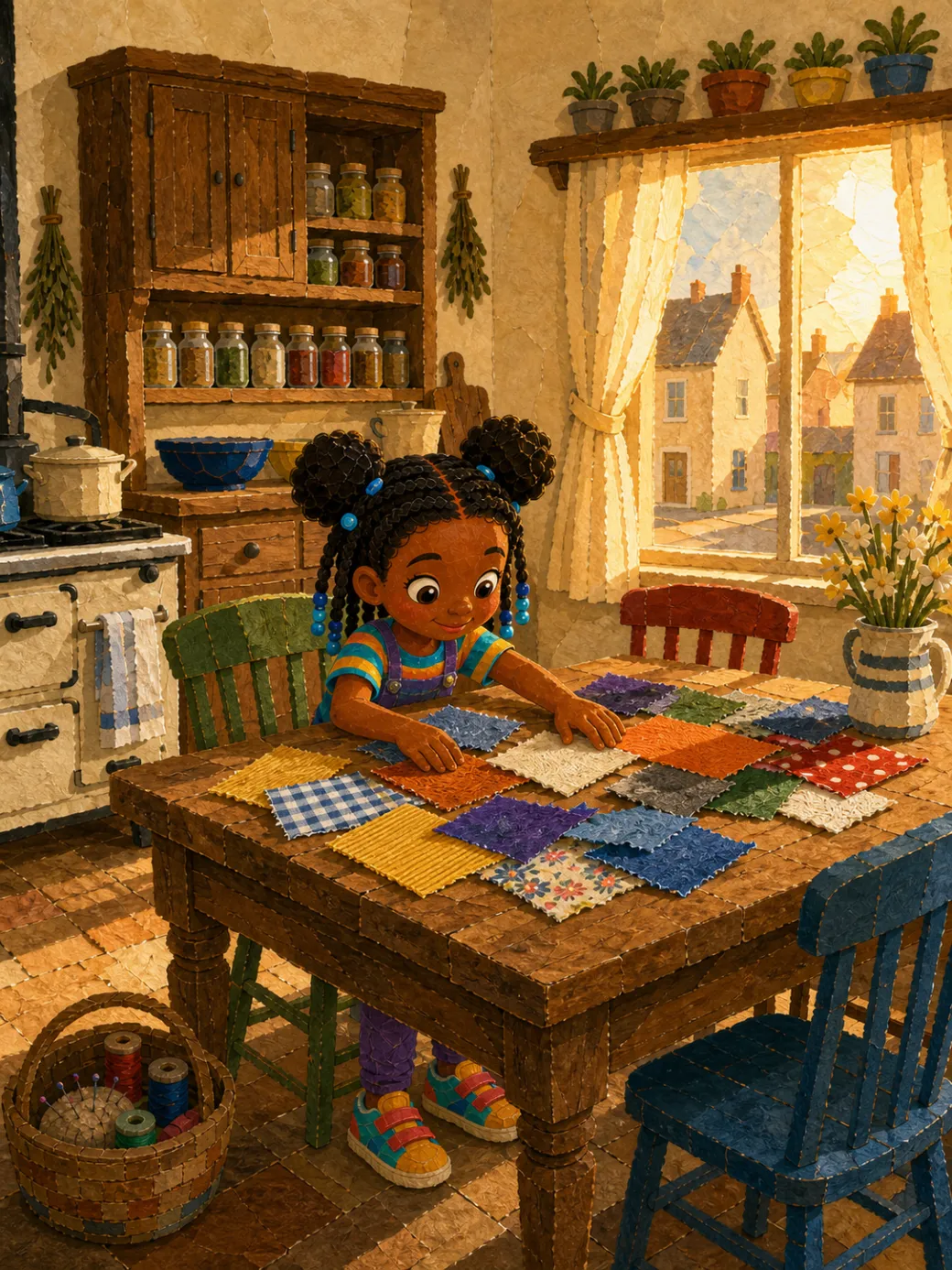
6Amara began arranging the pieces on the table, moving them around like a puzzle that had more than one right answer. There was ivory linen from the tablecloth where Grandma Jo herself had learned to roll dumplings. There was a soft gray flannel from the pajamas Amara had worn at her dad's house on the nights he made her a nest on the sofa because her old room wasn't ready yet. There was orange cotton from a sun-hat that had blown away twice on a trip to see the cousins far out west, and been chased and caught both times, laughing all the way. Each piece was small. None of them matched.
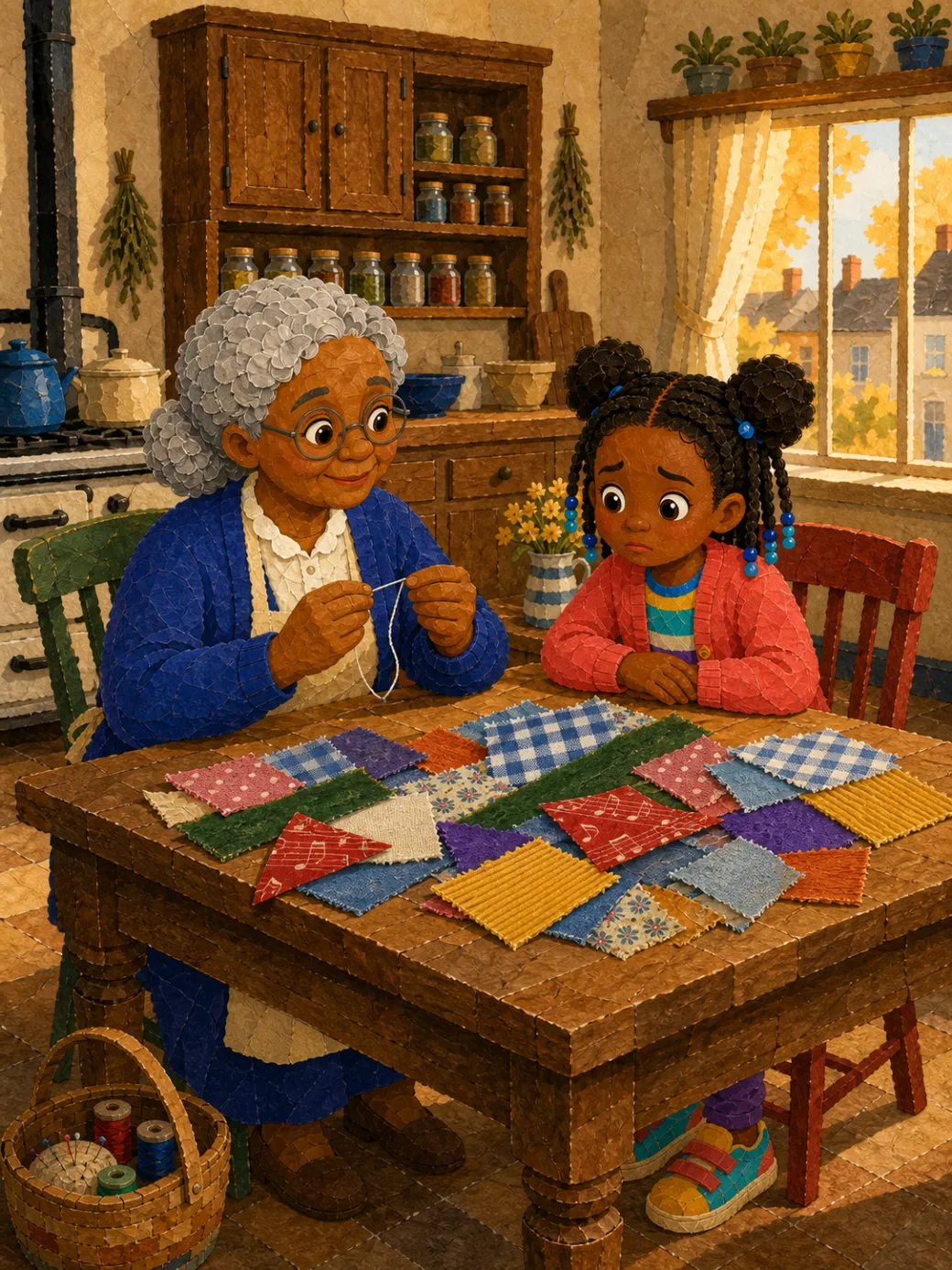
7"Grandma Jo," said Amara, "they're all so different. Will it look right?" Grandma Jo threaded her needle and sat down beside her. "Let's find out."
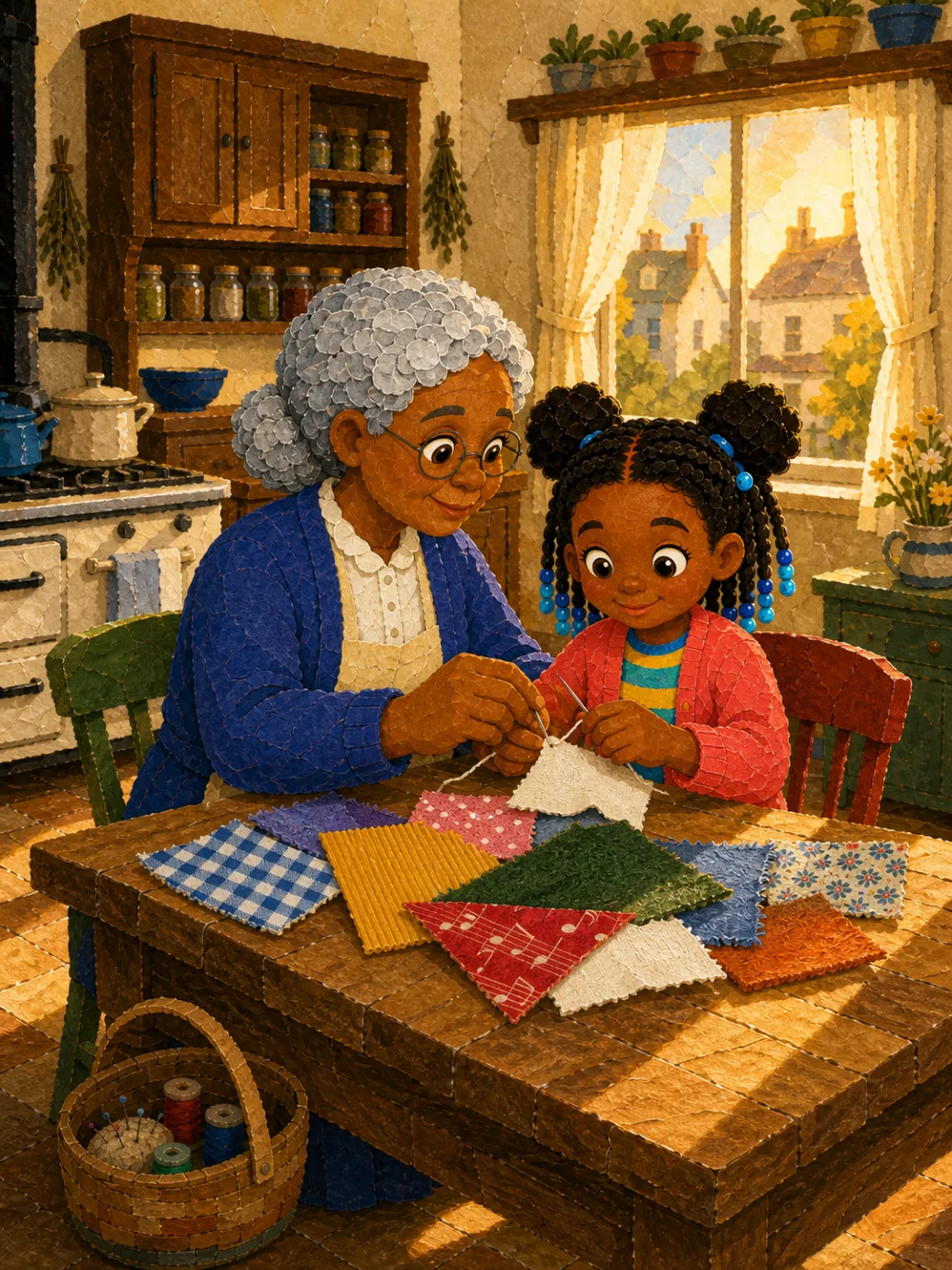
8They stitched slowly. Grandma Jo's hands guided Amara's at first, then let go. The blue-and-white checked square went beside the yellow corduroy. The green wool nestled against the red curtain triangle. The gray flannel found its place next to the orange sun-hat cotton, and the ivory linen held them all like a steady hand in the middle.
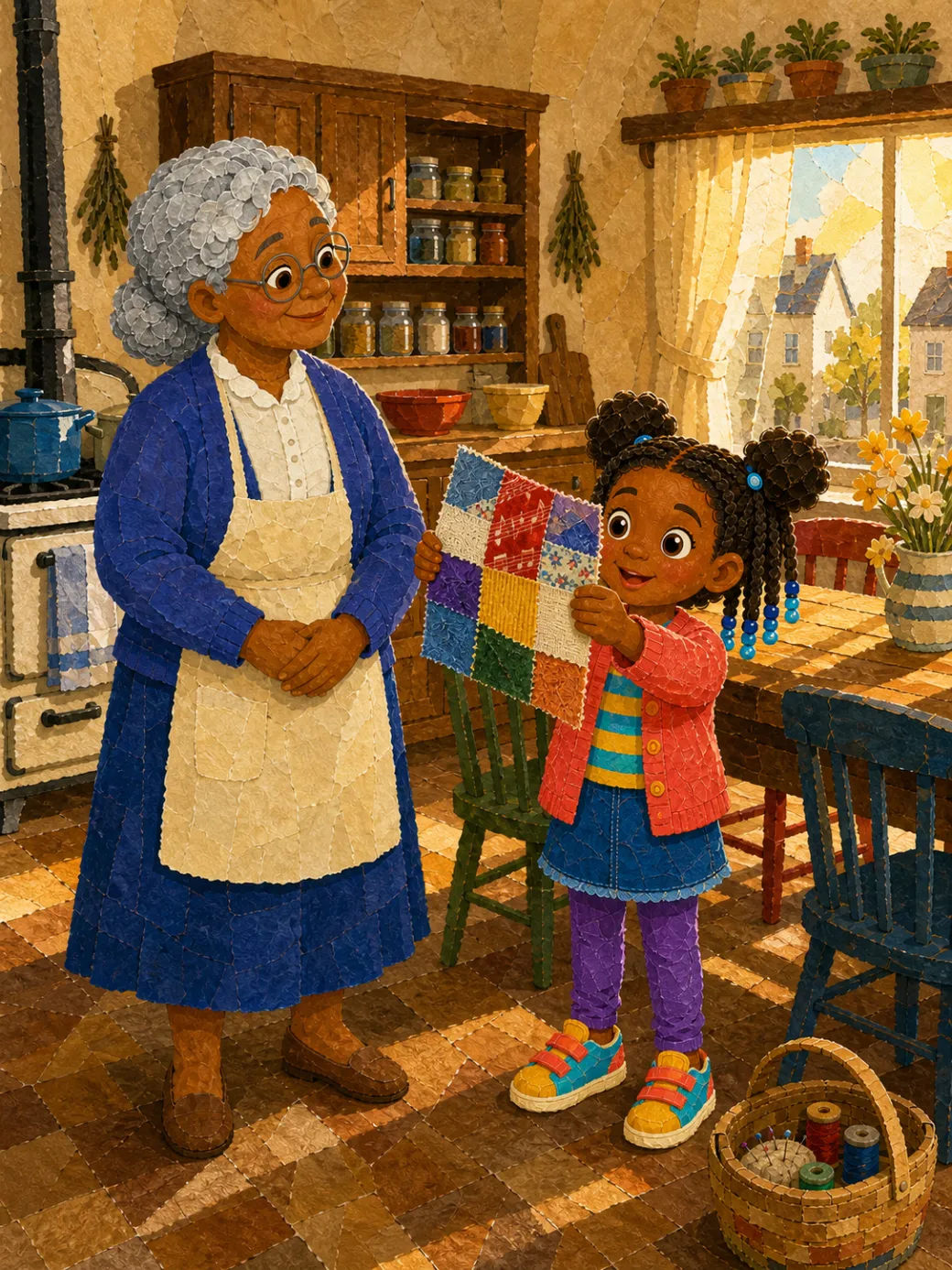
9When Amara held up the finished square — just the first of many they would sew together — she could see Uncle Desmond's kitchen and Aunt Priya's reading chair in the same glance. She could see the ferry and the music floating up through the floor and the sofa nest and the chased hat all at once, without having to choose between them. "It's big," she said quietly, though the square was no larger than a pillowcase.
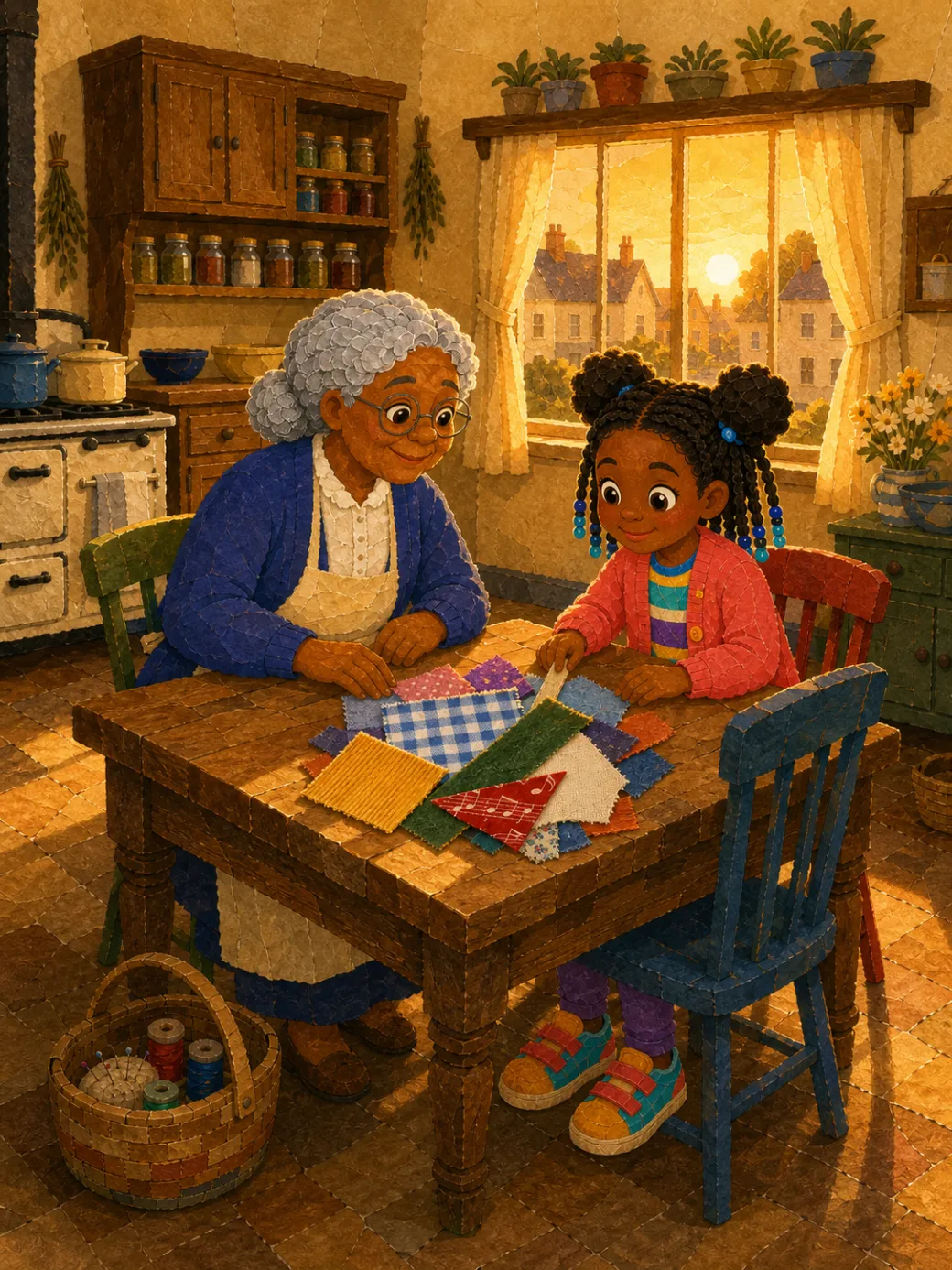
10"It'll keep getting bigger," said Grandma Jo. Outside, the late afternoon light came gold through the window, and somewhere down the street a door banged open and someone called a name, and it sounded, just for a moment, like every home at once.