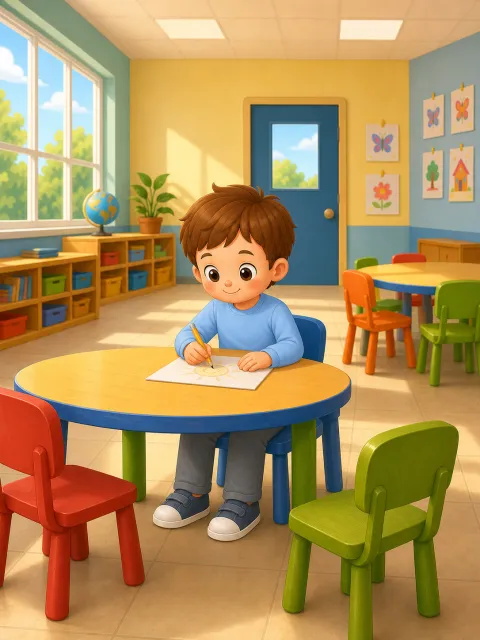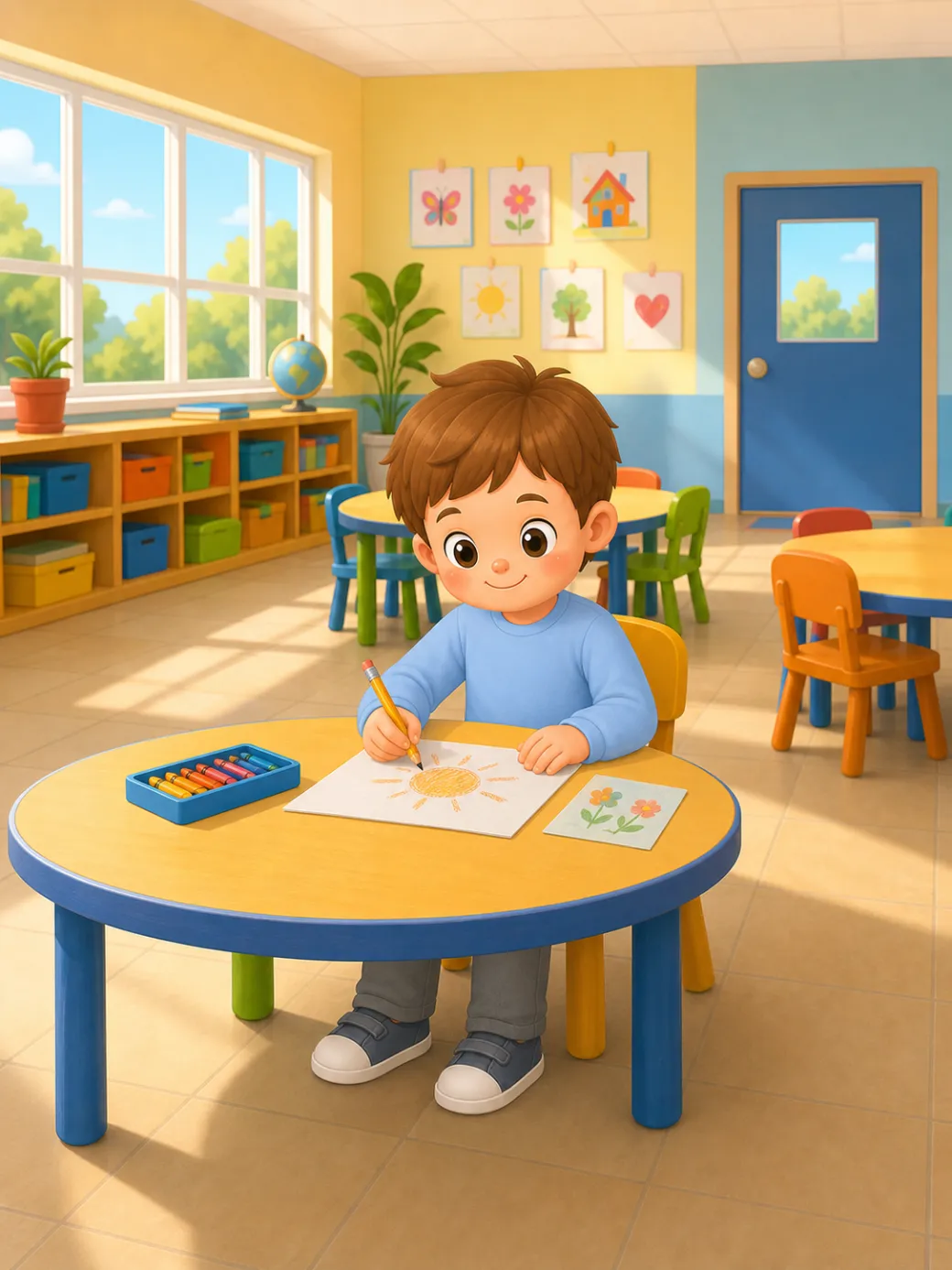
1I am sitting at my table, drawing a picture. My pencil moves slowly across the paper. I like it here. Everything feels just right.
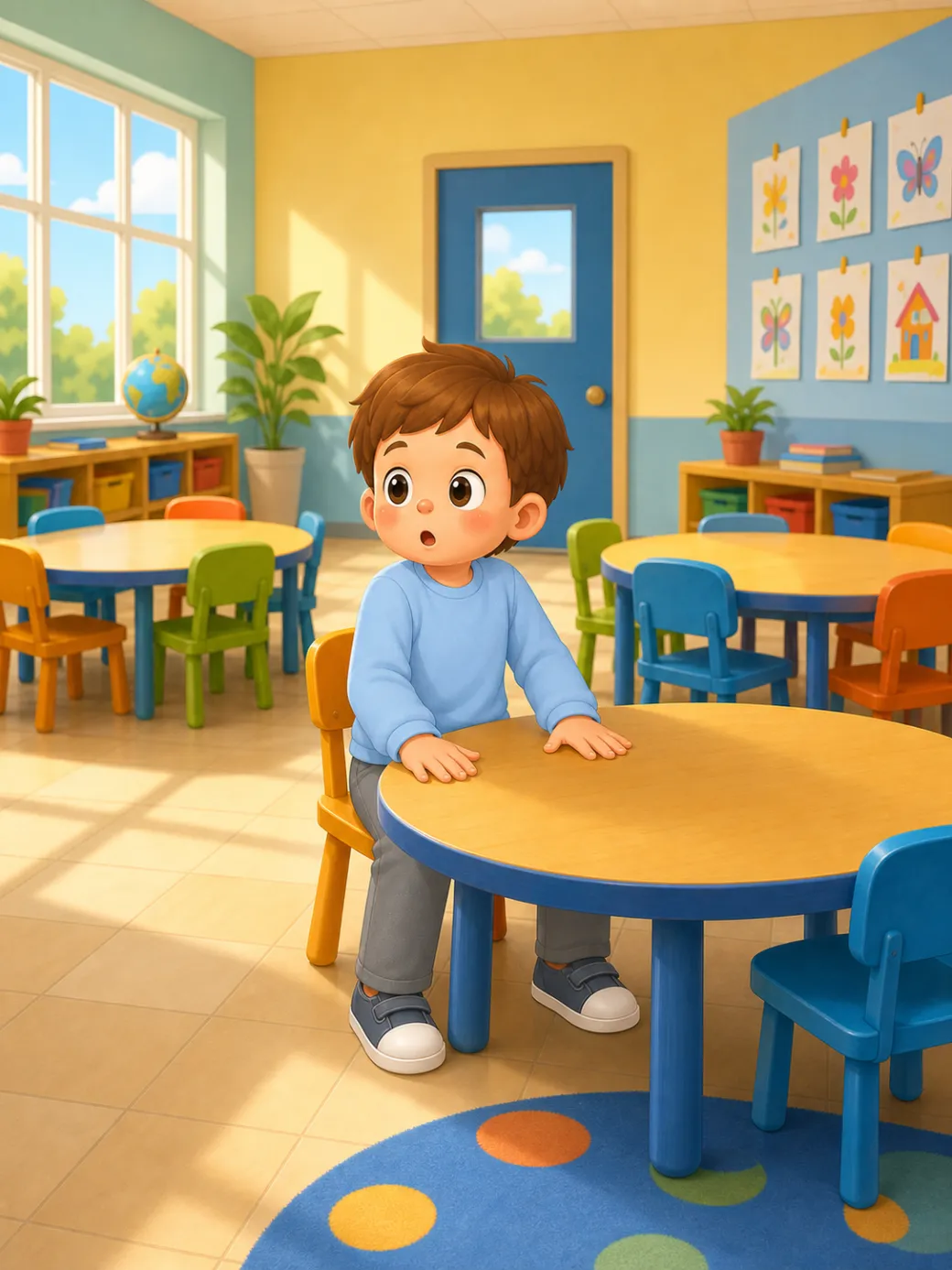
2Then the fire alarm rings. It is very loud and it starts all at once. I did not know it was coming. That is okay. Loud things can surprise us sometimes.
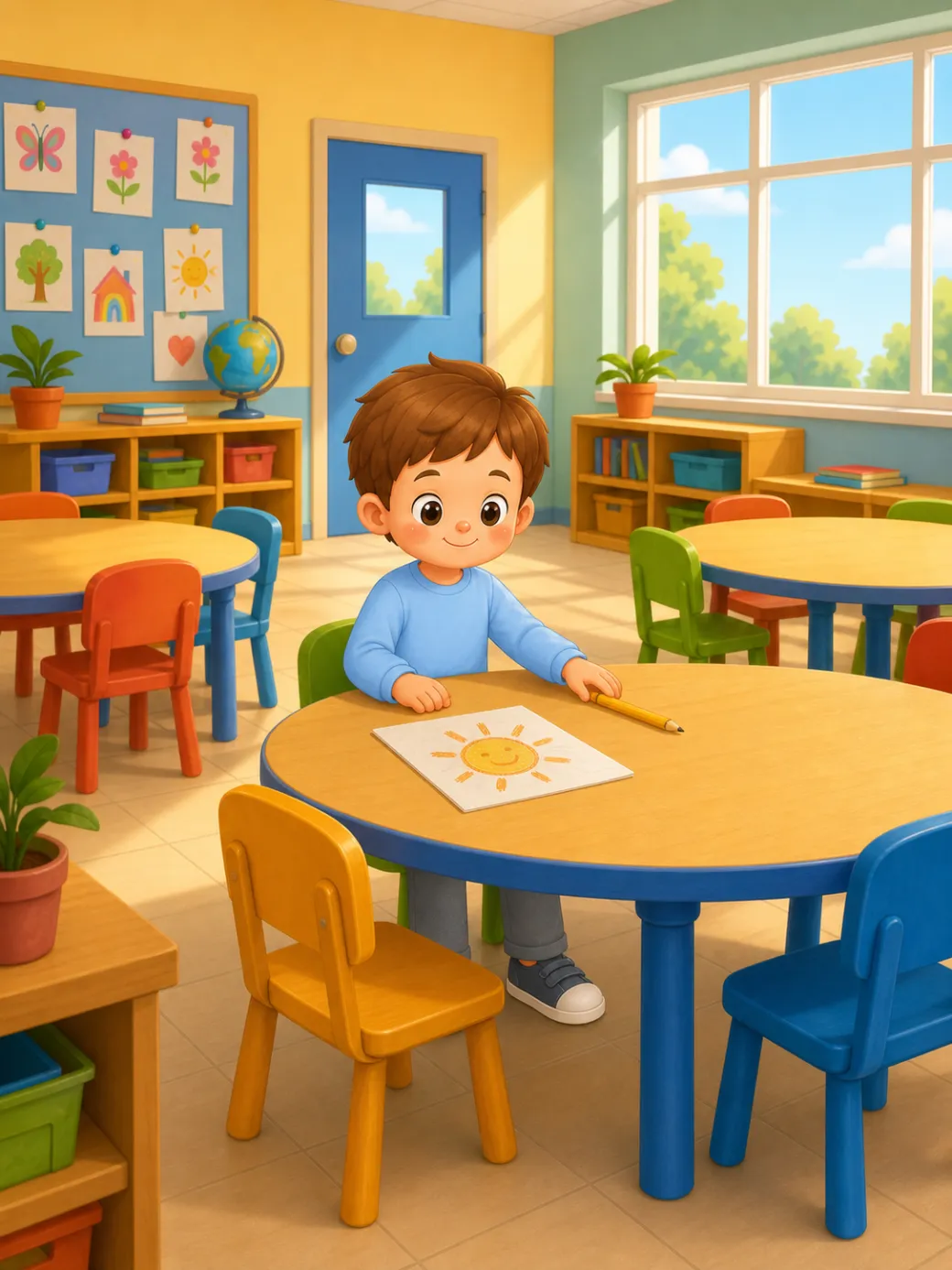
3I stop what I am doing. I put my pencil down on the table. I do not need to hold it anymore right now.
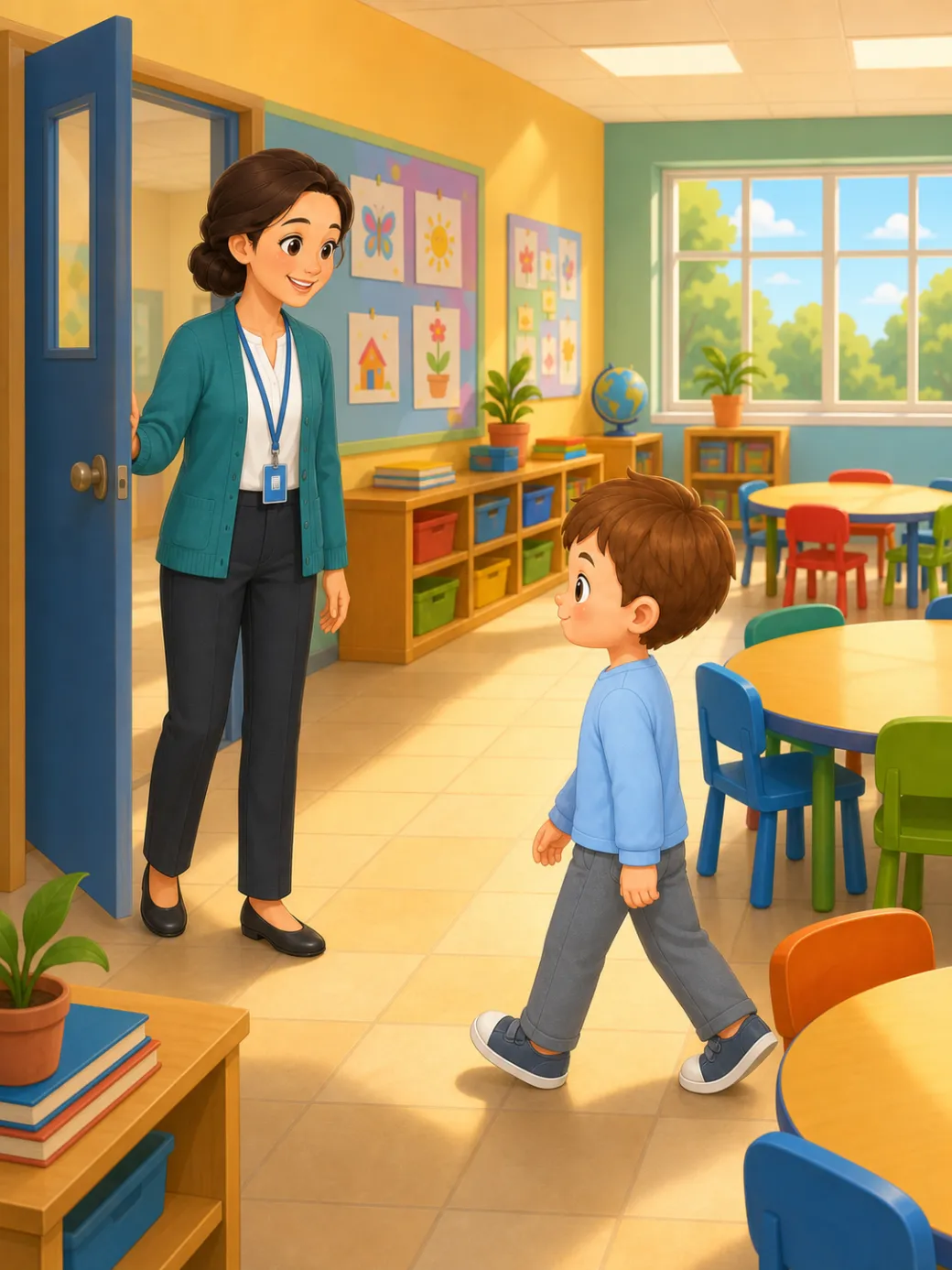
4My teacher says, "Line up at the door, everyone." I know what to do. I walk to the door and find my place in the line.
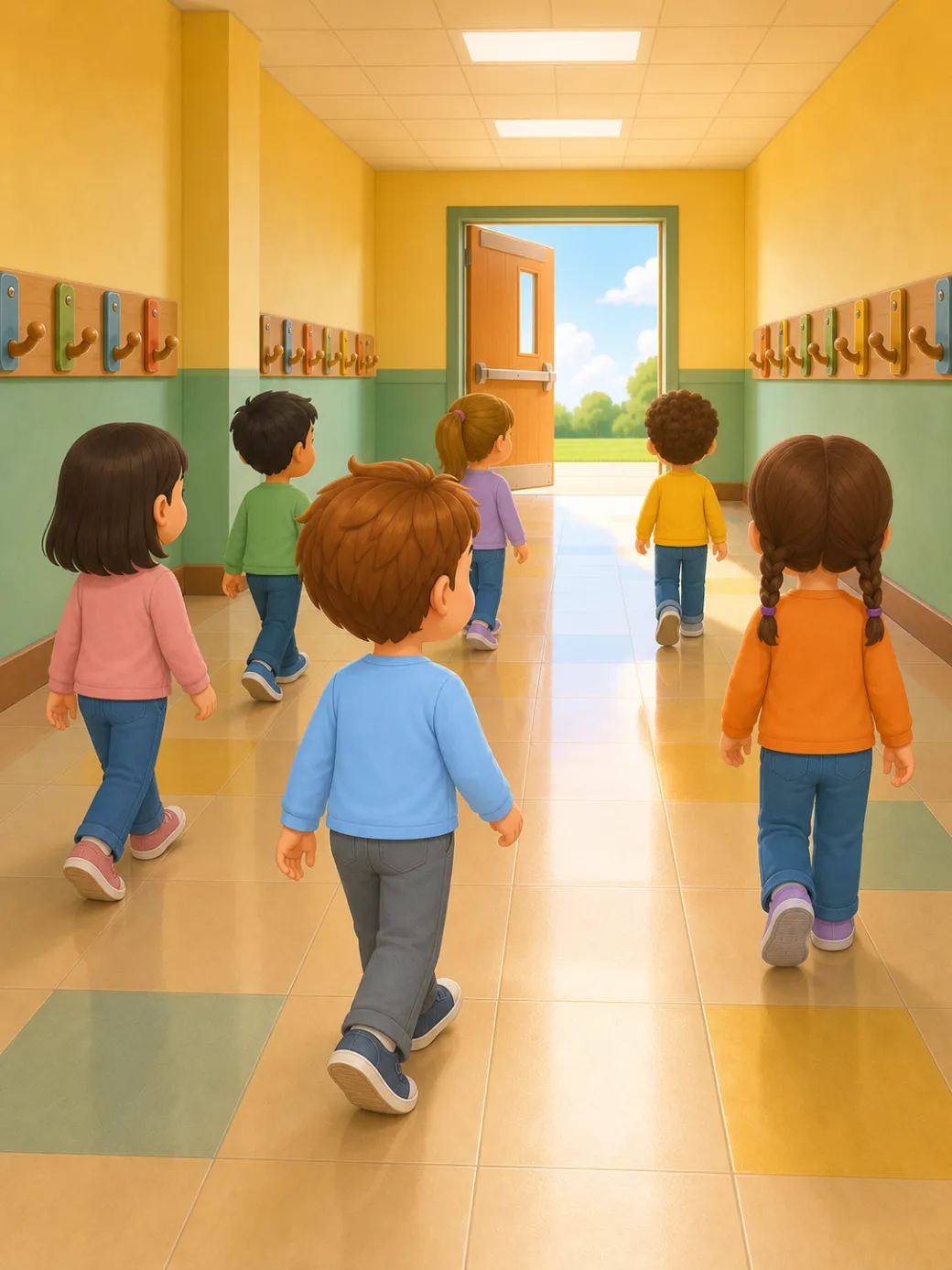
5We walk out of the classroom together. I walk. I do not run. My feet move steadily, one step at a time.

6We go along the hallway and out through the big door. The fresh air is all around me. I can feel it on my face.
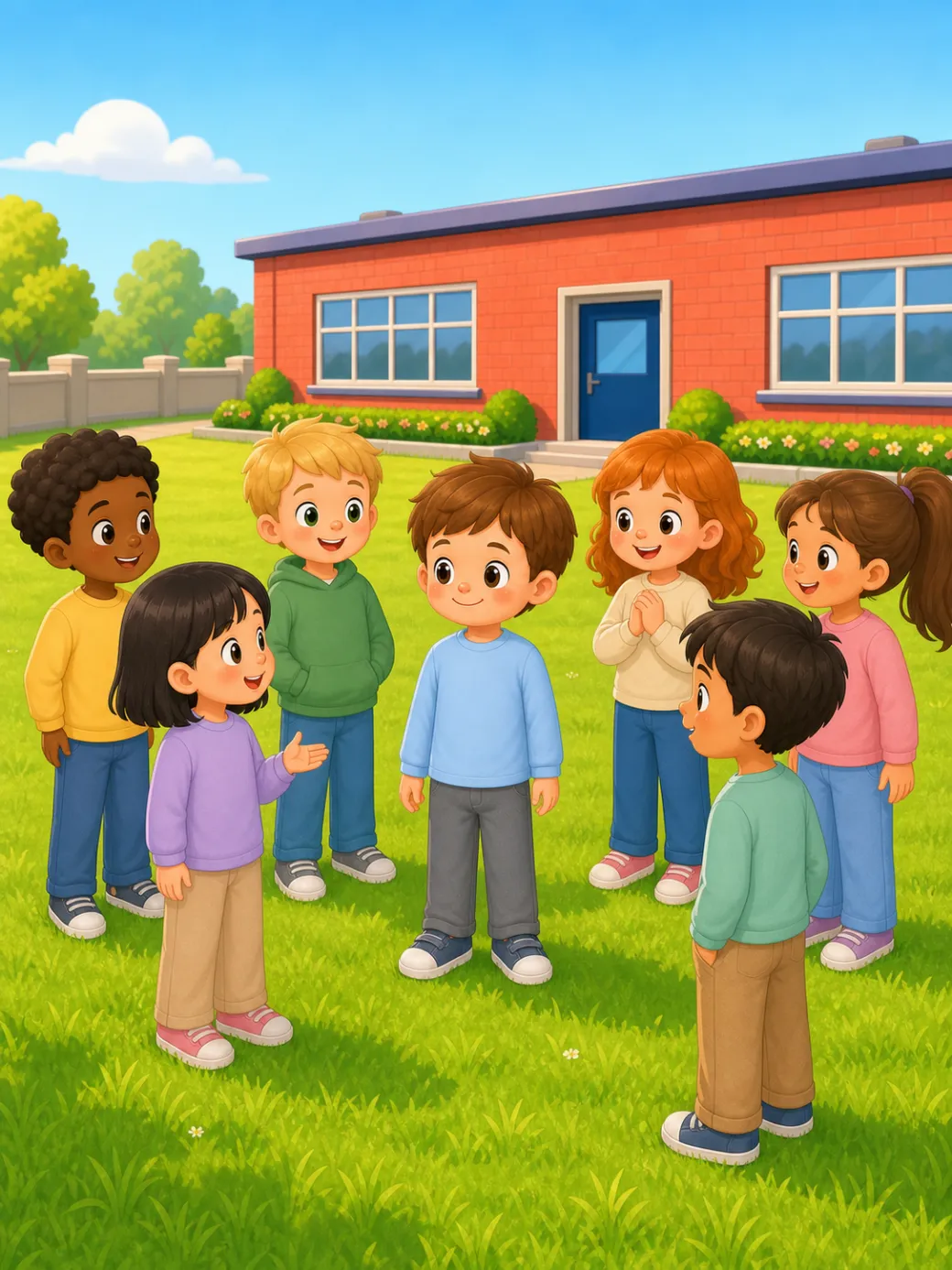
7We walk to the grass outside. Our whole class stands together. I can see my friends beside me. I am not alone.
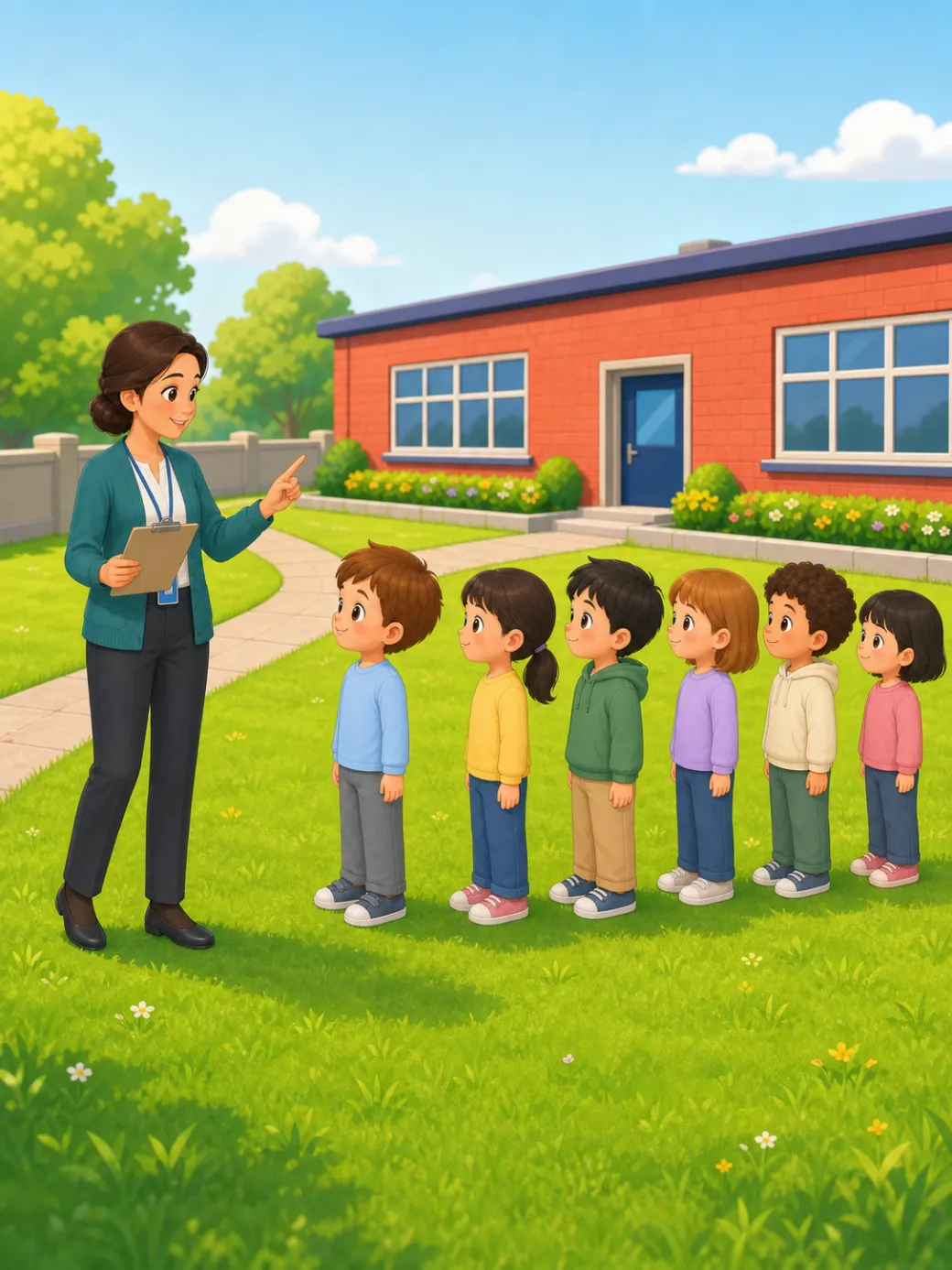
8My teacher counts us. One, two, three… she goes all the way down the line. She wants to make sure everyone is here. We are all here.
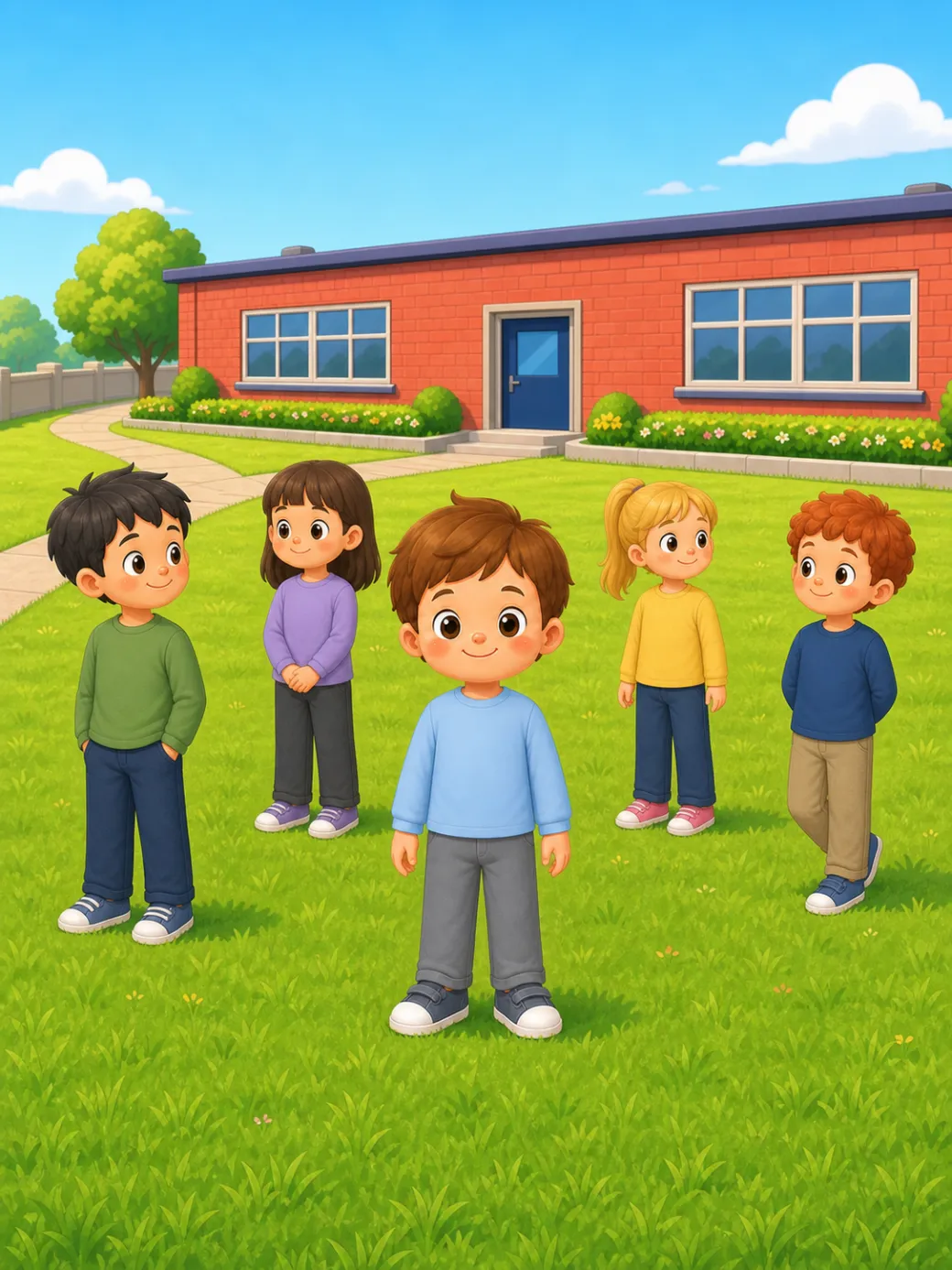
9We wait on the grass. It is quiet now. Some friends look around. Some friends stand still. Waiting is something I can do.
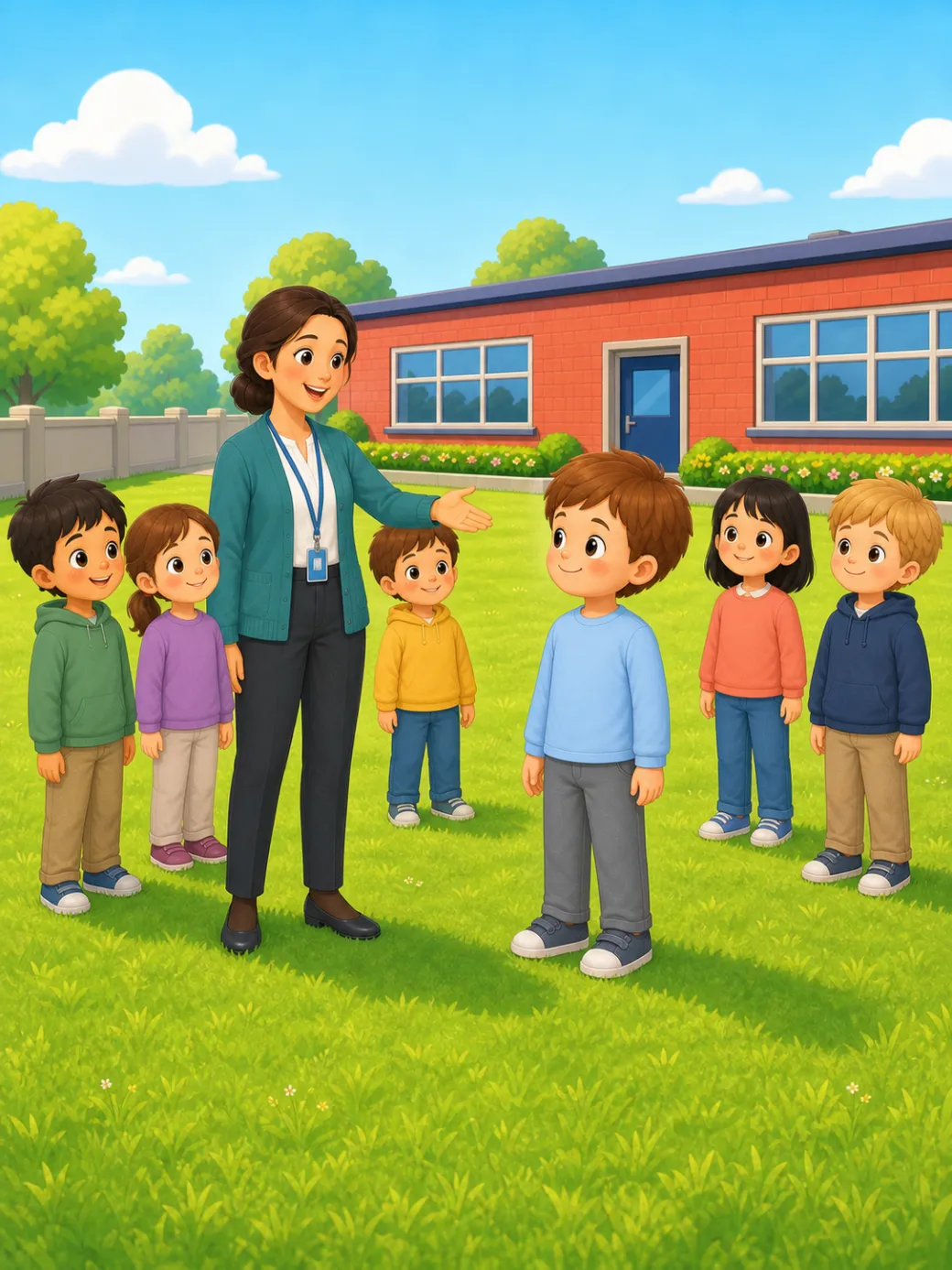
10My teacher smiles at us. She says, "Well done, everyone. You did a great job." Those words feel warm and good.
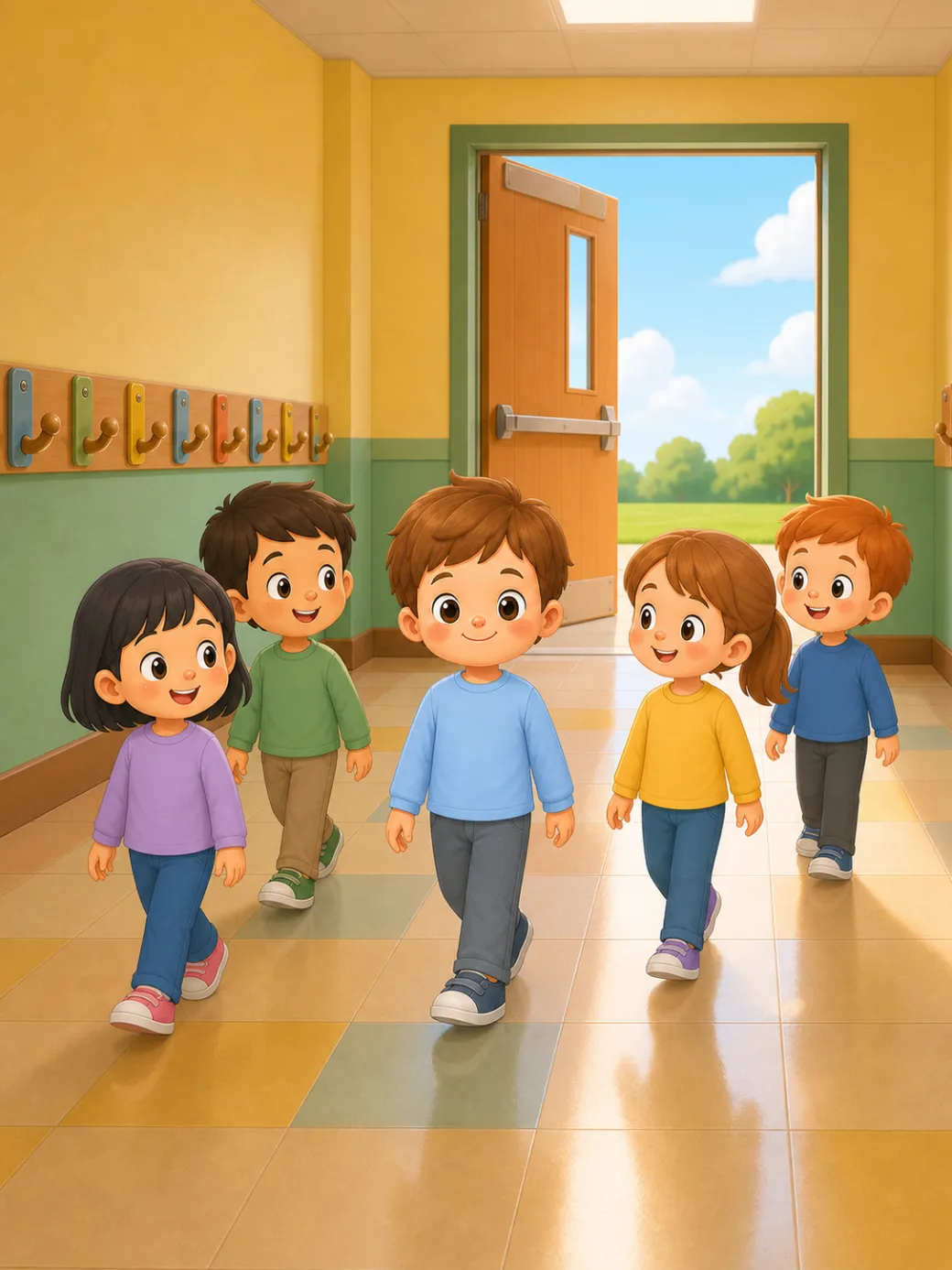
11Then my teacher says we can go back inside. We walk back in together, nice and calm, the same way we came out.
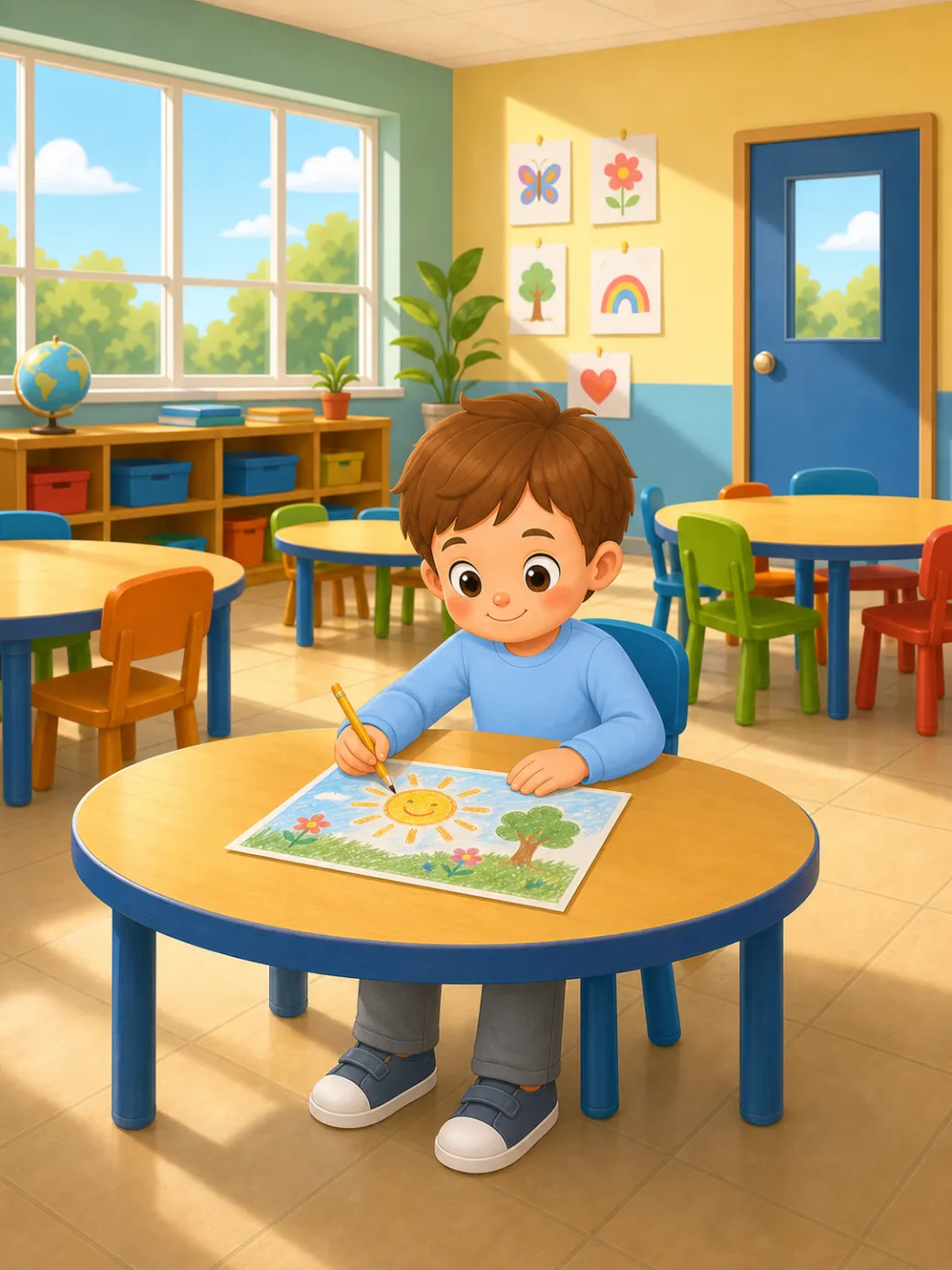
12I go back to my table. I pick up my pencil. I look at my picture and I carry on. I did it. The bell rang loud, and I knew just what to do.
For grown-ups
Read this before the drill, not during one — a social story does its work in advance, when the child is calm and has time to ask questions. Read it more than once; repetition is what turns the sequence into something familiar rather than something new. Point at the pictures as much as the words, because for many children it is seeing the order of events that makes the situation predictable. Where a detail differs at your school — the assembly point, who counts, what the alarm actually sounds like — say so out loud as you read, or make a version with your own details. Keep the language literal: no idioms, no reassurance the child cannot verify. The story and characters are original ReadKidz editorial content created for this platform-curated collection.
Talk about it together
- What is the boy doing before the bell rings?
- What does he do first when the alarm starts?
- Where does the class go, and how do they walk there?
- Why does the teacher count everyone?
- What happens at the end, after they go back inside?
Frequently asked questions
What happens in When the Bell Rings?
A boy is drawing at his table when the fire alarm goes off without warning. He puts his pencil down, lines up at the door, walks out with his class, stands on the grass while his teacher counts everyone, waits, and then walks back in and finishes his picture. Nothing goes wrong and nothing is frightening — the point of the story is that the child already knows the order of events before the day it happens.
What is a social story, and how is this one written?
A short, illustrated story that prepares one child for one specific situation. This one is written in the first person and the present tense, one idea to a page, and it mostly describes what happens rather than instructing the child what to do. That distinction matters: a story that issues instructions gets closed, and a story that describes gets re-read.
What ages is it written for?
Ages 4-8. It runs to twelve short interior pages with a complete beginning-to-ending arc, which is about one sitting for a child of that age.
Does it show a fire?
No. There is no fire, no smoke and no distress anywhere in the book. The alarm is treated as what it is for the child — a sudden loud sound — and every illustration stays on what the child does next.
Can I make a version with my own school’s details?
Yes, and for this format it is worth doing. Assembly points, who does the counting, and what the alarm sounds like all differ by school, and a social story works better the closer it is to the real thing. The story maker linked below takes a description of your own situation — or a script you have already written — and illustrates it the same way.
Is this Carol Gray’s Social Stories™?
No. “Social story” is used here in its everyday sense. Social Stories™ is Carol Gray’s named methodology with its own published criteria and training, and ReadKidz is neither affiliated with it nor claiming to meet those criteria.